
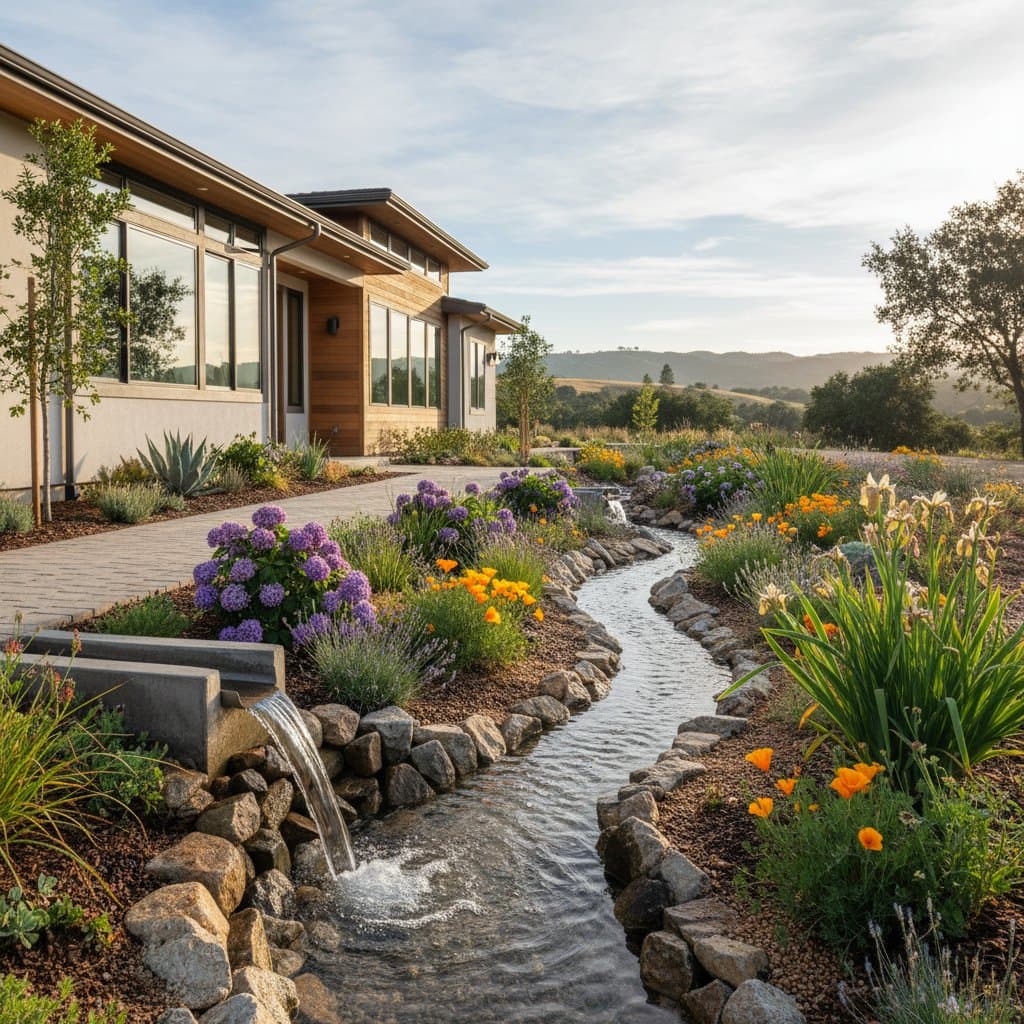
California's 2025 Stormwater Regulations Require Rain Garden Bioswales
California's updated stormwater regulations mark a significant evolution in landscape design and water conservation practices. These rules shift the focus from rapid runoff removal to capturing and utilizing rainfall as a valuable resource for landscapes and groundwater replenishment. Central to this approach, rain garden bioswales become required elements in numerous new construction and major renovation projects across the state.
This requirement extends beyond mere legal obligation. It presents a chance to craft outdoor environments that save water, foster wildlife habitats, and align with California's diverse ecosystems. For individuals embarking on new builds or renovations, grasping the specifics of these regulations and implementation strategies proves crucial for success.
Understanding Rain Gardens and Bioswales
A rain garden consists of a shallow, vegetated depression engineered to capture surface runoff from impervious areas such as roofs, driveways, and walkways. It temporarily stores water, which then percolates through engineered layers of amended soil, sand, and gravel into the ground. Select plants for these gardens that endure periodic inundation followed by extended dry intervals, ensuring robust performance year-round.
In comparison, a bioswale operates as an elongated version of a rain garden, forming a shallow, sloped channel that guides and treats water as it travels. These features excel in linear applications, such as alongside driveways, in parking medians, or bordering property lines where runoff concentrates. Both rain gardens and bioswales depend on high soil permeability and strategic plant choices to function optimally.
Site-specific adaptations remain essential in California's regions, which range from foggy coastal areas to arid interior basins. Conduct soil tests to assess infiltration rates, and adjust depths and widths accordingly; for example, aim for 6 to 12 inches of depth in rain gardens to handle typical storm volumes without overflow.
Incorporating Rain Gardens and Bioswales into Landscape Designs
Integrate rain gardens and bioswales thoughtfully to elevate rather than disrupt the overall aesthetic and utility of a property. Position them to complement existing features, transforming potential drainage challenges into visual and ecological assets.
Consider these placement strategies:
- In front yards, substitute bioswales for traditional turf, incorporating California natives like deer grass or yarrow for low-water color and texture.
- Near patios or decks, install rain gardens to buffer hardscapes, providing pollinator-friendly zones with plants such as milkweed or salvia.
- Within parking zones, deploy bioswales to intercept contaminants like motor oil, using gravel underlays to enhance filtration while mitigating urban heat.
Involve these elements during initial planning to optimize the site layout. For instance, reroute gutter downspouts to feed directly into a rain garden, minimizing reliance on municipal sewers. Combine them with permeable pavers, such as decomposed granite or porous concrete, to create unified systems that handle runoff at the source.
Engaging Professionals for Compliance and Execution
Adhering to stormwater regulations involves submitting detailed plans, including hydrologic calculations and soil permeability assessments. Homeowners may handle modest installations, but complex projects demand expert input to navigate technical and regulatory hurdles.
Key professionals include:
- Landscape architects, who specialize in site grading, soil amendments, and plant palettes tailored to local conditions.
- Civil engineers, who perform flow modeling and verify alignment with city or county ordinances.
- Landscape contractors, who execute site preparation, install underdrains if needed, and plant with precision for immediate stability.
Early collaboration prevents revisions and unlocks incentives like reduced permitting fees or rebates for green infrastructure. Verify credentials through state licensing boards to ensure qualified teams.
Ensuring Longevity Through Maintenance Practices
Rain gardens and bioswales function as dynamic ecosystems that require ongoing care to sustain effectiveness and appeal. Regular monitoring prevents minor issues from escalating into performance failures.
Follow this maintenance routine:
- After significant rainfall, evaluate for erosion or prolonged ponding within 48 hours; redirect flow if necessary.
- Remove weeds promptly, particularly in the first two years, to allow desired plants to dominate.
- Apply a 2-inch mulch layer annually, using organic options like wood chips to retain moisture and suppress weeds.
- Trim perennials and grasses in late winter or early spring to promote healthy regrowth and prevent overcrowding.
- Add compost every 3 to 5 years to restore nutrient levels as organic materials break down.
Such practices not only preserve functionality but also enhance soil biology, leading to self-sustaining features over 20 years or more.
Realizing Financial and Ecological Advantages
Rain gardens and bioswales deliver tangible economic and environmental gains that extend far beyond code compliance. They cut down on supplemental watering needs by 30 to 50 percent in many installations, while averting flood damage to foundations and basements.
Environmentally, these systems filter pollutants before they reach waterways, supporting cleaner rivers and bays. In drought-vulnerable California, they contribute to aquifer recharge; a single residential rain garden can infiltrate thousands of gallons annually, bolstering water security.
Aesthetically, they enrich landscapes with layered plantings and natural contours. Designers often accentuate them with subtle borders of recycled stone or integrated seating, blending utility with artistry to create resilient, inviting spaces.
Steps to Implement Compliant and Effective Systems
Approach stormwater compliance as a design enhancement rather than an administrative task. Begin by observing your property during rain to identify runoff paths and accumulation points, informing precise placement.
Consult municipal resources for infiltration volume requirements, typically calculated as a percentage of impervious surface area. Engage a designer versed in both botany and water dynamics to develop custom plans, specifying elements like root depths of 18 inches for stabilizing plants such as ceanothus.
Select enduring components, including corrosion-resistant edging and deep-rooted species adapted to your USDA zone. Incorporate access paths for upkeep, ensuring the system integrates seamlessly with daily life.
Ultimately, a thoughtfully executed rain garden or bioswale embodies harmony between built environments and natural processes, yielding enduring rewards in beauty, efficiency, and ecological stewardship.