
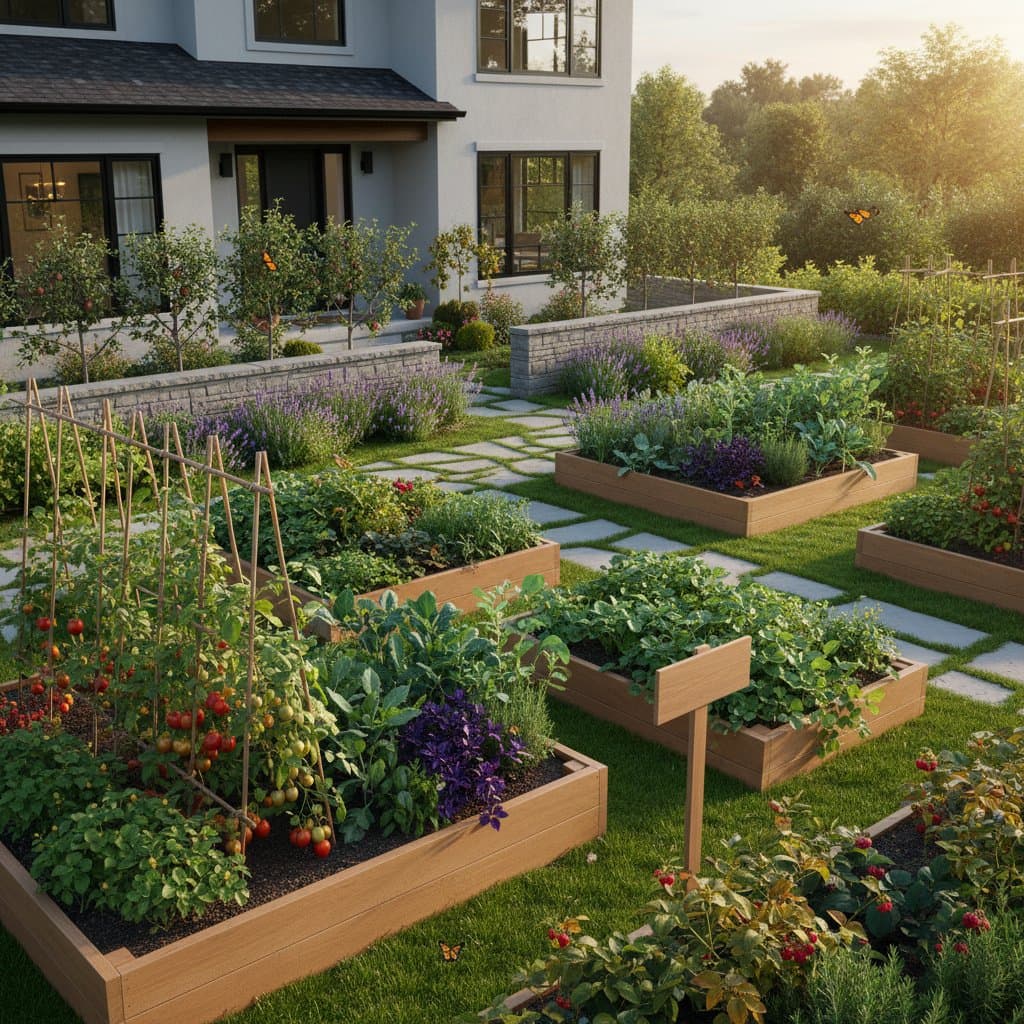
Edible Front Yards Boost Property Value by 30%
An edible front yard provides benefits beyond supplying fresh produce for a household. It enhances visual appeal, draws in pollinators, and demonstrates intentional landscaping. Homeowners increasingly recognize that well-planned edible landscapes can elevate property values by up to 30 percent. This integration of aesthetics and utility positions edible front yards as a prime example of sustainable design that delivers both immediate gratification and long-term financial returns.
At a Glance
Location: Residential neighborhoods
Size: Adaptable to compact urban lots or expansive suburban properties
Climate Zone: Versatile through selection of regionally suited plant varieties
Project Goal: Merge aesthetic appeal, practical function, and food production to maximize property value
1. Establish Structure and Balance in Design
Effective edible front yards rely on a strong foundational structure. Create defined planting beds, incorporate varying plant heights in layers, and set clear boundaries to maintain an organized appearance rather than a wild overgrowth. Install pathways using materials such as crushed granite or brick to direct visitor sightlines and facilitate routine access for upkeep. Employ raised beds or borders edged with stone to provide form while elegantly showcasing edible crops.
Landscape professionals emphasize that structure distinguishes a functional garden from a refined one. This organized layout directly contributes to superior curb appeal, a factor real estate experts associate with increased property valuations. Consider combining a low-growing boxwood hedge with vibrant kale or Swiss chard varieties to establish rhythmic patterns and striking contrasts that serve both decorative and utilitarian purposes.
Visual callout: Brick-edged beds brimming with herbs flank a straight walkway, introducing geometric precision to abundant greenery.
2. Integrate Ornamental and Edible Plants Seamlessly
To maintain year-round interest in a front yard, combine ornamental plants with edibles in thoughtful arrangements. Numerous fruit-bearing species fulfill dual roles as attractive features. For example, blueberry bushes offer lustrous green leaves, delicate spring blossoms, and rich summer berries. Scarlet runner beans ascend trellises adorned with vivid flowers that lure hummingbirds. Even everyday greens like lettuce transform into focal points when arranged in repetitive motifs or varied hues.
Achieve visual harmony by clustering plants according to color schemes or foliage textures for unified compositions. Professionals note that blending edibles with ornamentals introduces layers of interest and unexpected elements while preserving overall coherence. Try associating purple basil with lavender to echo hues, or tuck strawberry plants beneath rose bushes to cover exposed soil with elements that are equally charming and productive.
Functional benefit: Every plant secures its position by contributing beauty, yield, or soil enhancement.
Design insight: Consistent repetition of shapes and colors unifies the planting scheme.
3. Select and Position Fruit Trees and Shrubs Strategically
Fruit trees introduce substantial visual presence to front yards and act as anchoring elements under the canopy. Opt for compact cultivars such as the 'Honeycrisp' apple or 'Santa Rosa' plum, which suit limited areas yet deliver substantial harvests. Train espaliered trees flat against fences or walls to form artistic living structures that conserve space and project sophistication. Berry-producing shrubs, including currants, gooseberries, or raspberries, develop into appealing hedges that gently delineate property edges.
Horticultural specialists observe that fruit trees impart a sense of lasting stability to gardens, which potential buyers view as enduring assets. The progression of seasonal blooms, dappled shade, and fruit development enriches sensory experiences, fostering emotional connections. Properties bordered by such productive trees convey meticulous care and maturity, factors that quietly enhance market perceptions.
Visual callout: Dwarf apple trees shaped in open forms form an inviting canopy at the entrance.
To select appropriate varieties, evaluate your space constraints and sunlight availability. For instance, in partial shade, choose gooseberries that tolerate lower light levels while still yielding tart fruits for jams or fresh eating. Prune annually in late winter to encourage bushy growth and prevent overcrowding, ensuring the trees remain tidy contributors to the landscape.
4. Employ Hardscape Elements to Accentuate Abundance
Productive gardens gain from robust and visually pleasing hardscape features. Incorporate flagstone pathways, gravel seating areas, or low retaining walls to render edible zones purposeful. These components also regulate drainage and minimize ongoing tasks. A slender band of decomposed granite separating vegetable beds, for example, preserves clean footwear and confines weed growth.
Align hardscape choices with the home's architectural style for seamless integration. Pair timber edging or brick with Craftsman bungalows, whereas sleek concrete or metal borders complement contemporary designs. Contractors highlight that hardscape forms the foundational framework supporting garden vitality. By mirroring materials from the house facade, the edible yard integrates as a natural extension of the residence.
Functional benefit: Sturdy paths and edges streamline maintenance and define planting areas.
Design insight: Echo exterior materials from the home to foster visual cohesion.
When installing, prioritize permeable surfaces like gravel to support water infiltration and reduce runoff. Budget for professional installation if dealing with slopes, as proper grading prevents erosion around productive beds.
5. Implement Layered Lighting for Enhanced Evening Presence
Strategic lighting prolongs the usability of edible front yards into the night and bolsters a sense of security. Deploy low-voltage fixtures along pathways to illuminate routes, and apply warm uplights to accentuate fruit trees or trellises. Discreet glows also outline perimeters, presenting a complete aesthetic that property evaluators appreciate.
Designers recommend layered approaches that prolong outdoor time without overwhelming brightness. Select fixtures emitting light at approximately 2700 K for a soothing ambiance that enhances plants and structures alike. Solar models suit modest gardens, whereas hardwired setups fit broader expanses. Focus on subtle direction rather than intense beams to guide movement gracefully.
Visual callout: Gentle path lights follow the gentle arc of a gravel walkway edged with thyme.
Test lighting placements during dusk to ensure even coverage without dark spots. Integrate motion-sensor options near entry points for added convenience and energy efficiency.
6. Prioritize Plants Suited to Regional Conditions
Edible selections flourish when aligned with local environments. Indigenous and adapted varieties demand minimal irrigation and nutrients, lowering sustained expenses. In temperate regions, opt for currants, rhubarb, and resilient herbs. Milder areas support figs, citrus, and rosemary. Persistent edibles such as asparagus or artichokes offer structural benefits beyond harvest periods.
Cultivators assert that regionally fitting plants exhibit superior vitality, which elevates a property's allure. Tailor choices to specific microclimates for reliable development and verdant displays that attract buyers. This approach diminishes the need for frequent replacements, sustaining low-effort beauty.
Functional benefit: Lower resource demands paired with robust performance.
Design insight: Contrast foliage between edibles and ornamentals to emphasize shapes.
Consult local extension services for soil testing and variety recommendations. Amend soil with compost before planting to boost initial establishment, particularly for perennials that anchor the design.
7. Ensure Maintenance Remains Practical
Edible front yards must avoid the appearance of disarray to sustain appeal. Implement straightforward systems for longevity. Drip irrigation systems deliver precise hydration with minimal effort. Apply mulch layers to conserve water and curb weeds. Organize plants by hydration requirements to streamline routines. Regular path edging preserves neatness and warmth.
Managers stress that steady upkeep upholds an edible yard's premium look. A pristine garden reflects ownership commitment, shaping buyer impressions positively. Proactive planning safeguards yields and property equity alike.
Visual callout: Pristine gravel paths alongside uniformly mulched beds project discipline and simplicity.
Schedule seasonal tasks: thin overcrowded areas in spring, harvest promptly to encourage regrowth, and refresh mulch biannually. Invest in ergonomic tools to make care enjoyable rather than burdensome.
8. Foster Neighborhood Engagement
Edible front yards frequently spark local interactions. Distribute surplus herbs or vegetables to cultivate positive relations and community spirit. Position raised planters adjacent to sidewalks to invite dialogue while preserving seclusion via tiered vegetation. This communal aspect infuses subtle worth that enhances property desirability.
Gardeners remark that properties offering contributions draw residents naturally. The yard evolves from mere adornment to a communal asset. Prospective owners value this relational fabric as a hallmark of vibrant locales.
Encourage participation by labeling plants with care tips or harvest timelines, turning passersby into informal collaborators.
Sustaining Your Edible Landscape
Strategic decisions ensure the yard retains charm across seasons and years. Harmonize framework with profusion, decoration with utility, and output with accessibility. The outcome is a vibrant, bountiful, and resilient space that enriches daily life and secures lasting value.