
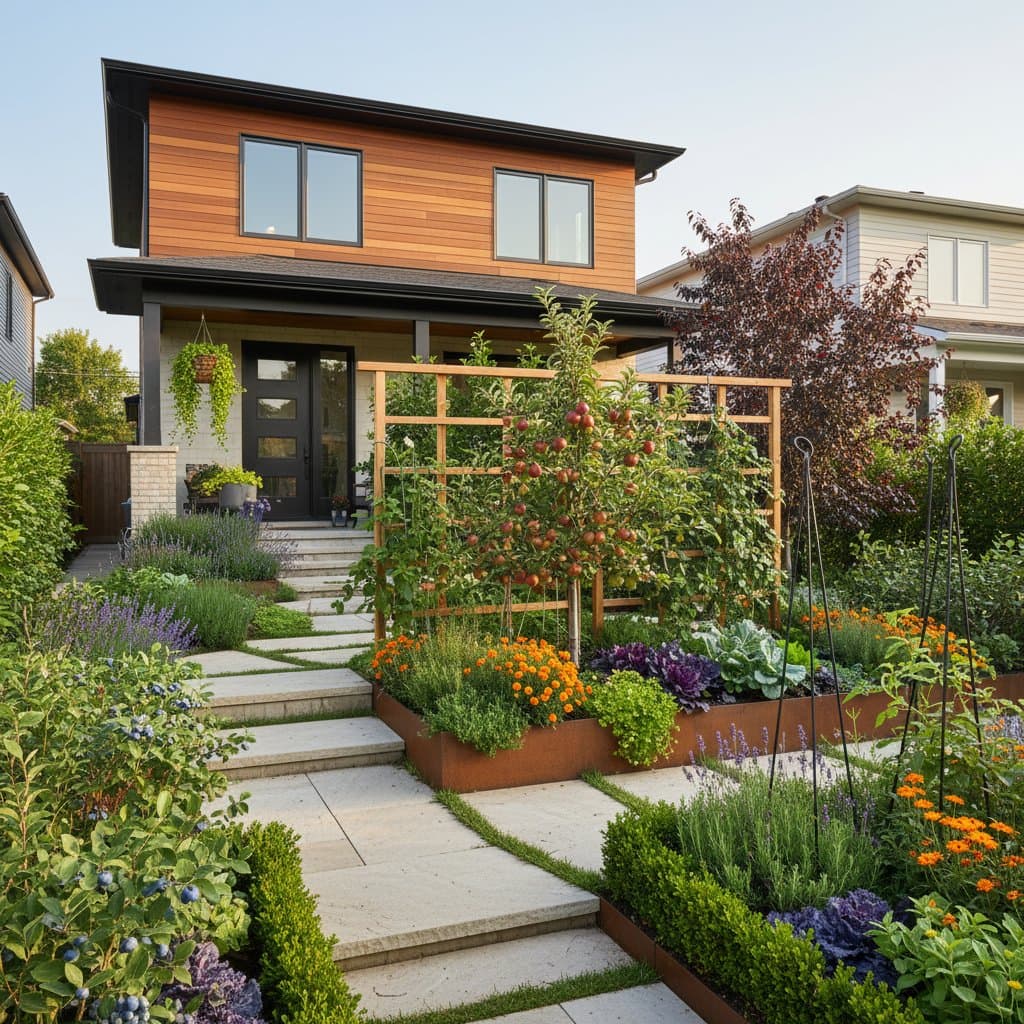
Front Yards of the Future: Edible Landscaping Reshapes Neighborhoods
When Marisa and Devin purchased their suburban home, they envisioned a front yard full of life. They grew weary of maintaining a lawn that offered no return beyond aesthetics. Instead, they sought a space that would yield food, provide color, and encourage interactions with neighbors.
Landscape architect Leo Tran of Green Current Design guided them in achieving this vision. The resulting yard integrates fruit trees, herbs, and seasonal vegetables into a cohesive design. This approach creates a lush, structured landscape that requires minimal upkeep.
Designing for Productivity and Appeal
From the sidewalk, visitors encounter a landscape rich in texture, far removed from a standard vegetable garden. Low mounds of thyme and oregano release pleasant aromas. A winding path of decomposed granite leads the eye to a shaded seating area beneath an espaliered pear tree.
Tran emphasized the balance between function and aesthetics. The design integrates edible elements seamlessly, maintaining a neat and purposeful appearance. Edible plants appear throughout, yet the yard retains the polish of a traditional garden.
Groundcovers such as creeping chamomile and clover replace the conventional lawn. These selections remain green for much of the year, demand little water, and enrich the soil with nitrogen. Raised beds constructed from local basalt house combinations of vegetables, herbs, and compact fruit shrubs.
Core Growing Areas
The yard's central section serves as the primary production zone. Three curved beds, each measuring approximately ten feet, accommodate rotating seasonal crops. In warmer months, the family cultivates tomatoes, peppers, and basil. During cooler periods, the beds transition to leafy greens, carrots, and beets.
Steel edging ensures the raised beds endure for decades. The soil receives amendments from the family's compost bin, a compact tumbler positioned behind a trellis supporting kiwi vines. Drip irrigation lines, covered by a layer of mulch, deliver water efficiently to plant roots while keeping pathways dry.
Marisa described the routine as manageable. The family dedicates about fifteen minutes daily to the garden, sufficient to preserve its condition. Children enjoy harvesting herbs for meals, and neighbors frequently pause to discuss the plantings.
Pollinator-friendly options like echinacea, calendula, and borage occupy spaces between crops. These additions provide ongoing color and draw beneficial insects. Tran noted that such companion planting deters pests effectively, fostering a balanced ecosystem.
Blending Edibles with Ornamental Elements
Edible ornamentals distinguish this design by merging utility with visual interest. Blueberry shrubs line the driveway as a gentle hedge. Their foliage emerges red, matures to green, and deepens to crimson in autumn, with berries offering seasonal accents that encourage harvesting without disorder.
Artichokes contribute bold form through their silvery leaves and architectural buds. Positioned in a sunny spot, they substitute for typical ornamentals like agave or grasses. Tran highlighted how the plants' stature and texture provide year-round framework, regardless of bloom status.
In the porch's partial shade, Swiss chard and kale intermingle with coleus and ferns. This mix of productive and decorative greens ensures layered visuals and consistent yields.
Cycles of Growth and Care
This garden changes with the seasons, unlike a static lawn. The planting scheme follows natural rhythms of activity and renewal. Spring introduces delicate greens and flowers. Summer brings abundant fruits and lush growth. Winter features cover crops such as clover and vetch to safeguard and fertilize the soil.
Care remains simple and systematic. The family trims fruit trees annually, incorporates compost biannually, and refreshes mulch periodically. An automated drip system, regulated by a soil moisture sensor, handles watering.
A harvest journal tracks successful varieties and adjustments. Through this practice, the plant selection has evolved to suit family preferences and regional conditions.
Selected Materials and Plants
Hardscape Elements
- Decomposed granite for pathways
- Recycled steel for bed edging
- Permeable pavers set on a sand base
- Local basalt stone for raised structures
Trees and Shrubs
- Dwarf Meyer lemon
- Columnar apple
- Brown Turkey fig
- Blueberry varieties (Vaccinium corymbosum)
Perennials and Groundcovers
- Creeping thyme
- Chamomile
- Lavender
- Rosemary
- Oregano
- Comfrey
Vegetables and Herbs
- Tomatoes, peppers, basil
- Kale, Swiss chard, carrots
- Parsley, mint, sage
Pollinator Supports
- Echinacea
- Calendula
- Borage
- Yarrow
Realizing Benefits Through Edible Design
Homeowners who adopt edible front yards gain more than fresh produce. These spaces lower water and maintenance demands while enhancing biodiversity. Neighborhoods benefit from shared knowledge and visual inspiration. Such landscapes prove that purposeful design can nourish both people and communities.