
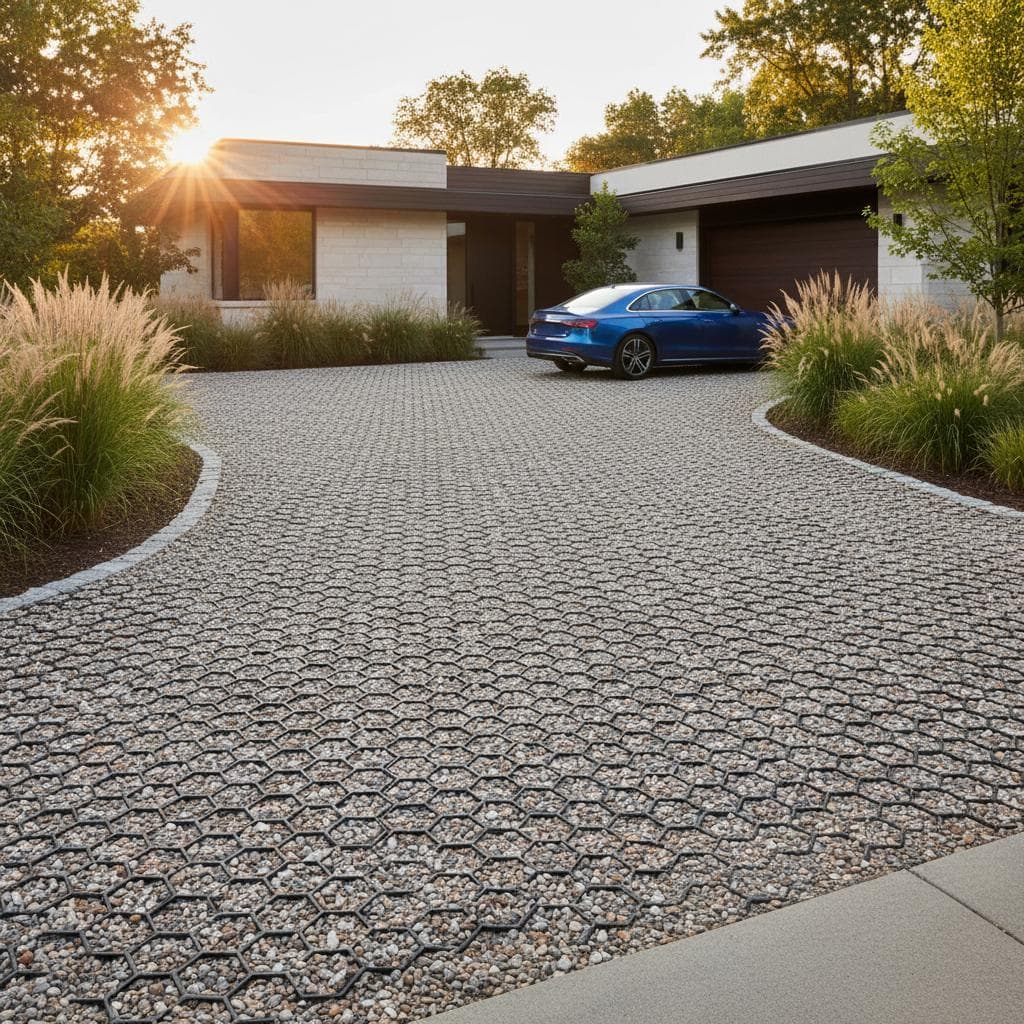
Gravel Grids: A Modern Solution for Stable Driveways
A driveway serves multiple roles beyond vehicle access. It shapes the home's entrance, manages water flow, and integrates with surrounding landscapes. In California and similar regions, property owners increasingly select gravel grids over conventional asphalt or concrete. This choice delivers the appeal of natural gravel alongside structural integrity for sustained performance and environmental benefits.
Gravel grids have evolved through advanced materials and installation techniques. They secure gravel in place while permitting water infiltration into the soil. Homeowners gain a surface that withstands daily use, maintains its form, and aligns with sustainability objectives.
Key Advantages of Gravel Grids for Homeowners
Gravel grids address common driveway challenges by merging aesthetic gravel finishes with robust support. They preserve environmental health while ensuring practical functionality. The following points highlight primary benefits.
Enhanced Drainage and Erosion Control
Solid surfaces like concrete and asphalt repel water, leading to runoff that burdens drainage systems and erodes nearby soil. Gravel grids feature an open-cell design that captures rainfall and directs it underground. This process replenishes groundwater, minimizes flooding risks, and stabilizes the surrounding terrain, particularly in areas with intense seasonal rains.
Built for Lasting Strength
Loose gravel surfaces develop ruts from tire traffic, demanding regular reshaping and replenishment. Grids lock stones into position, distributing weight evenly across the base. Engineered to support loads from passenger cars to heavy vehicles like RVs, these systems resist deformation and extend service life without frequent interventions.
Adaptable Aesthetic Options
Gravel grids suit diverse home styles, from contemporary elevations to traditional estates. Select gravel in varied hues and sizes to match existing palettes, and incorporate borders like stone or metal for defined edges. The underlying grid remains concealed, yielding a seamless gravel appearance that enhances pathways or garden interfaces.
Sustainable Material Choices
Environmental considerations drive modern construction decisions. Gravel grids often incorporate recycled plastic components, which can be repurposed at the end of use. They avoid fossil fuel-derived materials, reflect more sunlight to lower urban heat, and foster soil vitality through natural water cycles, aiding compliance with green building standards.
Reduced Upkeep Expenses
Asphalt demands periodic sealing, and concrete prone to cracking incurs repair costs. Gravel grids require minimal effort, such as occasional raking to clear debris. The contained design limits gravel loss, preserving the surface integrity and yielding long-term savings in labor and materials.
Installing a Gravel Grid Driveway: A Practical Guide
Proper installation ensures optimal performance from a gravel grid system. Focus on site preparation, material layering, and precise alignment. Most projects suit DIY efforts or local contractors with basic tools.
Define and Measure the Layout
Outline the driveway using stakes and string lines to mark boundaries. Account for vehicle maneuvering space and natural drainage slopes. Aim for a minimum depth of six inches, encompassing sub-base, grid, and gravel layers to accommodate standard loads.
Excavate and Build the Foundation
Clear organic material and excavate to the required depth. Spread and compact a layer of crushed aggregate, such as 4-inch minus gravel, using a mechanical tamper. Increase base thickness to eight inches for high-traffic areas to bolster stability against settling.
Place the Geotextile Barrier
Roll out a non-woven geotextile fabric over the compacted base. This barrier inhibits weed penetration and soil migration while maintaining water permeability. Overlap seams by six inches and secure with landscape pins.
Assemble the Grid Panels
Align grid sections atop the fabric, snapping connectors into place per manufacturer guidelines. Check levels frequently to establish a slight crown for runoff. Cut panels with a reciprocating saw to navigate irregular shapes or boundaries.
Load the Cells with Gravel
Pour angular gravel, sized 3/8 to 5/8 inch, into each cell, filling to the top. Angular particles interlock for superior stability over rounded varieties. Rake evenly and vibrate the surface to settle the material without air pockets.
Final Compaction and Edging
Pass a plate compactor over the filled grids in multiple directions to achieve a firm bond. Install perimeter restraints, such as aluminum edging or concrete curbs, to contain the gravel. Perform a final leveling rake for a uniform, professional appearance.
Adapting to Local Climate and Site Conditions
California's varied weather patterns emphasize the need for effective water handling. Gravel grids facilitate on-site infiltration, aligning with regulations on stormwater control and reducing reliance on public sewers. This approach conserves resources in water-scarce locales.
Gravel surfaces absorb less heat than dark pavements, moderating temperatures around living areas. They also retain moisture for adjacent vegetation, supporting drought-resistant plant selections. Integrate grids with bioswales or permeable borders to amplify ecological advantages.
Coordinating with Overall Landscape Elements
Driveways link to patios, paths, and planting zones, demanding cohesive design. Gravel grids pair well with similar permeable features, such as grid-stabilized walkways. Match gravel selections across elements to unify the outdoor composition.
Strategic edging reinforces transitions between hardscapes and softscapes. Add solar-powered fixtures along edges to illuminate gravel textures during evening use. In California's temperate zones, these enhancements promote safe, inviting exteriors year-round.
Ensuring Long-Term Driveway Performance
Routine care sustains the functionality of gravel grid installations. Remove accumulated leaves or dirt with a stiff broom to preserve drainage capacity. Replenish gravel in worn spots, targeting high-wear zones like entry points, to maintain even coverage.
Address emerging weeds through manual pulling or vinegar-based treatments, relying on the underlying fabric for primary suppression. After storms, verify slope integrity and redistribute any displaced material. Annual edge inspections prevent shifts that could undermine stability.
Schedule gravel resurfacing every three to five years, applying a thin layer to refresh vibrancy. These practices extend the driveway's lifespan, often exceeding 20 years with consistent attention.
Realizing the Full Value of Gravel Grids
A gravel grid driveway elevates daily property interactions. It welcomes arrivals with a textured, grounded presence that harmonizes with natural surroundings. This design choice fulfills utilitarian needs while advancing ecological stewardship.
For California residents balancing aesthetics, utility, and sustainability, gravel grids provide enduring reliability. They adapt to evolving landscapes, whether through initial builds or targeted updates, securing both immediate satisfaction and future resilience.