
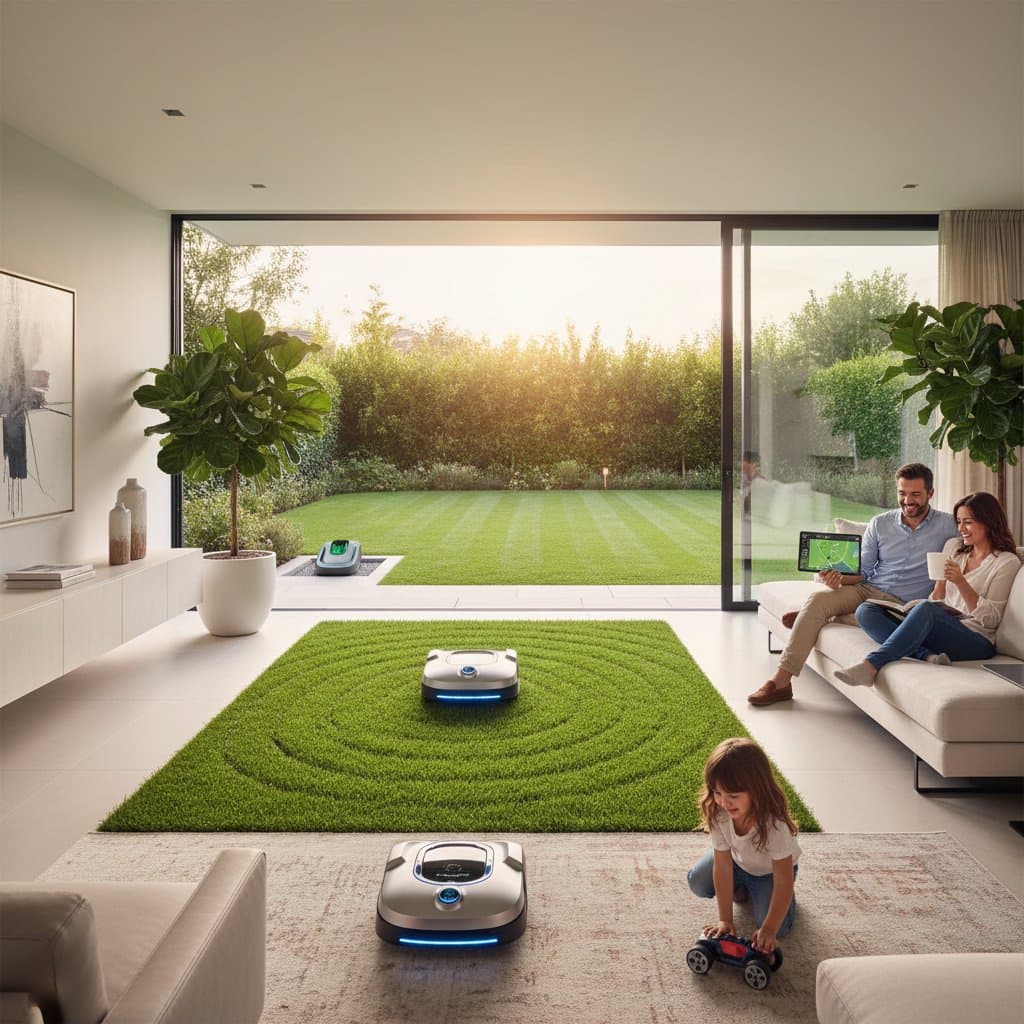
Smart Robotic Mowers Reduce Lawn Care Costs by 60 Percent
For Mark and Elena Cruz, maintaining their half-acre yard meant dedicating weekends to mowing, edging, and cleanup. These tasks not only drained their time but also added significant expenses to their monthly budget. Seeking a better approach, they invested in a smart robotic mower system that automated the process while preserving a healthy, attractive lawn.
After installation, the Cruzes observed immediate benefits: reduced water consumption, lower ongoing costs, and a yard that stayed neatly trimmed without daily oversight.
Shifting to Automated Lawn Maintenance
Previously, the Cruzes relied on a weekly professional mowing service and managed their own irrigation. These efforts cost them several hundred dollars monthly, driven by labor fees, fuel for occasional manual mowing, and inefficient watering practices. The robotic mower disrupted this cycle entirely.
Their Husqvarna Automower 435X AWD navigates the property multiple times weekly with quiet precision. All-wheel drive conquers slopes up to 70 percent grade and irregular terrain, while integrated sensors identify boundaries, avoid obstacles, and respond to rain or frost.
"We set it up once, and now it operates independently," Mark noted. "Mowing blends into our routine without any hassle."
Through a companion app, users customize schedules, blade heights from 0.8 to 2.4 inches, and operational hours. The system syncs with weather forecasts to pause during wet conditions and coordinates with smart irrigation to prevent overwatering.
Key Components of the System
The Cruzes' installation features these essential elements:
- Mower unit: A compact, battery-operated device with razor-sharp mulching blades, GPS for positioning, and ultrasonic sensors for obstacle detection.
- Docking station: A weatherproof base that the mower locates and returns to autonomously for recharging.
- Boundary wires: Thin cables laid 1 to 2 inches underground to mark the mowing zone and provide navigation signals back to the station.
Advanced models employ GPS and cellular mapping for wire-free operation, ideal for open layouts. However, wire systems excel in complex yards with trees, shrubs, or elevation changes.
Batteries support 2 to 3 hours of runtime per charge, with full recharges in 60 minutes. The mower resumes mowing immediately after docking, ensuring comprehensive coverage.
Power usage stays low: one full session equates to about 0.5 kilowatt-hours, far less than the 1.5 kilowatt-hours for a gas mower's equivalent time. This efficiency, paired with no fuel needs, drives substantial long-term savings.
Calculating the Savings
Prior to automation, the Cruzes' yearly lawn budget covered:
- Professional service at $50 per visit, totaling $2,600 annually.
- Fuel and maintenance for backup manual mowing.
- Fertilizer applications and weed treatments.
- Excess water from mistimed irrigation.
The robotic mower transformed these figures. Its mulching function recycles clippings as natural fertilizer, cutting chemical needs by 50 percent. App-controlled irrigation reduced water bills by 30 percent through targeted scheduling.
Eliminating service fees provided the biggest gain. After accounting for $100 yearly electricity and $50 for blade replacements, overall expenses declined by 60 percent in the first year.
Prospective buyers should tally total ownership costs, including a $2,500 initial purchase. With 10-year durability and negligible repairs, the system outperforms traditional methods financially within three seasons.
Balancing Functionality and Aesthetics
The automated routine delivers a lawn with even growth and no wheel marks, thanks to the mower's irregular pathing algorithm. Grass stays at a uniform height, promoting denser turf without bare patches.
Environmentally, the electric design produces zero emissions and operates below 60 decibels, quieter than a conversation. The Cruzes' pets adapted swiftly, treating the mower as unremarkable yard furniture.
Landscape architect Laura Chen of GreenEdge emphasized integration: "We positioned the station amid foliage for invisibility and selected a low-profile model that complements natural surroundings."
Building a Connected Yard Ecosystem
Robotic mowing serves as an entry to broader automation. The Cruzes next added soil sensors to monitor moisture levels and automated LED path lights.
A unified app oversees all devices: the mower signals when to irrigate based on cut grass evaporation, while lights trigger on motion after dusk. This setup optimizes resources across the property.
Coordinated operations lower energy use by 20 percent and foster resilient landscapes through data-driven care, such as adjusting cuts during dry spells to conserve soil health.
Integrating Automation into Daily Life
Several months in, the Cruzes view their mower as a seamless household asset. It completes cycles before dawn, docking silently as they start their day. The yard thrives without crew visits or equipment storage.
"Reclaiming those weekends changed everything," Elena shared. "We host barbecues or garden without the dread of upkeep."
For others considering this upgrade, the Cruzes' experience highlights practical steps: assess yard size and terrain, select a model with app controls, and plan for wire installation. These systems suit diverse properties, from small city plots to larger estates, evolving with software updates for enhanced performance.
Automation elevates lawn care to a sustainable practice that minimizes effort and maximizes enjoyment, delivering returns in saved time and resources.