
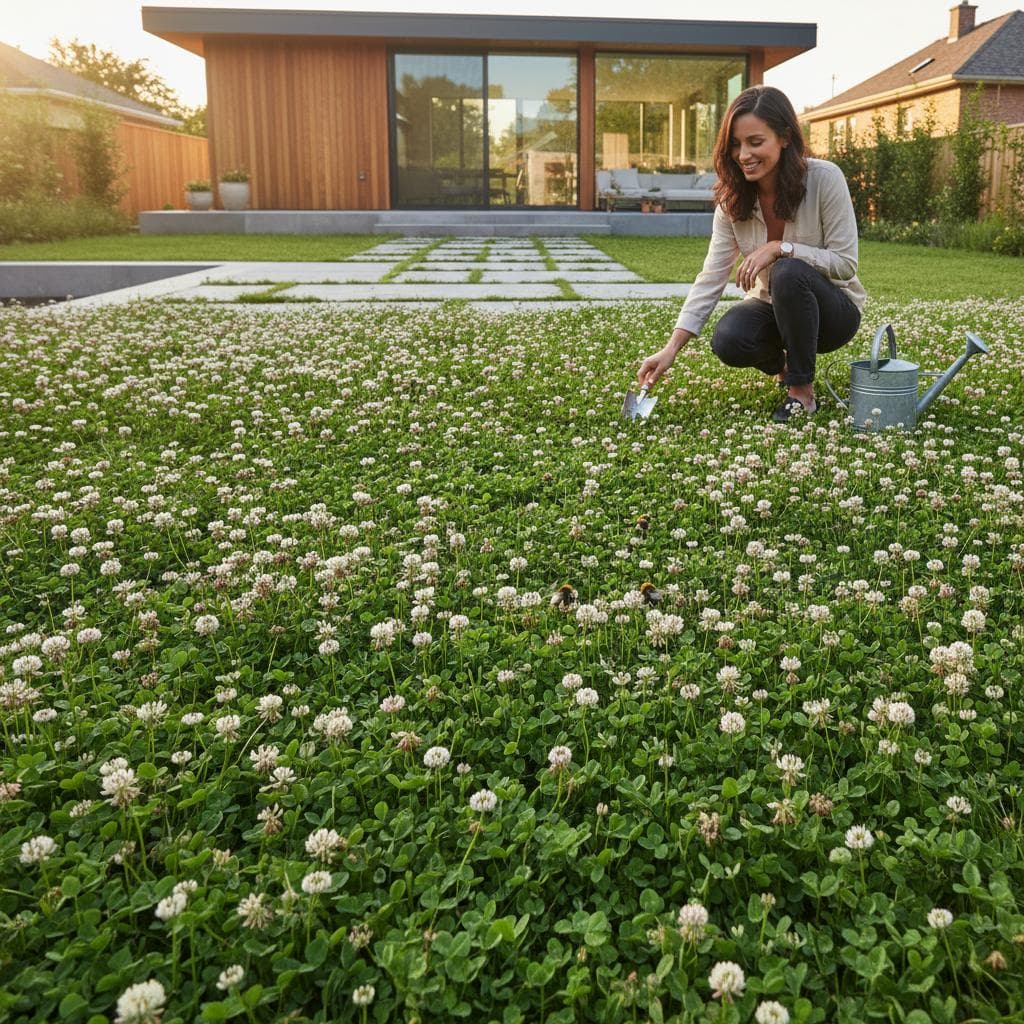
Ditch the Mower: Clover Lawns Enter the Mainstream
When Erin and Mateo decided to rework their suburban front yard, their goal was simple. They wanted a space that felt green and alive without the constant hum of a mower or the pressure of weekly watering. What they created instead was a thick, soft carpet of clover that draws bees, stays green through dry spells, and needs almost no maintenance.
Their project is part of a growing movement among homeowners who are rethinking what a lawn can be. Clover, once dismissed as a weed, is quickly proving itself as a resilient, practical, and surprisingly elegant alternative to traditional grass.
A New Kind of Lawn
The first impression when walking onto Erin and Mateo's property is the texture. The clover lawn feels soft underfoot, almost cushiony, with small round leaves that catch the light. It is not perfectly uniform, and that is the appeal. There are subtle color shifts, tiny white blossoms, and an easy, natural rhythm that contrasts with the clipped precision of a grass yard.
Ruiz explains her clients' motivation clearly. "They were tired of spending weekends mowing and fighting brown patches. They wanted something alive, but also forgiving," she said. "Clover gave them both."
Microclover, a smaller-leaved variety of white clover, forms the foundation of the design. It stays low, rarely exceeding six inches, and fills gaps quickly. Erin and Mateo's mix includes a small percentage of fescue for added softness, but the clover dominates. The result is a yard that looks intentional rather than neglected, thriving without constant attention.
From Seed to Green
The installation process was straightforward but deliberate. Ruiz began by removing the existing turf and lightly tilling the soil to about two inches deep. She incorporated compost for organic matter and evened the surface before broadcasting seed by hand. A gentle watering schedule followed for the first few weeks, then rain took over.
Within a month, the clover had filled in with a low, even texture. By the end of the first season, it formed a dense green mat that never needed mowing. Erin recalls, "We kept waiting for it to look patchy or sparse, but it just kept getting thicker. It surprised us how quickly it settled in."
No irrigation system was added. The family waters occasionally during long dry periods but otherwise leaves the lawn alone. The soil stays cooler, which helps the clover maintain its color and vitality.
Design Choices That Matter
1. Choosing Microclover Over Standard Clover
Microclover was selected for its smaller leaves and denser growth habit. It stays low and resists flowering excessively, which keeps the yard tidy. Standard white clover can grow taller and produce more blooms, which some homeowners prefer for pollinators but can appear unkempt in urban settings.
Ruiz explains, "Microclover gives you the green coverage and ecological benefits without looking wild. It is a great fit for neighborhoods where appearance still matters."
2. Defining Edges for Structure
One of the challenges with clover lawns is that their relaxed texture can spill into paths or planting beds. Ruiz used recycled-steel edging to create crisp lines around the borders. The dark metal contrasts beautifully with the bright green leaves and prevents the clover from creeping where it is not wanted.
3. Blending with Perennials
Instead of treating the clover as a separate feature, Ruiz integrated it with low perennials and groundcovers. Plants such as creeping thyme, blue fescue, and yarrow blend seamlessly and extend the flowering season. This mix supports pollinators almost year-round while maintaining a cohesive look.
4. Minimizing Irrigation
Clover's drought tolerance meant the irrigation plan could be minimal. Drip lines were installed only for the border plantings. The main expanse relies on natural rainfall, which reduces costs and maintenance. The result is a yard that feels lush but works with the local climate rather than against it.
Maintenance Simplified
The care routine for a clover lawn is refreshingly short. Ruiz outlines it as follows:
- Mowing: Optional, once or twice a year if a more manicured look is desired.
- Watering: Only during extended dry periods.
- Fertilizing: Not needed due to nitrogen fixation.
- Weeding: Minimal, as the dense growth suppresses most weeds naturally.
- Reseeding: Light overseeding every few years can refresh coverage.
Erin appreciates the simplicity. "We used to spend hours adjusting sprinklers and fighting crabgrass. Now we just watch the bees and enjoy the yard."
Environmental Benefits
The ecological value of clover lawns extends beyond convenience. The reduction in fertilizer and pesticide use protects groundwater and supports biodiversity. Clover flowers attract bees and butterflies, helping sustain local pollinator populations.
Ruiz notes that homeowners often overlook how much water traditional lawns consume. "Even a small reduction in watering makes a difference," she said. "When you multiply that across a neighborhood, the savings are huge."
Clover's ability to improve soil health also benefits adjacent plantings. Over time, its root system increases organic matter and aeration, which supports trees and shrubs nearby.
Visual Appeal and Seasonal Shifts
Clover's color holds steady through most of the year, with subtle tonal shifts that respond to light and weather. The small white blooms appear in waves, creating a gentle sparkle across the yard. Ruiz sometimes mows lightly during peak bloom to keep the texture consistent without removing all flowers.
The visual softness works well with both modern and traditional architecture. Erin and Mateo's mid-century home gains warmth from the natural look, while the clean edges keep it polished. "It feels alive, not manicured," Erin said. "That is what we love most."
Overcoming Misconceptions
Despite its benefits, some neighbors initially questioned the choice. Clover had long been labeled a weed, a reputation left over from older lawn-care marketing. Ruiz sees that perception fading quickly. "Once people see how even and green it stays, they start asking about it. The stigma disappears when they realize it is intentional."
Another concern is bee activity, especially for families with small children. Ruiz often suggests microclover for this reason, since it produces fewer blooms. For homeowners who still worry, mowing during heavy bloom periods can manage flower numbers without harming the plants.
Cost and Longevity
Clover lawns typically cost less to install than sod, especially when seeded directly. The long-term savings come from reduced irrigation, fertilizer, and mowing. Ruiz estimates that maintenance costs drop by more than half after the first season.
The plants self-renew, meaning the coverage improves over time rather than diminishing. Occasional overseeding can fill thin spots, but there is no need for full replacement. This makes clover suitable for both small urban yards and larger rural properties.
Living with Your Design
For those considering the switch, start small. Replace a side yard or a patch near the driveway to see how it performs. Once established, the benefits become hard to ignore. Clover lawns deliver enduring value through time savings, environmental gains, and a vibrant outdoor space that enhances daily life.