
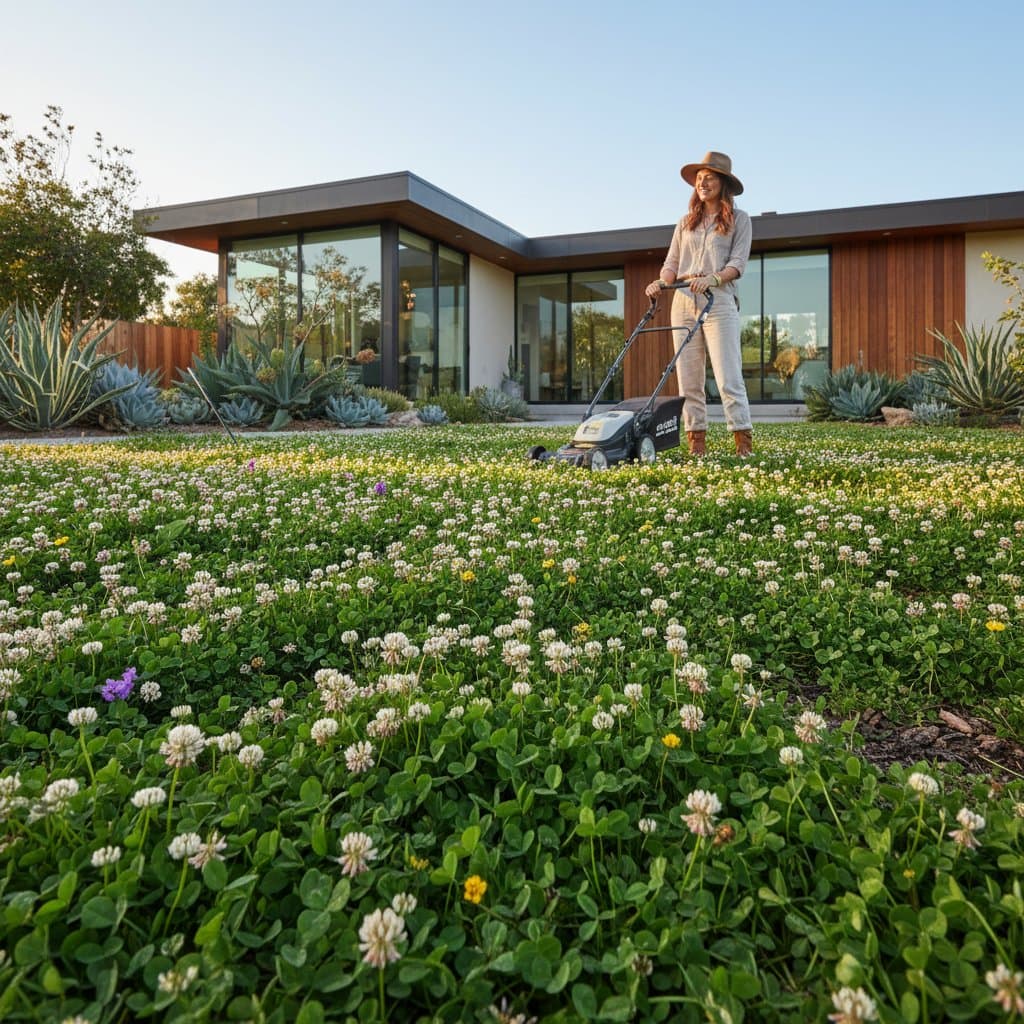
Clover Lawns: The 2025 Shift Toward Low-Maintenance Turf
Homeowners seek vibrant green lawns that endure dry spells with minimal effort. Clover lawns deliver this reality across California and other regions. This resilient plant combines aesthetic appeal with practical benefits, including soft texture, drought tolerance, and inherent soil enrichment. Clover emerges as an ideal option for those balancing beauty, durability, and reduced upkeep.
The Resurgence of Clover in Modern Lawns
Clover once featured prominently in lawn seed blends until herbicides diminished its presence. Environmental imperatives and cost efficiencies now drive its revival. Clover demands significantly less water than conventional turfgrass and maintains vitality in suboptimal soils while naturally supplying nitrogen. These attributes translate to reduced fertilizer applications, fewer weed issues, and a diminished environmental impact. In water-scarce areas like California, clover aligns seamlessly with priorities for conservation and resource efficiency.
Understanding the Biology of Clover Lawns
As a member of the legume family, clover partners with soil bacteria to capture atmospheric nitrogen. This symbiotic process nourishes surrounding vegetation and minimizes reliance on artificial fertilizers. The plant's extensive root system enhances soil aeration and bolsters resistance to drought. Established clover retains its green hue well beyond the point where traditional grass fades.
Several clover varieties suit lawn applications. White Dutch clover stands out for its popularity, creating a dense, low-profile mat that withstands moderate foot traffic and regular mowing. Microclover, with its finer leaves, integrates smoothly into grass blends for a conventional aesthetic while preserving core advantages. Select based on visual preferences and intended usage intensity.
Advantages Extending Past Simplified Care
Clover lawns provide more than convenience; they yield measurable gains for users and ecosystems alike.
- Water Conservation: Deep roots enable clover to draw from lower soil layers inaccessible to grass, supporting infrequent irrigation schedules in arid environments.
- Chemical Reduction: Natural nitrogen fixation eliminates most fertilizer needs, and clover's competitive growth suppresses weeds, curtailing herbicide use.
- Comfortable Surface: Clover remains cool and plush underfoot during warm periods, offering a welcoming play area for children and animals.
- Biodiversity Enhancement: Flowering clover draws bees and pollinators, fostering ecological diversity within the yard.
- Financial Efficiency: Decreased water and product expenses ensure rapid return on investment.
Strategic mowing further eases routines. Many owners trim clover sections just a handful of times annually, preserving neatness while permitting periodic blooms.
Planning a Clover Lawn for Optimal Integration
Switching to clover from standard turf requires deliberate preparation. Determine if a full clover expanse or a clover-grass hybrid best suits the area. Pure clover yields a consistent, verdant cover adaptable to full sun or partial shade. Hybrids deliver a grass-like facade infused with clover's ecological perks.
Soil preparation forms the foundation. Eliminate competing weeds and grass through manual removal or smothering methods. Rake the surface lightly to ensure seed-soil contact, then broadcast seeds at a rate of 2 to 4 ounces per 1,000 square feet for white clover or adjust for microclover per package guidelines. Initiate with light, consistent watering to promote sprouting, maintaining moisture for the first two to three weeks until seedlings root firmly. Mature clover sustains itself through basic oversight.
For expansive properties, segment the yard into functional zones. Deploy clover in prominent or lightly used sections, reserving durable alternatives like gravel paths or robust groundcovers for high-traffic zones. This zoning strategy yields a dynamic, multifunctional layout.
Addressing Typical Hesitations
Potential adopters often question clover's appearance or its appeal to insects. These issues resolve through informed design choices. Clover's vivid green tones and delicate foliage impart a fresh, organic vibe. For seamless blending, incorporate microclover into existing turf.
Regarding pollinators, schedule mowing to precede full bloom cycles or designate small bloom zones to harmonize visual appeal with ecological support. Durability concerns also surface, as clover endures average use but may sparse in heavily trafficked spots. Install stone paths or reinforce with wear-resistant plants to safeguard coverage and maintain allure.
Incorporating Clover into California Settings
Clover complements the California emphasis on versatile outdoor areas for leisure and socializing. Its modest water profile addresses ongoing drought challenges, and persistent greenery pairs well with drought-adapted flora. Combine with ornamental grasses, succulents, or local wildflowers to forge a unified, enduring composition.
Coastal properties benefit from clover's tolerance to saline conditions, thriving amid sea breezes. Interior regions see success in varied soils, from heavy clays to loose sands, where grass often falters. As a complete substitute or targeted element, clover advances climate-resilient designs.
Streamlining Clover Lawn Upkeep
Established clover demands sparse intervention for vigor. Mow to a height of 2 to 3 inches every 4 to 6 weeks, depending on growth. Irrigate deeply yet sparingly, aiming for 1 inch per week during establishment and less thereafter to promote root depth. Steer clear of synthetic fertilizers, which disrupt the nitrogen-fixing microbes; apply organic matter sparingly if soil tests indicate deficiencies.
Weeds diminish naturally over time, but manual extraction addresses any persistents seasonally. To rejuvenate thinning areas, overseed in early spring or fall by scattering fresh seeds and lightly raking them in, followed by gentle watering.
Building Resilient Landscapes with Clover
Clover lawns signal a broader movement toward efficient, earth-friendly exteriors. They enable homeowners to merge visual charm with ecological stewardship. Clover conserves resources, minimizes pollutants, and nurtures wildlife habitats, all while forming a durable, inviting ground plane.
Embrace clover to cultivate a yard that evolves with environmental needs. This approach ensures sustained vitality, cost savings, and a deeper connection to natural systems, transforming everyday spaces into models of thoughtful design.