
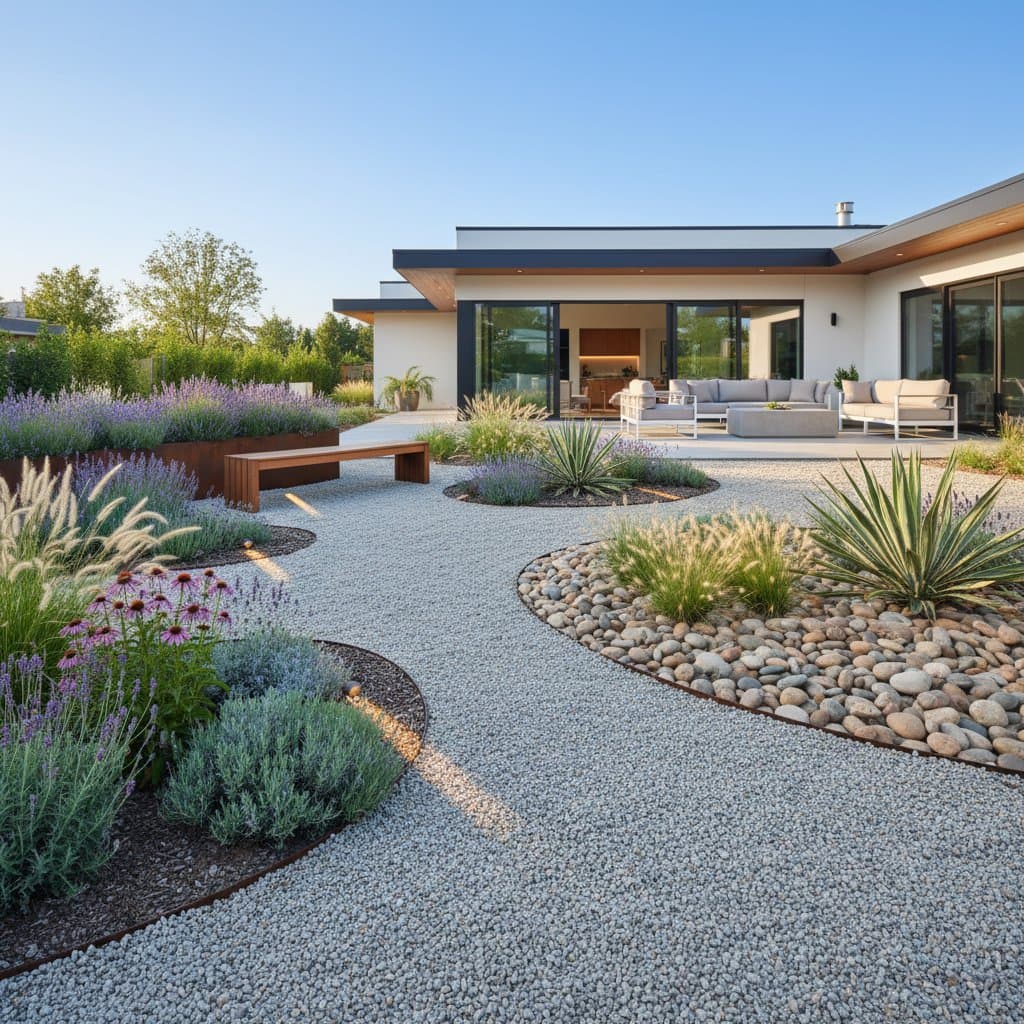
Designing Gravel Gardens: Reduce Maintenance by 70 Percent by 2026
Gravel gardens represent a shift in sustainable landscaping practices for homeowners and professionals alike. These designs require less frequent watering, eliminate mowing demands, and maintain visual appeal across seasons. They demonstrate that a yard with reduced upkeep can remain intentionally crafted and vibrant.
A gravel garden achieves harmony between form and fluidity. Plants flourish in the well-draining medium, while the gravel provides texture and subtle color variations. The outcome is an organic-looking landscape that aligns with contemporary lifestyles and significantly lowers time spent on care.
Key Benefits Overview
- Adaptability: Suited to dry or temperate regions, from compact patios to expansive yards.
- Scale: Flexible for urban balconies or suburban plots.
- Climate Suitability: Ideal for areas with variable rainfall or periodic droughts.
- Primary Objective: Achieve up to 70 percent less maintenance while preserving aesthetic depth.
1. Plan the Layout and Select Gravel
Effective gravel gardens begin with thoughtful site preparation and material choices. Define zones for pathways, planting beds, and seating areas to guide foot traffic and highlight focal points. Opt for angular gravel in sizes from 3/8 inch to 3/4 inch, which locks together for stability without compacting into mud.
Landscape architects emphasize that clear zoning prevents overgrowth and simplifies access. Select gravel colors that complement local stone or soil tones, such as pea gravel for a softer look or crushed rock for sharper definition. This foundation ensures durability and ease of future adjustments.
Practical Advantage: Establishes boundaries that curb weed invasion and erosion.
Design Tip: Sketch a simple diagram to allocate space, leaving room for plants to expand without crowding.
Illustration: In a 20-by-30-foot backyard, allocate 40 percent to gravel paths, 50 percent to planted zones, and 10 percent to a central gathering spot.
2. Select Drought-Tolerant Plants
Choosing appropriate vegetation allows a gravel garden to succeed with minimal supplemental irrigation. Prioritize perennials and ornamental grasses that tolerate poor soils, including lavender for fragrance, salvia for bold blooms, and thyme for ground cover. Incorporate native varieties, which establish rapidly and demand scant intervention post-planting.
Experts note that species adapted to harsh environments reciprocate with robust performance and low needs. Pair fine-leaved grasses with fuller perennials to generate movement and depth. This selection sustains interest from spring flowers to autumn seed heads.
Practical Advantage: Lowers water consumption and pruning requirements.
Design Tip: Arrange plants in drifts of three to five for natural flow, varying heights from 12 inches to four feet.
Illustration: Integrate blue fescue for silvery tufts, Russian sage for lavender spikes, and yarrow for flat golden clusters, forming a layered palette.
3. Apply Gravel Mulch for Soil Protection
Spread a 2-to-4-inch layer of gravel over landscape fabric to shield soil from extremes and inhibit weeds. This barrier retains moisture during rains while permitting excess to drain away, fostering healthy root development. Refresh the surface annually to maintain even coverage and appearance.
Horticulturists recommend this method to mimic natural arid ecosystems, where mulch mimics fallen debris. It reduces evaporation and stabilizes temperatures, benefiting plant vitality in fluctuating weather.
Practical Advantage: Suppresses unwanted growth and preserves soil integrity.
Design Tip: Edge beds with metal or wood borders to contain gravel and define shapes cleanly.
Illustration: Cover a salvia border with 3/8-inch granite chips, creating a uniform base that contrasts with emerging green foliage.
4. Mix Hard and Soft Elements
Balance the garden by integrating rigid features with organic ones. Combine gravel with elements like flagstone pavers for walkways, wooden seats for rest, or rusted steel planters for modern accents. These additions provide structure amid the garden's fluidity.
Designers observe that deliberate contrasts elevate gravel gardens from utilitarian to artistic. Repeat motifs, such as rounded stones echoing gravel curves, to unify the composition. Limit hardscape to essential pieces to avoid overwhelming the space.
Practical Advantage: Offers stable surfaces and enduring focal points.
Design Tip: Position benches at intersections of paths to encourage pauses and views.
Illustration: Place a corten steel obelisk amid ornamental grasses, its patina blending with nearby gravel tones while grasses sway softly around it.
5. Layer Lighting for Extended Use
Illuminate the garden to extend its usability into evenings. Gravel's reflective quality diffuses light gently, accentuating surfaces and ensuring safe navigation. Install low-voltage LED systems with 2700K bulbs for a warm, ambient effect.
Lighting specialists advise multi-level approaches to avoid uniformity. Position fixtures to skim across gravel rather than beam straight down, revealing subtle patterns. This setup enhances safety and mood without excessive energy use.
Practical Advantage: Prolongs access and highlights nighttime textures.
Design Tip: Use timers or sensors for automatic activation at dusk.
Illustration: Line a thyme-bordered path with solar bollards, while uplights accentuate olive tree canopies, casting elongated shadows over the gravel.
6. Water and Feed Strategically
Established gravel gardens require infrequent, deep watering to promote strong roots. Apply water slowly to penetrate 6 to 12 inches into the soil, ideally in the early morning to minimize loss. Use subsurface drip systems to deliver moisture directly to roots.
Specialists caution against over-fertilizing, as nutrient-rich soil encourages weak, high-maintenance growth. Rely on compost at planting, then allow natural cycles to sustain the plants. This restraint builds resilience against drought and pests.
Practical Advantage: Builds drought resistance and cuts routine tasks.
Design Tip: Monitor soil moisture with simple probes to water only when necessary.
Illustration: Install a soaker hose under a yarrow patch, running it for 30 minutes weekly during the first summer, then tapering off.
Sustaining and Enjoying Your Gravel Garden
Over time, a gravel garden matures into a cohesive, evolving feature. Plants fill in gaps, gravel weathers to a patina, and the overall design gains depth. Maintenance routines simplify to occasional weeding and surface raking, often halving efforts compared to traditional setups.
This style promotes mindful outdoor engagement through sensory elements like rustling leaves and crunching paths. It supports biodiversity, attracting pollinators to the resilient flora. Homeowners gain a space that rewards observation more than labor, fostering lasting satisfaction.