
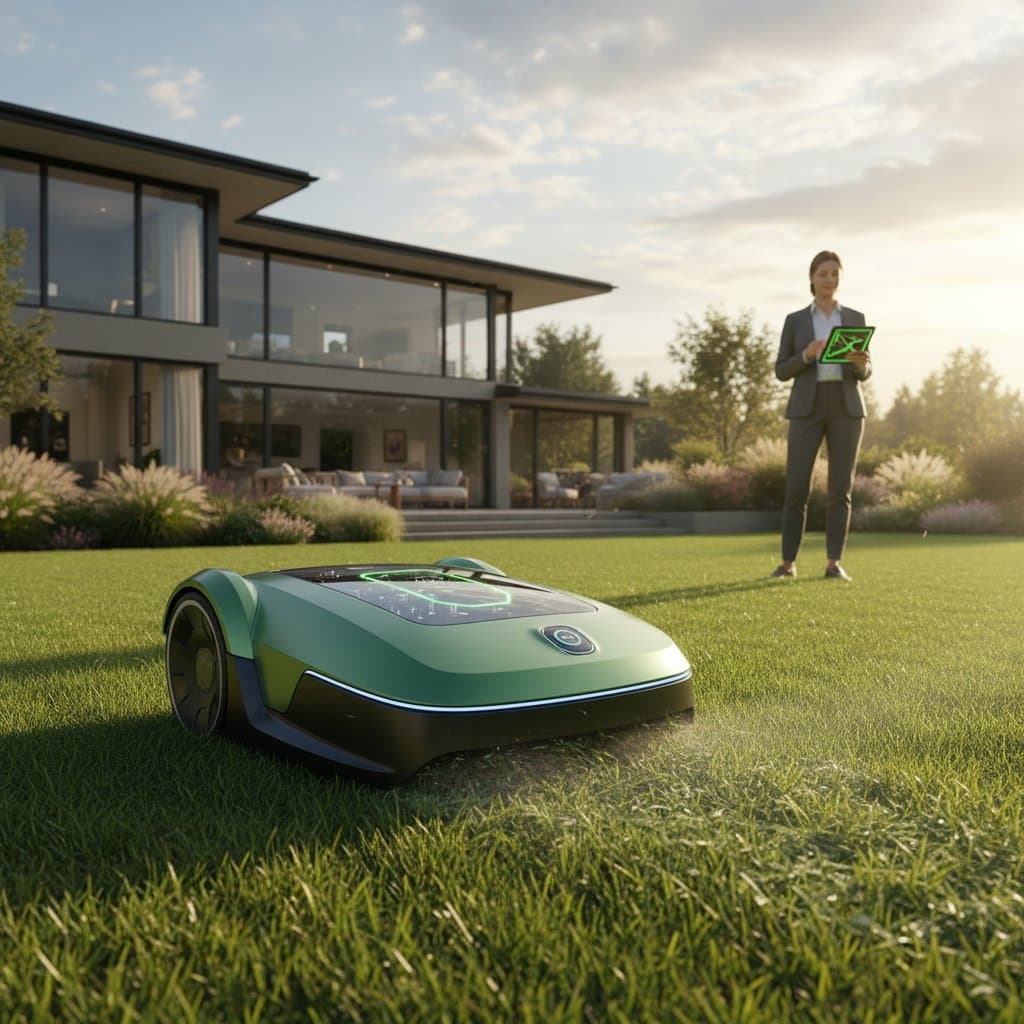
The Emergence of AI Mowers in Modern Lawn Management
Property owners increasingly seek efficient methods to maintain their outdoor spaces. Traditional mowing demands significant time and physical effort, often leading to inconsistent results. AI-powered robotic mowers address these challenges by integrating advanced technology for precise, automated care. This innovation delivers uniform lawn coverage, reduces manual intervention, and enhances overall yard vitality.
These devices navigate yards using sensors and algorithms to map boundaries and obstacles. They operate during optimal times, such as early mornings or evenings, to minimize disruption. The outcome includes healthier grass growth and a more inviting landscape with far less owner involvement.
Key Features for Effective Deployment
Suitable Locations: Ideal for suburban yards and rural settings with defined boundaries.
Recommended Lawn Sizes: Effective on areas ranging from compact patios to properties up to half an acre.
Adaptable Climates: Performs well in temperate zones and arid environments with proper setup.
Primary Objectives: Automate routine tasks to foster lawn resilience and eliminate weekly manual efforts.
Users benefit from models that include boundary wires or virtual perimeters for safe operation. Initial installation requires mapping the yard, a process that takes under an hour for most setups. Once configured, the mower returns to a charging station automatically after each session.
Sustainable Practices Through Frequent Trimming
AI mowers employ a strategy of regular, light cuts rather than infrequent heavy mowing. This approach leaves clippings on the lawn, where they decompose into natural nutrients that enrich the soil. Over multiple cycles, this method builds stronger root systems and decreases reliance on chemical fertilizers.
Landscape professionals emphasize the value of this technique. One technician noted, “Frequent micro-cuts keep grass blades short enough to self-feed, which prevents thatch buildup.” Select units with customizable height settings to match grass varieties like Kentucky bluegrass or zoysia. During spring growth spurts, set the blade lower for denser turf; in summer, raise it to conserve moisture.
This practice not only sustains the lawn but also conserves water. Healthier soil retains moisture better, reducing irrigation needs by up to 30 percent in many cases. Homeowners observe thicker, greener patches that resist pests and weeds more effectively.
Visual Suggestion: Imagine a lawn bathed in evening light, displaying smooth, uniform texture from consistent automated care.
Advanced Connectivity for Informed Oversight
Contemporary AI mowers link seamlessly to smartphones via dedicated applications. Owners schedule sessions, define no-mow zones around flower beds or play areas, and receive notifications on battery status or completion times. Integration with broader smart home ecosystems allows coordination with weather forecasts or lighting controls.
Such features provide actionable insights into yard conditions. The app might display moisture levels or growth patterns, enabling precise adjustments to watering schedules. A horticultural expert commented, “Integrating mowing data with irrigation control creates a balanced routine that keeps lawns green without waste.”
For families with pets or children, safety protocols ensure the mower pauses if it detects movement. Remote access proves invaluable during vacations, as users monitor and tweak operations from afar. This level of control transforms lawn care from a chore into a managed, data-driven process.
Visual Suggestion: A mobile interface reveals a digital yard map, highlighting recent paths and upcoming schedules in vivid detail.
Selecting and Maintaining Your AI Mower
Choosing the right model involves assessing yard complexity and desired features. Entry-level options suit flat, simple layouts, while advanced units handle slopes up to 20 degrees and integrate GPS for larger properties. Budget considerations range from basic models under $800 to premium versions exceeding $2,000 with anti-theft tracking.
Maintenance remains straightforward. Clean the undercarriage weekly to remove debris, and sharpen blades annually through manufacturer services. Replace batteries every few seasons to sustain performance. These steps ensure longevity, often spanning five years or more with proper care.
Test the mower in sections of the yard during the first week to refine boundary settings. Consult local guidelines on noise levels or placement near property lines. With these preparations, integration into daily life becomes seamless.
Embracing Automated Landscapes for Lasting Benefits
AI mowers liberate owners from seasonal drudgery, allowing focus on enjoyment rather than upkeep. Lawns flourish under consistent attention, yielding spaces that enhance property value and curb appeal. Professionals and residents alike appreciate the shift to efficient, eco-conscious management. This technology paves the way for vibrant, low-maintenance outdoor havens that align with contemporary living demands.