
The Rise of Zero-Maintenance Gravel Gardens in 2025
Homeowners often seek outdoor spaces that demand little effort yet deliver lasting appeal. Mark and Lena faced this challenge on their hillside property, where a patchy lawn required constant attention. Landscape architect Julia Tran proposed a gravel garden solution, transforming the area into a resilient landscape that harmonizes with the environment.
This design replaces traditional turf with layers of gravel, drought-tolerant plants, and strategic hardscaping. The result offers year-round elegance without the need for frequent watering or mowing. Such gardens align with 2025 trends toward sustainable, low-effort outdoor living.
Designing in Harmony with the Environment
Gravel gardens excel by embracing local conditions rather than resisting them. They feature structured layouts that incorporate spontaneity through plant placement and texture variations. Tran emphasized restraint in her project, selecting a limited palette of plants and gravel types to create cohesion.
The process starts with site preparation. Grade the soil to promote natural drainage, then install a geotextile fabric to block weeds while allowing water passage. Layer in five inches of crushed granite in mixed sizes to support plant roots and facilitate percolation.
This foundation suits species adapted to arid climates, such as those from Mediterranean or desert regions. The setup minimizes water use and prevents root rot, ensuring plants establish quickly.
Crafting Pathways and Transitional Areas
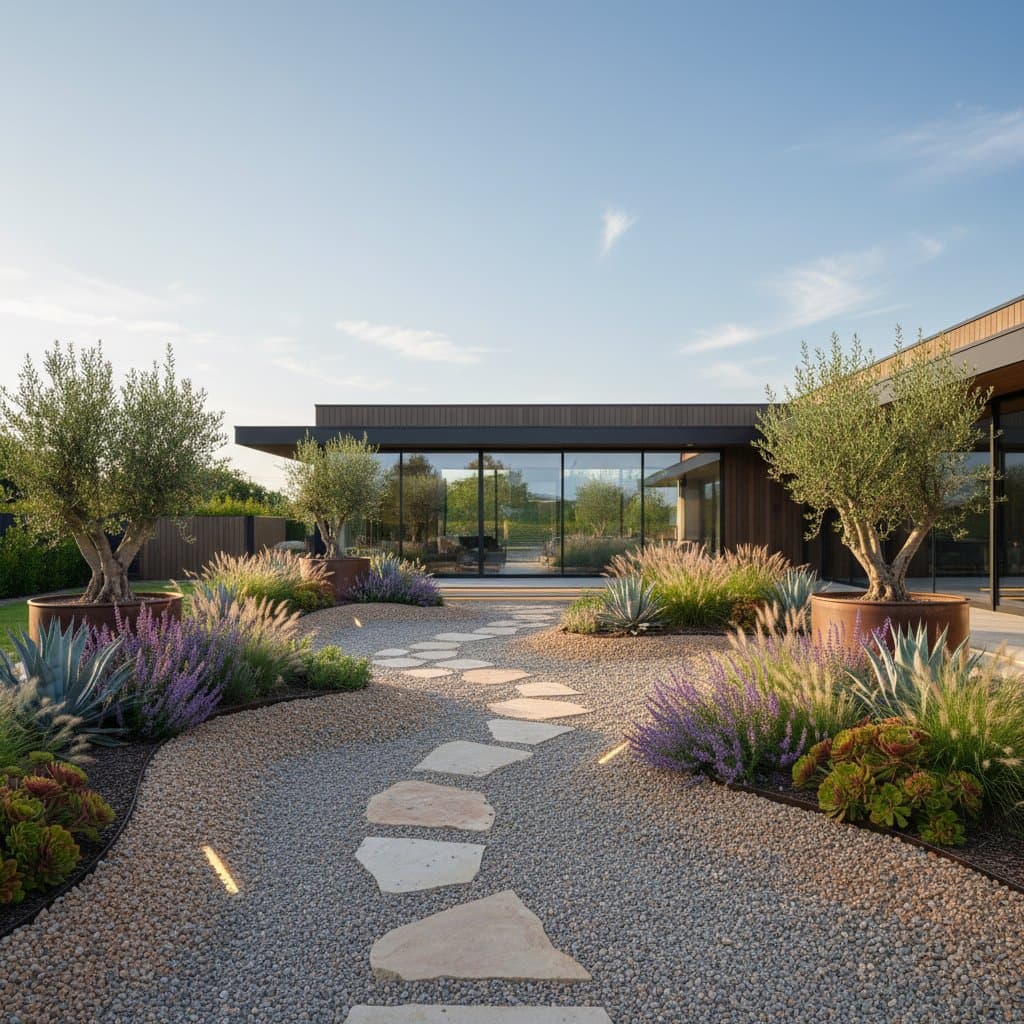
Poor drainage plagued the original side yard, leading to mud and erosion. The redesign introduced a gravel channel with flush-set flagstone pavers, forming a functional path that also captures rainwater. This multifunctional element directs flow while providing access.
Select plants that tolerate fluctuating moisture levels for these zones. For instance, Carex testacea offers feathery bronze foliage that sways in the breeze, while Dianella Little Rev provides strappy blue-green leaves and occasional purple blooms. Both thrive in partial shade and require no division for years.
Incorporate elevated steel planters for vertical interest. Plant Olea europaea Little Ollie in these containers, pruning it into soft spheres to mimic natural forms. The silvery foliage complements the gravel tones, maintaining a unified aesthetic across the space.
Tran advised seamless transitions between areas. Use consistent edging materials, such as corten steel borders, to link paths with planting beds. This approach prevents the garden from feeling disjointed.
Selecting Materials for Durability and Style
Gravel forms the backbone of these gardens, offering multiple benefits. It inhibits weed growth, stabilizes soil temperatures, and provides a neutral backdrop that highlights plant forms. Choose sizes strategically: 3/8-inch fine gravel for smooth walking surfaces and 1/2-inch coarser aggregates for planting areas to add depth.
Opt for locally sourced stones in earthy hues like grays, buffs, or subtle reds to blend with the surroundings. These materials weather gracefully, developing a patina that enhances maturity over time.
Pair gravel with complementary hardscape. Low retaining walls from reclaimed stone can define levels on sloped sites, while permeable pavers allow excess water to infiltrate the ground.
Implementing Simple Maintenance Routines
Low upkeep defines the appeal of gravel gardens. Rake away fallen debris periodically to avoid organic buildup that could foster weeds. Refresh the gravel surface every three to five years by adding a thin layer, which restores vibrancy without excavation.
Install a basic drip irrigation system on a timer. Deliver short bursts twice weekly during peak dry seasons, adjusting based on rainfall. In cooler months, deactivate the system entirely, relying on natural precipitation.
Monitor plants annually for signs of stress. Prune only to shape or remove dead growth; most selections self-regulate. This routine frees weekends for enjoyment rather than labor.
Tran recommends testing gravel samples in situ before full commitment. Observe how colors shift under different lighting to ensure harmony with your home's exterior.
Evolving and Expanding the Design
Gravel gardens mature gracefully, gaining depth as plants fill out and surfaces settle. Introduce subtle changes over time, such as interplanting with self-seeding natives like Erigeron karvinskianus for delicate white daisies. These additions evolve the space without overwhelming the original intent.
Begin implementation on a small scale. Transform a single bed or pathway first to assess performance. Note how drainage patterns emerge and adjust plant positions accordingly.
Scale the design to your setting, from urban patios to expansive lots. In compact areas, focus on vertical elements like espaliered shrubs against walls. For larger properties, create meandering gravel expanses interspersed with focal boulders.
Maintain balance through repetition. Echo key plants, such as repeating clumps of Festuca glauca for blue-toned mounds, to unify the composition. Limit accessories to weathered benches or simple lanterns that enhance rather than distract.
Experiencing the Benefits Daily
For Mark and Lena, the gravel garden shifted their outdoor routine. Free from chores, they now host gatherings on the terrace, appreciating how sunlight dances across the textured surfaces. The space supports biodiversity, attracting pollinators to blooms like those on Salvia microphylla.
These designs address broader concerns, including water conservation amid climate shifts. They reduce utility bills and eliminate chemical fertilizers, fostering healthier ecosystems. Thoughtful gravel gardens demonstrate that simplicity yields profound, enduring rewards.
Embrace this approach to cultivate a landscape that nurtures both people and the planet. With intentional choices, your garden becomes a serene extension of home, requiring care only when desired.