
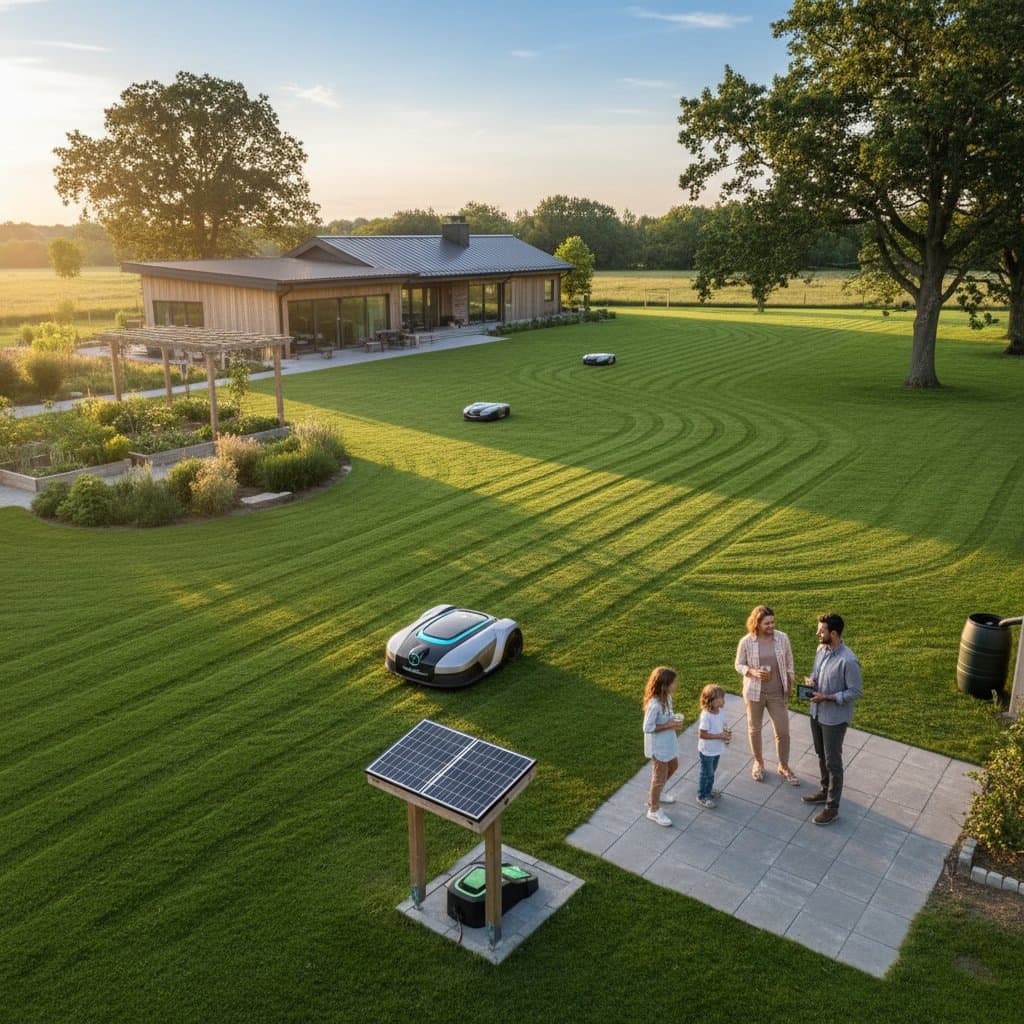
Robotic Mowers Conquer Three Acres on a Single Charge
A family in a rural setting faced the challenge of maintaining a three-acre lawn that included open fields, an orchard, and sloped terrain. Traditional mowing methods consumed entire weekends and required heavy equipment. The solution arrived with advanced robotic mowers equipped with long-lasting batteries, precise navigation, and robust designs that handle large properties efficiently.
These devices operate autonomously, covering vast areas without human intervention. They integrate satellite technology for mapping and sensors for obstacle avoidance. Property owners gain freedom from manual labor while achieving uniform lawn coverage.
Mapping and Zoning for Optimal Coverage
The robotic mower begins by creating a detailed map of the property using GPS and boundary wires. This process divides the three acres into manageable zones, such as flat grassy expanses, the orchard perimeter, and the inclined backyard. Each zone receives tailored mowing patterns based on factors like sunlight exposure and soil type.
During operation, the mower follows these zones systematically. It adjusts its path to mow in straight lines on open fields for even cuts. In the orchard area, narrower paths prevent damage to fruit trees. The system logs coverage data to ensure every section receives attention without overlap.
Homeowners schedule zones through a companion app. For instance, high-traffic play areas might receive daily light trims, while less-used slopes get weekly full cuts. This zoning approach maximizes battery efficiency, allowing the mower to complete the full three acres before returning to its base.
Navigation and Obstacle Management
Satellite positioning guides the mower across the property with centimeter-level accuracy. Perimeter wires define boundaries, while onboard cameras and ultrasonic sensors detect obstacles like fences, flower beds, and tree trunks. The mower slows or reroutes as needed to navigate slopes up to 35 degrees.
In real-world conditions, the device handles uneven terrain effectively. It climbs inclines without slipping and maneuvers around roots protruding from the soil. If an unexpected barrier appears, such as a fallen branch, the mower pauses, assesses, and proceeds safely.
Battery management plays a key role in uninterrupted performance. The lithium-ion pack provides up to 10 hours of runtime on a full charge, sufficient for three acres. As power dips below 20 percent, the mower navigates back to the docking station, recharges in two to three hours, and resumes from the exact spot.
Weather-Responsive Sensors and App Integration
Built-in sensors monitor environmental conditions to optimize mowing. Rain detectors halt operations during wet weather, preventing soil compaction and ensuring clean cuts once the ground dries. Moisture sensors on the undercarriage assess grass dampness, adjusting blade height to avoid clumping.
The mobile app serves as the control center. Users set custom schedules, such as mowing every other day during peak growth seasons. Real-time notifications alert to low battery, completed jobs, or potential issues like stuck wheels. Location tracking adds peace of mind, with geofencing to keep the mower within property lines.
Security features include a PIN lock and GPS-based theft alerts. If the mower moves outside designated areas, owners receive immediate phone notifications. These elements make the system reliable for unattended use over extended periods.
Enhancing Lawn Health and Sustainability
Regular mowing with a robotic system promotes denser grass growth. The mower's mulching blades cut clippings finely and redistribute them as natural fertilizer, enriching the soil with nutrients. This method reduces weed invasion by maintaining consistent height, typically set between 1.5 and 3 inches depending on grass type.
Compared to gas mowers, robotic models consume far less energy. A single charge draws power equivalent to running a household appliance for a short time. They produce no emissions, supporting eco-friendly yard care. Noise levels stay below 60 decibels, allowing operation at night or during family gatherings without disturbance.
The family reported visible improvements within weeks. Their lawn developed a lush, even texture, and weed patches diminished. Time saved from mowing shifted to enjoyable activities like planting vegetables in the orchard or hosting barbecues on the freshly groomed fields.
Installation and Maintenance Essentials
Setting up a robotic mower for a three-acre property involves initial planning. Install boundary wires around the perimeter and no-go zones, such as garden plots. Place the docking station in a sheltered, accessible spot with good signal reception. The entire setup takes one to two days, often with professional assistance for complex layouts.
Ongoing maintenance remains simple. Clean the undercarriage weekly to remove grass buildup. Sharpen blades every few months or after 200 hours of use. Check battery health annually, though lithium-ion units last five to seven years with proper care.
For best results, select a model rated for at least three acres, such as those with 10-amp-hour batteries and IPX waterproofing. Test the system on a small area first to refine zone settings. These steps ensure seamless integration into daily life.
Achieving Effortless Large-Property Care
Adopting a robotic mower transforms lawn maintenance from a chore into a background task. The family's experience highlights how these devices deliver precision and reliability on expansive grounds. Healthier turf, reduced effort, and environmental benefits make them ideal for rural homeowners.
Properties of this scale benefit from the mower's ability to operate on a single charge cycle. This efficiency, combined with smart adaptations to terrain and weather, creates a low-stress solution. Ultimately, the result is a vibrant, well-kept landscape that enhances property value and outdoor enjoyment.