
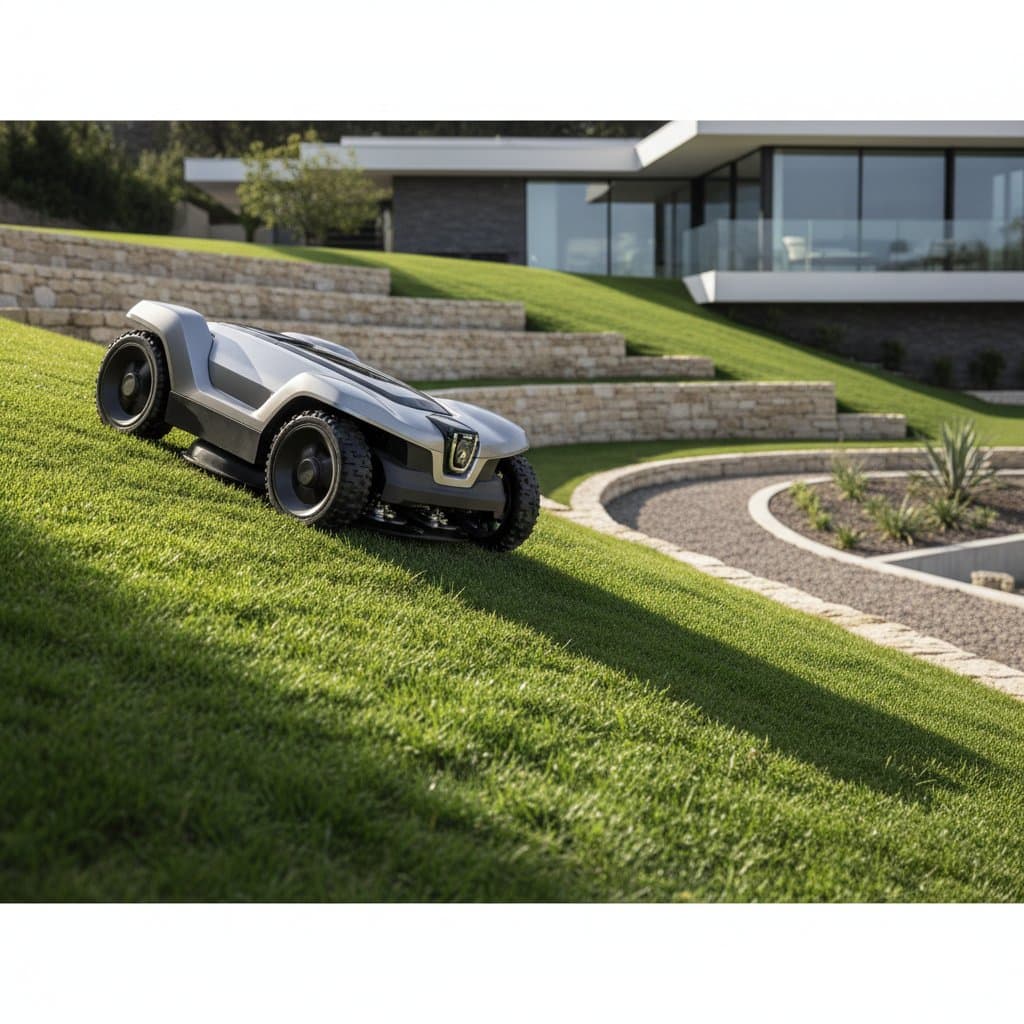
Advanced Robotic Mowers Conquer Slopes and Hills
Steep lawns once presented significant challenges, requiring weekend efforts with heavy push mowers or precarious navigation on uneven ground. Advanced robotic mowers now address these issues with quiet precision. These devices enable homeowners and groundskeepers to maintain hilly terrain without the physical demands or extensive time investment associated with manual mowing.
The latest models designed for slopes incorporate smart sensors, adaptive traction systems, and mapping technology to achieve clean cuts on difficult inclines. This approach results in a well-maintained, healthy lawn that operates autonomously. Homeowners benefit from reduced effort, while professionals appreciate the efficiency in larger properties.
Smart Traction Systems for Secure Operation on Inclines
Maintaining grip represents the primary obstacle for mowers on sloped surfaces. Advanced robotic mowers overcome this through all-terrain wheels and active traction control mechanisms. Rubberized treads combined with a low center of gravity provide stability, even on wet grass. Certain models dynamically adjust wheel torque upon detecting slippage, ensuring continued operation on gradients that would halt conventional mowers.
A landscape technician observed, “Grip technology has changed everything. The machines hold their line and keep cutting where older models would slide.”
These features minimize soil disruption and prevent the formation of ruts. The even distribution of pressure supports turf vitality. On properties featuring terraces or retaining walls, reliable traction also limits damage along boundaries.
Compact robotic mower climbs a terraced lawn without visible track marks.
To enhance performance, select models with weighted chassis that improve balance. Users report that such designs perform effectively on slopes up to 45 degrees, covering areas from small yards to expansive estates. Regular cleaning of wheels ensures optimal contact with the ground, extending the lifespan of both the mower and the landscape.
Intelligent Navigation That Adapts to Terrain
Earlier robotic mowers relied on random patterns for coverage. Contemporary versions map and retain details of the terrain, employing GPS or boundary sensors for thorough, efficient traversal. On sloped properties, this capability guarantees that no section remains overlooked or excessively mowed.
Upon encountering a steep incline, the mower modifies its speed and trajectory to preserve equilibrium. Advanced systems store distinct mowing routes for varied zones, facilitating management of combined slopes and level expanses in a single session.
A maintenance expert noted, “The new mapping systems read the yard almost like a topographic map. They know where the grade changes and adapt without help.”
Precise navigation conserves battery power. The device returns to its charging station independently, recharges, and continues from the previous position. Over multiple cycles, optimized paths reduce energy consumption and promote sustained turf health by avoiding unnecessary passes.
Integration with mobile applications allows users to monitor progress and set preferences, such as mowing frequency or height adjustments. For properties with obstacles like trees or flower beds, virtual boundaries prevent incursions, enhancing safety and precision.
A mower follows a defined path across a curved hillside lawn.
Seamless Integration of Technology in Landscape Design
Robotic mowers function most effectively within landscapes that accommodate their paths. Designers incorporate smooth transitions, reachable docking areas, and defined edges to optimize operations. Mower-friendly routes, such as gravel or paver paths connecting lawn segments, enable seamless movement between terraces and garden beds.
A landscape architect commented, “When we design with robotic systems in mind, we can simplify maintenance without changing the look of the space.”
Combining these mowers with native grasses or durable border plants decreases overall upkeep needs. This synergy between automation and resilient vegetation establishes a balanced, sustainable routine for exterior care.
Planning ahead involves assessing the property's topography during initial design phases. For instance, positioning the docking station in a sheltered, level spot protects it from weather while allowing quick access. Such considerations not only boost mower efficiency but also preserve the aesthetic integrity of the yard.
Docking station tucked behind ornamental grasses near a paved service path.
Professionals recommend consulting with specialists to customize installations, ensuring compatibility with existing features like irrigation systems. This tailored approach maximizes the benefits of robotic mowing, from erosion control on hillsides to uniform growth in multi-level gardens.
Benefits of Automated Mowing for Steep Terrains
Slope-capable robotic mowers transform routine maintenance into a hands-off process once set up. Homeowners enjoy uniform results devoid of personal exertion, while landscapes retain vibrancy through consistent, gentle trimming. The technology fosters convenience and environmental harmony by mowing only as required and mulching clippings to enrich the soil.
Beyond aesthetics, these devices contribute to erosion prevention by distributing weight evenly and avoiding compacted paths. Professionals in commercial settings value the time savings, redirecting efforts toward creative design elements. For families with children or pets, the quiet operation and obstacle avoidance features add peace of mind.
Long-term adoption reveals additional advantages, such as lower water usage due to healthier root systems from regular cuts. Users often report reduced weed growth, as the mowers disrupt seed germination cycles. In regions with variable weather, weather-resistant models ensure year-round reliability, adapting to rain delays or seasonal changes.
Selecting the right model involves evaluating yard size, slope severity, and desired features like app connectivity. Initial investments yield returns through minimized labor costs and enhanced property value. As technology evolves, future iterations promise even greater autonomy, solidifying robotic mowers as essential tools for modern landscaping.