
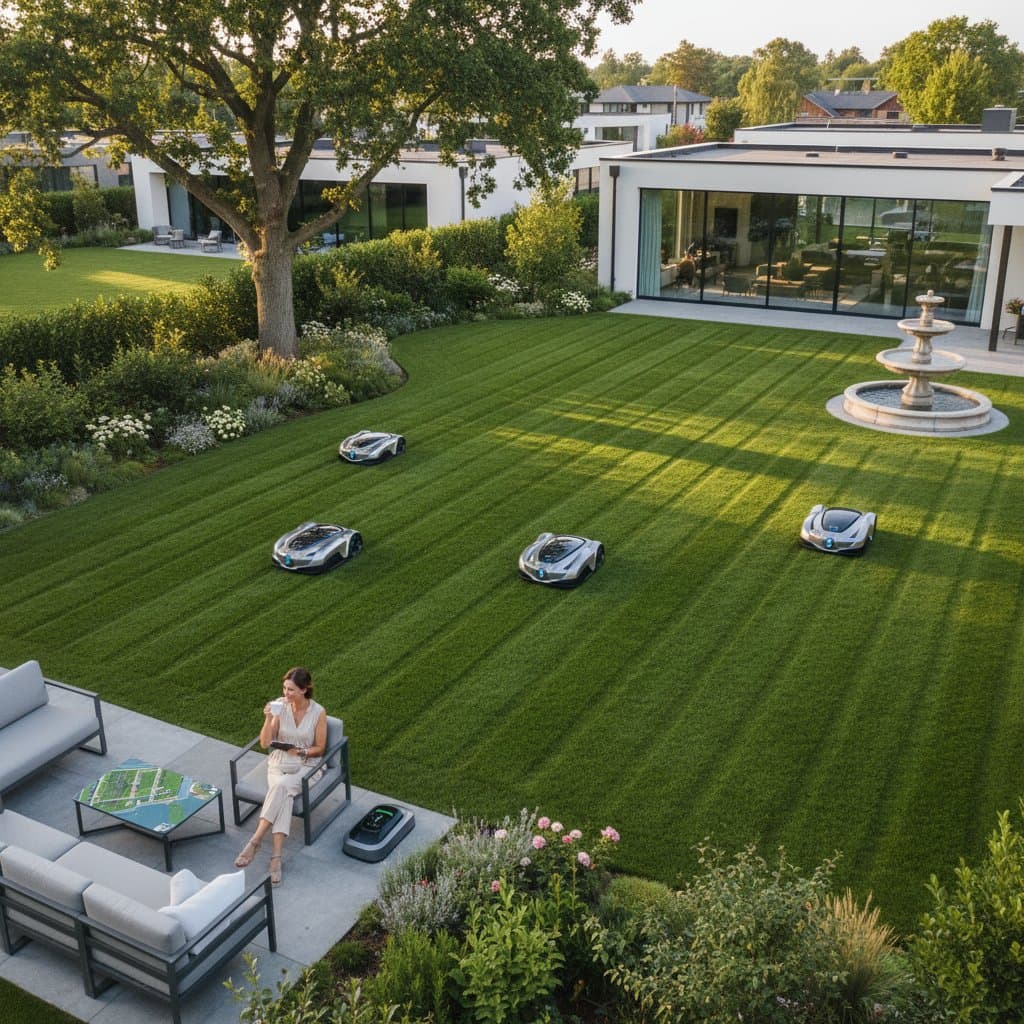
How Robotic Mowers Slash Lawn Care Time by 90 Percent
A pristine lawn reflects dedication and enhances property appeal, yet traditional mowing demands significant weekly hours. Robotic mowers offer a reliable solution. These autonomous, battery-operated units navigate yards silently and accurately, matching the output of skilled landscapers. Homeowners and estate overseers achieve verdant, level turf through greatly diminished physical input.
At a Glance
Location: Ideal for suburban and rural settings
Size: Accommodates compact lots to expansive multi-acre estates
Climate Zone: Performs well in temperate and warm climates
Project Goal: Minimize upkeep duration and elevate turf uniformity
1. Understand the Time Savings
Robotic mowers diminish lawn maintenance time by as much as 90 percent. After initial configuration, these devices follow preset timetables and retreat to docking stations for recharging without supervision. They manage routine clipping tasks, allowing property owners to pursue alternative yard enhancements.
A landscape architect observed, “Clients adopting robotic mowers frequently reclaim full weekends for leisure.” The steady mowing regimen maintains optimal grass length, which fortifies root systems and inhibits weed proliferation.
Visual Callout: A compact robotic unit traverses a gentle incline, producing evenly sheared grass in its path.
2. Choose the Right Model for Your Yard
Various robotic mower variants address specific yard requirements. Entry-level options suit modest, level areas, whereas advanced models with enhanced grip and satellite guidance excel on vast or sloped terrains. Prioritize features such as variable blade heights, durable cutting edges, and robust, all-weather builds.
A lawn machinery expert advised, “Units equipped with responsive obstacle detection navigate irregular surfaces without damaging the grass.” For resilient grasses like Bermuda or Zoysia, opt for models with high-grade stainless-steel blades that deliver precise, repeatable slices.
Design Insight: Align the mower's power rating with your property's dimensions to avoid strain and ensure balanced coverage.
3. Plan Smart Boundaries and Zones
Establishing defined areas during installation optimizes the robot's movement. Perimeter wires or digital mapping direct the unit away from obstacles like planting beds, decks, and recreation zones. Distinct sections enable customized routines for separate yard portions, such as front and rear areas.
An installation specialist commented, “Strategic boundary setups protect delicate landscaping elements and aquatic installations.” Such planning also lessens the need for manual edging, preserving neat borders with reduced manual effort.
Functional Benefit: Precise zoning eliminates overlooked patches and minimizes equipment stress.
4. Keep Maintenance Simple
Robotic mowers demand far less attention than fuel-dependent alternatives. Schedule blade replacements every few months and remove accumulated clippings from the undercarriage. Select models with rinseable bases and digital notifications for service cues.
Property owners with photovoltaic or green energy setups enjoy virtually free recharging. A service professional emphasized, “Regular cleaning prolongs operational efficiency and promotes uniform shearing.” Consistent attention prolongs device longevity and sustains peak functionality.
Visual Callout: An owner cleans the mower's base using a hose near its shaded charging base amid foliage.
5. Integrate with Smart Lawn Technology
Contemporary robotic mowers link to residential Wi-Fi and mobile applications. Owners modify itineraries, observe operational status, and check power reserves instantly via these interfaces. Integrated rain detectors halt operations during precipitation, safeguarding turf and machinery alike.
These systems also interface with automated lighting or watering networks, forming an interconnected yard environment. A smart garden advisor stated, “Interdevice connectivity maximizes automation effectiveness.” This yields a harmonious, power-conserving setup that operates with minimal human input.
Functional Benefit: Linked technologies cut down on direct monitoring and refine overall vegetation condition.
Embracing Automated Lawn Upkeep
Installing a robotic mower converts standard yard maintenance into seamless, unobtrusive operation. Turf remains perpetually well-manicured, liberating schedules for pursuits like planting, hosting gatherings, or unwinding outdoors. The uniform trimming fosters robust root development and yields a lush, velvety texture.
Individuals prioritizing eco-conscious and streamlined living find robotic solutions seamlessly integrate into intelligent yard designs. Through thoughtful initial placement and periodic checks, the landscape appears perpetually refreshed, with subdued energy consumption and sound levels. This evolution from laborious routines to automated care elevates the yard's usability and delight throughout the seasons.