
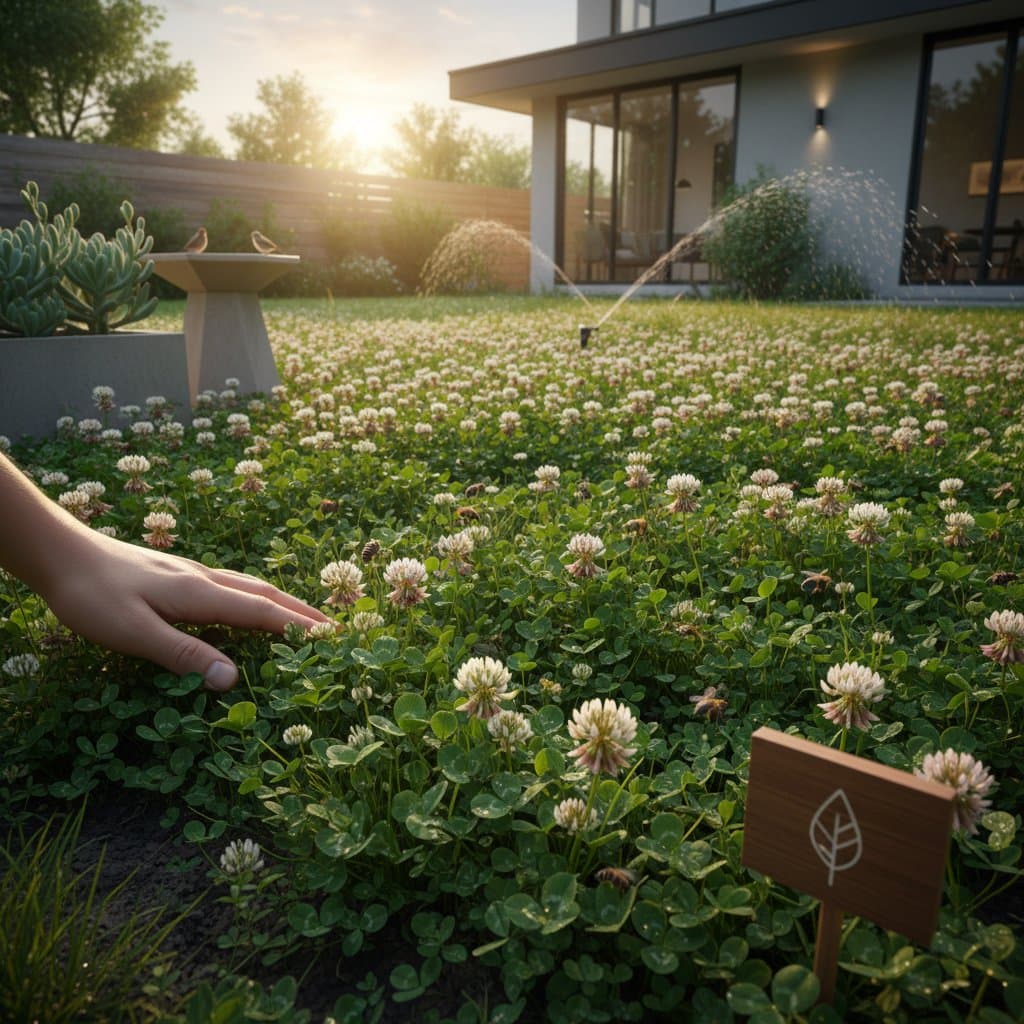
Embracing Clover: The Superior Choice for 2025 Lawns
Clover lawns redefine the essence of a vibrant, sustainable yard. Homeowners and landscape experts increasingly favor these alternatives to traditional turf for their inherent resilience, aesthetic appeal, and environmental advantages. Clover maintains its lush appearance during dry periods, supports pollinator populations, and demands far less upkeep than conventional grass.
This shift toward clover aligns with contemporary preferences for low-effort, ecologically sound outdoor environments. The plants offer a plush texture underfoot, require minimal irrigation, and foster a subtle buzz of beneficial insects. For those seeking to replace relentless mowing and chemical treatments with a more harmonious approach, clover provides an accessible and rewarding transition.
1. Select the Appropriate Clover Variety
The foundation of a thriving clover lawn begins with choosing the correct variety. Popular options include white Dutch clover, microclover, and red clover, each suited to specific uses and conditions.
White Dutch clover serves as a perennial staple, growing to a low height of four to six inches, spreading steadily, and tolerating moderate foot traffic. Microclover features finer leaves and a denser growth pattern, ideal for manicured appearances in contemporary settings. Red clover reaches heights up to 12 inches, suiting it for naturalistic meadows or as a companion in diverse groundcover plantings rather than high-use areas.
A landscape designer observes: "Treat clover selection like any planting decision. Align the variety with the intended activities in the space."
Key advantage: Proper variety choice ensures durability against traffic and varying moisture levels.
Aesthetic consideration: Blending types introduces nuanced textures and organic diversity.
Practical application: Incorporate microclover primarily, accented by white Dutch clover, to maintain uniformity adjacent to patios while promoting blooms in peripheral zones for pollinator attraction.
2. Prepare the Soil for Optimal Growth
Effective soil preparation lays the groundwork for clover establishment. Begin by testing the soil pH, aiming for a range of 6.0 to 7.0, as clover thrives in slightly acidic to neutral conditions. Amend heavy clay soils with organic matter such as compost to improve drainage and aeration.
Clear existing weeds and debris from the area, then till the top four to six inches of soil lightly to avoid compacting it. Incorporate a balanced, slow-release fertilizer if nutrient levels test low, focusing on phosphorus to support root development.
A soil specialist notes: "Preparation determines long-term success. Invest time upfront to create a welcoming bed for clover roots."
Key advantage: Well-prepared soil promotes even germination and reduces future weed competition.
Aesthetic consideration: Nutrient-rich soil yields deeper green hues and fuller coverage.
Practical application: In a sunny yard, mix in two inches of compost before seeding to foster quick establishment around play areas.
3. Achieve Even Seeding Distribution
Clover seeds, being small and lightweight, require careful application for uniform coverage. Mix the seeds with fine sand or inert carrier material to facilitate even broadcasting. Use a handheld spreader or scatter by hand in two perpendicular passes, then rake gently to embed the seeds under a quarter-inch layer of soil.
For hybrid lawns, integrate clover with compatible grasses like fine fescue or perennial ryegrass at a ratio of 80 percent grass to 20 percent clover. This combination fills potential gaps while leveraging clover's nitrogen-fixing properties to benefit the entire planting.
A turf management expert advises: "Seed sparingly yet consistently. Clover self-propagates effectively once rooted."
Key advantage: Uniform seeding minimizes bare patches and subsequent weed invasion.
Aesthetic consideration: Blends introduce gentle color variations and layered visual interest.
Practical application: Around garden pathways, a microclover and fescue mixture maintains consistent greenery despite fluctuating light and use.
4. Establish with Strategic Watering
Watering during the initial growth phase proves essential for clover success. After seeding, maintain consistent moisture in the top inch of soil by applying light, frequent irrigations every one to two days until germination occurs, typically within seven to 14 days.
Once established, reduce frequency to deep weekly soakings during dry spells, as clover demonstrates remarkable drought tolerance compared to grass. Avoid overwatering to prevent root rot, and adjust based on local climate and soil type.
A horticulturist recommends: "Water deeply but infrequently after the first month. This builds resilient roots."
Key advantage: Proper hydration accelerates establishment and enhances long-term stress resistance.
Aesthetic consideration: Adequate moisture ensures vibrant color retention without waterlogging.
Practical application: In arid regions, install drip irrigation for targeted delivery, preserving the lawn's lush look through summer heat.
5. Maintain with Occasional Mowing
Clover grows more compactly than many grasses, yet periodic mowing refines its appearance. Adjust mower blades to three inches to clip without scalping, performing cuts every two to three weeks during active growth.
Shorter heights may weaken plants, while allowing occasional elongation permits blooming for ecological benefits. Mowing stimulates lateral spreading and denser turf formation.
A designer suggests: "Mow based on visual cues rather than rigid timing. Respond to the landscape's needs."
Key advantage: Controlled mowing promotes even density and limits excessive flowering if desired.
Aesthetic consideration: Varied mowing heights delineate functional zones with subtle contrasts.
Practical application: Trim central play areas closely while permitting edge sections to flower, balancing usability and biodiversity.
6. Control Weeds and Pests Organically
Clover lawns naturally suppress many weeds through dense growth, but vigilant management sustains their health. Hand-pull emerging competitors early, and apply mulch around transitions to borders. For pests like aphids, introduce beneficial insects such as ladybugs rather than chemicals.
Clover's nitrogen fixation reduces fertilizer needs, minimizing nutrient imbalances that attract weeds. Monitor for grubs by inspecting roots annually and treat with nematodes if infestations occur.
An ecologist states: "Integrated management keeps clover dominant without harsh interventions."
Key advantage: Organic methods preserve soil health and pollinator safety.
Aesthetic consideration: Weed-free clover maintains a pristine, uniform expanse.
Practical application: In mixed borders, use cardboard mulching under new plantings to block weed seeds while clover fills in.
7. Foster Pollinators and Biodiversity
The delicate flowers of clover draw bees, butterflies, and other pollinators, transforming the lawn into a vital habitat. This influx supports garden productivity by aiding pollination of nearby fruits and vegetables.
To accommodate family safety, mow high-traffic zones before flowering peaks, reserving untamed patches for wildlife. Diverse clover types enhance this appeal by offering varied bloom times.
A landscape ecologist affirms: "Clover serves as an essential pollinator resource. Diversity strengthens the entire ecosystem."
Key advantage: Pollinators boost yields in adjacent plantings.
Aesthetic consideration: Selective blooms add dynamic, seasonal accents.
Practical application: Designate a rear-yard strip for full blooming, keeping front areas mowed for safe recreation.
8. Integrate with Existing Features
Clover adapts seamlessly to established landscapes, complementing trees, shrubs, and flower beds. Overseed thin grass areas gradually to transition without disruption, ensuring clover does not overwhelm perennials.
Its shallow roots coexist with deeper-rooted plants, and the nitrogen boost benefits companions like vegetables. Prune overhanging branches to maintain adequate sunlight exposure.
A designer notes: "Integration creates cohesive, low-care oases."
Key advantage: Clover enhances soil for surrounding vegetation.
Aesthetic consideration: It softens hard lines and unifies diverse elements.
Practical application: Weave clover under fruit trees, where it suppresses grass while enriching the orchard floor.
9. Pair with Hardscape Elements
Hardscaping elevates the organic flow of clover lawns. Install gravel walkways, stone borders, or permeable pavers to define paths and contain growth.
These features prevent encroachment into non-lawn areas and add enduring structure. Select materials like natural stone that harmonize with green tones.
A designer emphasizes: "Sharp contrasts highlight clover's gentle form."
Key advantage: Boundaries simplify edge trimming.
Aesthetic consideration: Textural mixes foster balanced, inviting compositions.
Practical application: Line a clover expanse with low retaining walls, guiding foot traffic while framing views.
Experiencing the Clover Lawn Daily
A clover lawn reshapes daily interactions with outdoor spaces. Its yielding surface invites barefoot strolls, while persistent vibrancy withstands seasonal challenges. Maintenance routines simplify, freeing hours for relaxation amid nature.
This planting aligns with modern aesthetics, enhancing wildflower edges, sleek patios, or rustic enclosures. It scales effortlessly from urban plots to expansive properties, integrating with other covers for evolving designs.
Seasonal flowers punctuate the evergreen base, supporting play and pet comfort. Clover achieves a poised vitality that rewards sustainable choices.
Steps to Transition Successfully
Converting to clover involves deliberate steps for smooth results. Remove turf in phases using sod cutters or solarization, then prepare and seed targeted zones. Monitor progress, adjusting irrigation to aid rooting.
View this change as a commitment to enduring appeal and efficiency. Established clover demands little, yielding a resilient, life-affirming yard.
Experts and residents recognize clover as the benchmark for forward-thinking lawns. It excels in form, function, and ecological harmony.