
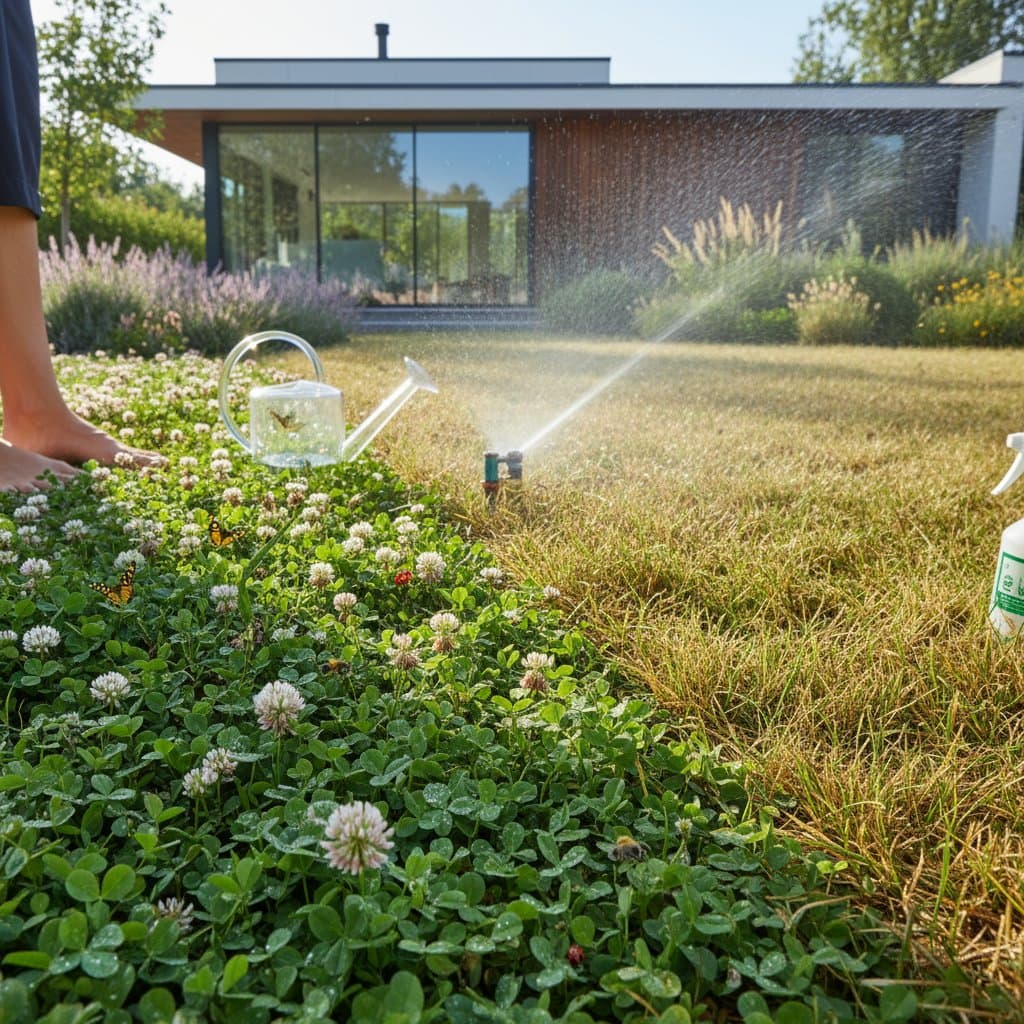
Why Clover Lawns Outshine Grass for Eco Yards
Clover lawns deliver a serene, natural aesthetic to outdoor areas while significantly reducing water consumption and upkeep demands. The dense green foliage provides a soft texture underfoot and maintains vitality during periods of drought. For homeowners and landscape professionals pursuing sustainable designs, clover presents a robust substitute for conventional grass turf.
In optimal conditions, a clover lawn supplants demanding grass varieties with a durable, environmentally sound ground cover that nurtures pollinators and minimizes reliance on synthetic chemicals. This approach yields a landscape that appears welcoming, integrates seamlessly with nature, and demands minimal intervention.
1. Select the Appropriate Clover Variety
The choice of clover species plays a pivotal role in ensuring enduring performance. Popular selections include white clover (Trifolium repens), microclover, and red clover (Trifolium pratense), each contributing distinct visual and growth characteristics.
White clover propagates readily and forms a gentle, low-growing mat capable of withstanding moderate foot traffic. Microclover, featuring finer leaves, integrates smoothly with residual grass patches and preserves a neat profile. Red clover attains greater height, fitting expansive or wilder settings.
A landscape architect observes, "Microclover achieves a refined appearance without frequent mowing, suiting front lawns or communal areas."
Functional benefit: Lowers upkeep requirements while enhancing soil fertility through nitrogen fixation.
Design insight: Incorporate microclover into current turf via overseeding for a phased conversion.
Example: In a suburban setting, a blend containing 20 percent microclover seed supplants half the existing grass within a single growing season, resulting in denser coverage and reduced bare spots.
To establish a new clover lawn, prepare the site by clearing debris and loosening the top six inches of soil. Broadcast seeds at a rate of one to two pounds per 1,000 square feet, then lightly rake them in and water gently to promote germination. Expect initial sprouting within seven to ten days under favorable spring or fall conditions.
2. Reduce Water Consumption Substantially
The extensive root network of clover accesses moisture from deeper soil strata, enabling it to retain lushness as grass fades in arid conditions. Watering proves necessary only during prolonged dry periods, conserving both natural resources and personal effort.
In areas subject to water rationing, clover maintains its verdant hue without routine supplemental irrigation. Property owners value the reliable visual appeal alongside diminished utility expenses.
A designer notes, "Clover's intricate roots function as subterranean storage, sustaining vibrancy amid challenging weather."
Functional benefit: Cuts irrigation demands by as much as 50 percent relative to traditional turfgrass.
Design insight: Combine clover zones with stone or paver walkways to highlight contrasting textures and direct drainage.
Example: A microclover courtyard endures a hot summer with just two deep waterings per month, preserving color and suppleness without supplemental systems.
For best results, install a simple drip irrigation line during establishment, then rely on natural rainfall thereafter. Mulch lightly around edges to retain soil moisture and prevent erosion in sloped areas.
3. Attract Pollinators and Enhance Biodiversity
The blossoms of clover draw bees, butterflies, and other vital insects, fostering pollination that benefits adjacent plantings. These delicate flowers introduce periodic visual accents without dominating the overall lawn composition.
Within urban or suburban environments lacking native habitats, clover serves as a compact refuge. Foregoing chemical sprays transforms the space into a secure haven for local fauna.
A garden designer comments, "As clover flowers emerge, the area buzzes with activity, illustrating how aesthetics and ecological support converge in modest landscapes."
Functional benefit: Bolsters ecological diversity and aids crop pollination in nearby gardens.
Design insight: Integrate clover with ground covers such as creeping thyme or lavender to prolong flowering sequences.
Example: A white clover and self-heal combination in a side yard forms a plush, insect-attracting layer adjacent to raised vegetable beds, boosting yields without additional effort.
Monitor bloom cycles and allow at least one in three patches to flower annually. This practice not only supports wildlife but also enriches the soil naturally over time.
4. Deter Pests and Weeds Through Natural Means
The thick canopy of clover deprives weeds of sunlight and space, inhibiting their proliferation. Its inherent toughness repels common lawn pests that favor monoculture grass. A chemical-free regimen promotes an equilibrium that sustains the lawn independently.
Mow at a height of three to four inches every two to three weeks to foster a robust cover. Progressive soil enrichment further suppresses invasive growth.
A horticultural expert states, "Clover alters subsurface dynamics; robust soil translates to diminished surface threats."
Functional benefit: Eliminates the necessity for synthetic pesticides and herbicides.
Design insight: Apply clover seed post-aeration on dense soils to accelerate rooting and coverage.
Example: A community park converted 50 percent of its grass to clover, observing a 70 percent decline in weed incidence after the first year, alongside fewer pest outbreaks.
Conduct soil tests annually to maintain pH between 6.0 and 7.0, optimal for clover. Introduce companion plants like dandelions sparingly to diversify without competition.
Maintaining a Thriving Clover Lawn
Clover lawns introduce a relaxed cadence to yard management. Tasks such as irrigation, trimming, and fertilization occur sporadically rather than routinely. The result remains verdant and inviting, yet far less demanding than grass counterparts.
Preserve peak condition by setting mower blades high and scheduling cuts sparingly. Permit occasional blooming to aid pollinators, followed by light shearing for uniformity. Refresh sparse areas through spring or autumn overseeding, and limit heavy use on saturated ground to safeguard roots.
This approach reorients lawn care toward harmony with nature. Homeowners discover a tactile, vibrant ground plane that fosters environmental health. Clover emerges as a enduring option for sustainable yards, reimagining lawns as efficient, resilient features of modern living.