
Moss Lawns Surge 300%: Zero Mowing, Eco Bliss Awaits
A quiet revolution spreads across backyards. Homeowners replace thirsty, high-maintenance grass with lush carpets of moss that remain green year-round. Moss lawns deliver a cool, serene appearance while eliminating mowing, fertilizing, and watering tasks almost entirely. The outcome is a soft, natural surface that flourishes where traditional turf often fails.
At a Glance
- Location: Shaded or partially shaded yards
- Size: Suitable for small courtyards to full lawns
- Climate Zone: Thrives in cool, moist areas but adapts with proper care
- Project Goal: Substitute turf with a low-maintenance, eco-friendly groundcover
1. Start with the Right Conditions
Moss favors damp, compact soil and partial shade. Unlike grass, it requires no rich soil, which positions it perfectly for areas under trees or on north-facing slopes. The elimination of mowing saves substantial time each month.
Landscape designers note that moss rewards minimal intervention. Once established, it demands little attention. Select species such as Hypnum or Thuidium for their dense, cushiony coverage. These varieties endure light foot traffic and conform to uneven terrain.
Prior to planting, remove debris and level the soil surface. Apply a light mist to help moss fragments settle into place. Maintain consistent moisture during the initial establishment phase, typically four to six weeks. After rooting, moss depends on natural ambient humidity rather than supplemental irrigation.
Visual callout: Soft green moss carpets a shaded corner beneath mature oaks.
2. Forget Fertilizer and Mowers
The primary advantage of a moss lawn lies in the activities one can discontinue. Eliminate mowing, fertilizer applications, and pesticide use entirely. Moss absorbs nutrients from rainfall and airborne particles. Its gradual growth rate produces no clippings or maintenance-related waste.
This straightforward approach attracts homeowners pursuing sustainable landscapes. Horticulturists emphasize that each skipped mowing cycle conserves fuel, minimizes noise pollution, and promotes soil health. In practical terms, a typical 500-square-foot moss lawn avoids approximately 20 gallons of gasoline annually compared to grass.
While grass browns during dry spells, moss enters a dormant state and revives with returning moisture. This resilience renders it among the most accommodating living surfaces for temperate gardens. Homeowners in regions with variable rainfall find moss particularly reliable for consistent coverage.
Visual callout: A handheld spray bottle keeps a new moss patch evenly damp.
3. Design with Texture and Contrast
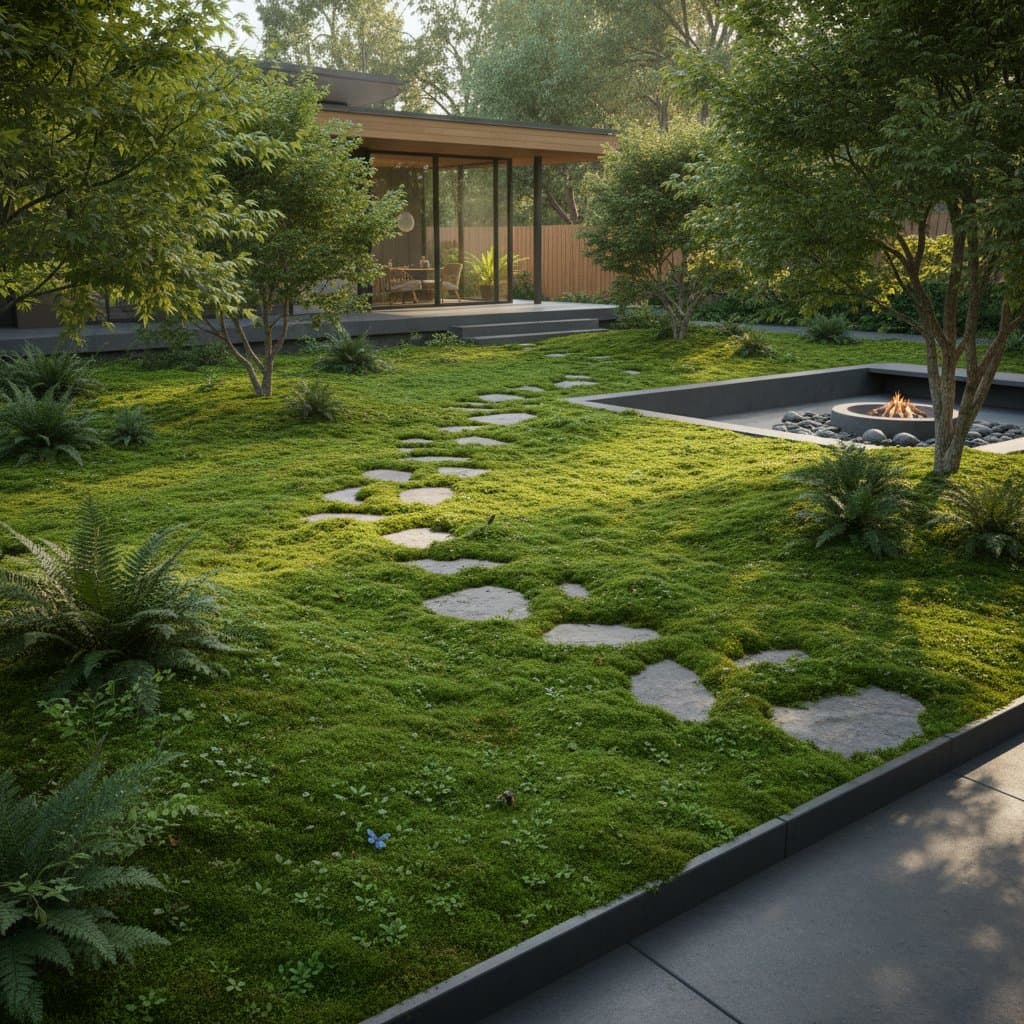
Moss lawns encourage innovative layering in garden design. The rich, velvety texture complements ferns, hostas, and shade-tolerant perennials effectively. Incorporate stone paths or gravel borders to frame the soft green expanse. Such contrasts accentuate each material and guide natural movement through the space.
Designers frequently blend moss with low-growing companions like Mazus reptans or Sagina subulata in areas receiving more sunlight. This combination maintains yard cohesion while accommodating variations in light exposure. For optimal results, space companion plants 6 to 12 inches apart to allow moss to interweave.
Landscape architects observe that moss imparts immediate maturity to gardens. It fosters an established, calming atmosphere from the outset. The plant's capacity to colonize rocks, logs, and soil surfaces unifies diverse elements into a cohesive visual narrative.
Visual callout: Flat stepping stones weave through a moss lawn, leading to a shaded bench.
4. Encourage Natural Growth
After establishment, the most effective maintenance involves restraint. Refrain from aggressive raking or traversing the surface when conditions are dry. Gently remove fallen leaves by hand or with a soft-bristled broom to prevent smothering. Moss flourishes when permitted to expand naturally over the soil.
Address bare patches by transplanting small sections from vigorous areas. Press these fragments firmly into the prepared gaps, ensuring good soil contact. Apply regular misting, ideally every other day, to facilitate adhesion of the new pieces. Over several months, the lawn integrates into a seamless green layer.
Garden specialists stress that patience proves essential. Moss propagates steadily under suitable conditions, gradually filling every available space. Monitor for invasive weeds during the first year and remove them promptly to support uniform development.
Visual callout: A gardener presses a small moss clump into moist soil to fill a gap.
5. Embrace the Eco Advantage
Substituting turf with moss yields tangible environmental gains. Moss lawns eliminate fertilizer needs, thereby preventing nutrient runoff into nearby waterways. They substantially lower irrigation requirements and reduce emissions from gas-powered lawn equipment. The dense mat stabilizes soil effectively and filters rainwater through natural absorption.
In areas subject to water restrictions, moss provides a refined alternative to conventional lawns. Its fine texture moderates ground temperatures, often by 10 to 15 degrees Fahrenheit compared to bare soil. Additionally, it harbors small insects essential for local biodiversity.
Sustainability experts highlight that each moss lawn functions as a localized microclimate. It contributes to cleaner water cycles and cooler ambient air. This inherent role elevates private yards to modest ecological contributors within broader communities.
Visual callout: Morning dew glistens on a moss-covered yard, reflecting soft light.
Living with a Moss Lawn
Experiencing the tranquil allure of moss makes reverting to routine mowing challenging. The vibrant color persists through most seasons, and the surface yields pleasantly underfoot. Gradually, it elevates a basic yard into a serene sanctuary.
Moss promotes deliberate pacing and attentiveness to nuanced textures. Curving paths can meander across its expanse, while subtle lighting accentuates its evening luminescence. Growing low to the ground, it preserves an open, unobstructed feel.
Homeowners who prioritize resilient, low-effort beauty discover in moss lawns a compelling option. These installations demonstrate that eco-conscious decisions enhance both functionality and aesthetic depth.
Visual callout: A shaded backyard glows with moss under soft path lighting, inviting quiet evenings outdoors.