
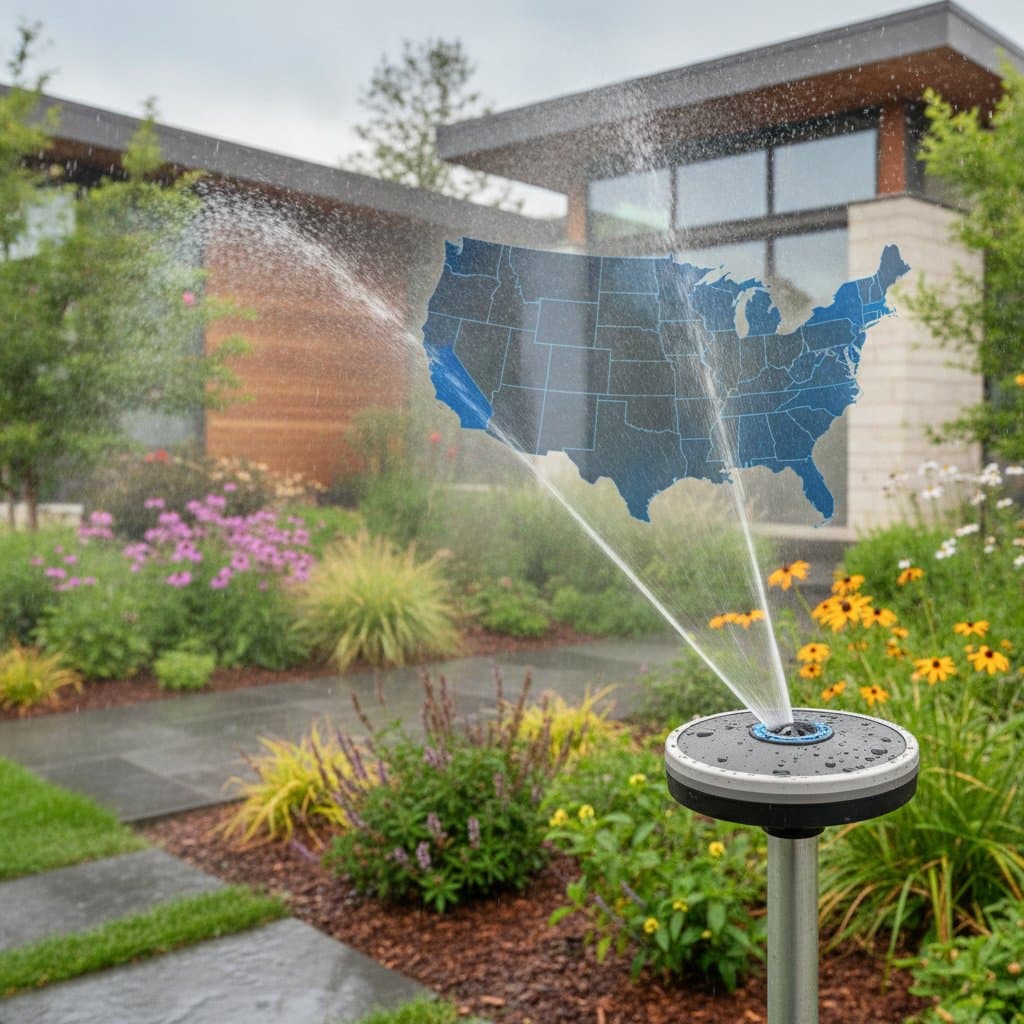
12 States Require Rain Sensors on Sprinkler Systems
Smart irrigation systems still waste water when they operate during rainfall. Twelve states now mandate rain sensors on new installations and major upgrades to address this issue. These devices pause watering once moisture reaches a set threshold and resume once conditions dry.
Key Requirements at a Glance
- Focus: Rain sensors integrated with irrigation controllers
- Coverage: Regulations active in twelve states
- Objective: Lower municipal water demand while maintaining landscape health
Rain sensors detect precipitation and interrupt scheduled cycles. This action prevents runoff, reduces plant stress from overwatering, and lowers utility costs. Contractors position sensors in open areas away from eaves or dense foliage to capture accurate readings.
How Rain Sensors Function
A rain sensor measures accumulated rainfall and signals the controller to skip irrigation. Wireless models transmit data from a roofline or fence post to the main unit. Once the rain stops and the sensor dries, normal scheduling resumes without manual intervention.
Reasons for State Mandates
Many regions face ongoing water supply constraints. Requiring sensors ensures new systems contribute directly to conservation targets. When paired with pressure-regulated nozzles and drip tubing, the devices can reduce seasonal irrigation volumes by up to one third in storm-prone areas.
States and Climate Variations
The twelve states span humid coastal zones and drier inland plains. Coastal codes often specify corrosion-resistant housings, while inland rules emphasize precise calibration. Builders must check local amendments before finalizing designs or ordering equipment.
Integration With Smart Controllers
Sensors deliver the greatest savings when linked to weather-responsive controllers. Homeowners can combine a Wi-Fi controller, rain sensor, and soil-moisture probe to adjust run times daily. This combination maintains even hydration across turf and beds without excess application.
Installation and Placement Guidelines
Mount the sensor where it receives unobstructed rainfall and sits slightly above surrounding plants. A deck railing or dedicated post near the lawn edge works well for most residential lots. Avoid locations under tree canopies or roof overhangs that block precipitation.
Routine Maintenance Steps
Clean sensor vents seasonally to remove dust, pollen, and insect debris. During spring startup, apply a small amount of water to the sensor and confirm the controller shuts off zones. Record the model number and last service date in the property maintenance log.
Calibration by Region and Soil Type
Set the trigger threshold at one-half inch for humid climates and one-quarter inch for arid zones. Sandy soils benefit from shorter pauses, while clay soils tolerate longer intervals between cycles. Adjust settings after any change in plant material or irrigation layout.
Documentation for Permit Compliance
Submit the sensor specification sheet with permit applications. Include calibration data and mounting details so inspectors can verify adherence on site. Retain copies of invoices and model numbers for future reference.
User Education Practices
Provide a brief card near the controller that explains automatic pause behavior. Property managers can include the same note in lease packets so residents understand why zones remain off after storms.
Broader Landscape Water Strategies
Combine sensors with native grasses such as little bluestem and switchgrass plus mulch layers to cut overall demand. A courtyard planted with drought-tolerant species and served by a sensor-controlled drip system maintains visual appeal while using minimal supplemental water.
Equipment Selection and Future Upgrades
Choose modular sensors with replaceable discs that accommodate varying rainfall intensity. Wireless units simplify future controller replacements and allow easy addition of soil-moisture probes as regulations evolve.