
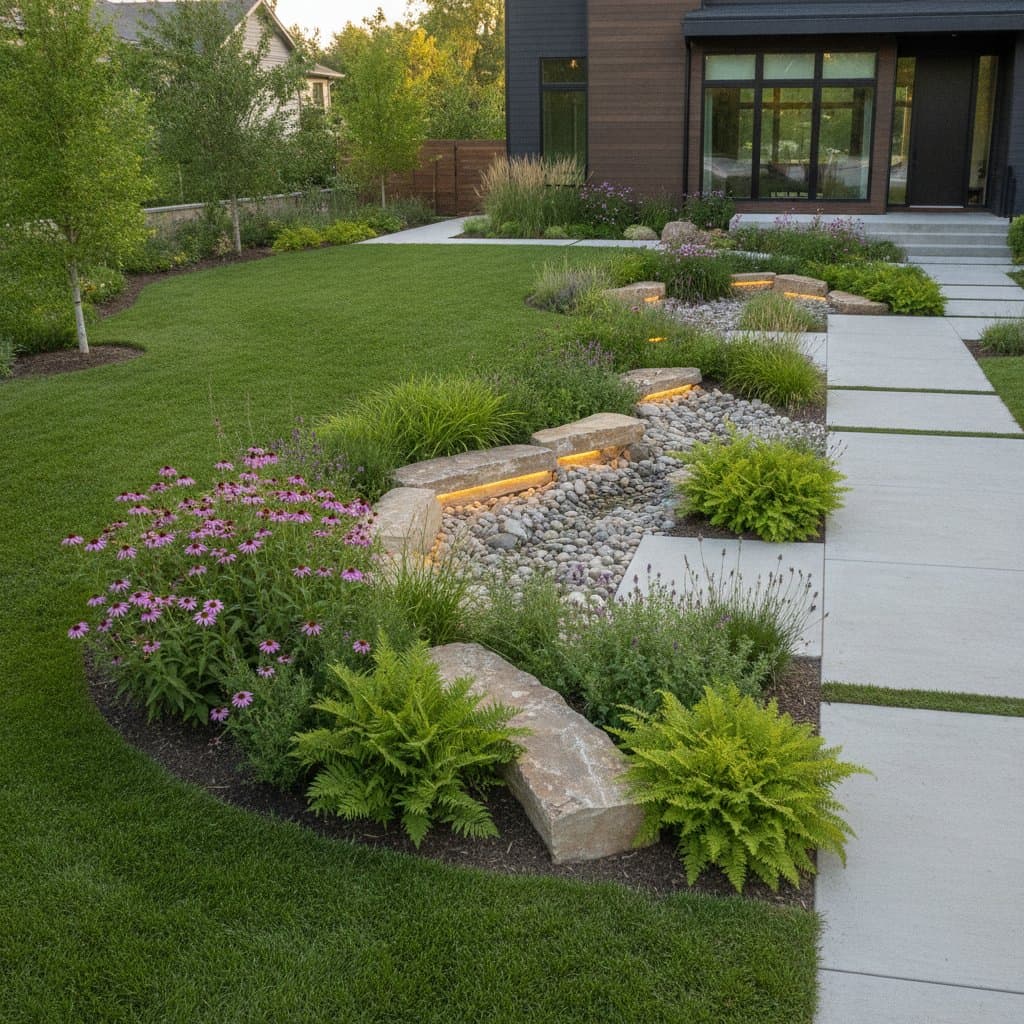
Mandated Bioswales Transform Into Beautiful Borders
A bioswale may start as a municipal requirement, but it can become one of the most striking features in a landscape. When designed with intention, these functional drainage systems turn into lush, sculptural borders that bring texture, movement, and ecological value to a property. They manage stormwater effectively while creating a living edge that feels purposeful and refined.
Bioswales are no longer just utilitarian trenches. With the right grading, planting, and materials, they can define garden zones, soften transitions, and support pollinators. The result is a landscape that meets code and enriches daily experience.
At a Glance
- Location: Residential or mixed-use landscapes
- Size: Varies by property line and drainage need
- Climate Zone: Adaptable across regions with native or climate-resilient plants
- Project Goal: Combine stormwater management with garden beauty
Layer Plants for Structure and Seasonal Interest
Planting turns a bioswale from a ditch into a dynamic border. Choose species that can handle both wet and dry conditions since the soil will fluctuate in moisture. Mixing heights gives structure and seasonal variety.
Deep-rooted plants filter runoff and stabilize the soil. Combine native sedges and rushes at the base with flowering perennials on the banks for contrast. Pair blue flag iris and soft rush in the center, then transition to coneflower, prairie dropseed, and little bluestem along the edges.
Layering plants by moisture tolerance keeps the swale thriving all season. This approach turns the required drainage strip into a habitat ribbon that attracts birds and pollinators. The layered texture also reads as a natural border that softens hard edges like driveways or walkways.
Define Edges with Thoughtful Materials
Defined edges make bioswales appear cared for and intentional. Steel edging, stone curbs, or low retaining walls can keep mulch and soil in place while framing the planting.
This contains soil and prevents washout during heavy rain. Keep edging subtle so it blends with the landscape rather than drawing attention to the drainage function. A low dry-stack stone wall along the upper side of the swale doubles as a seating ledge and visual boundary.
A crisp edge makes even the wildest planting look planned. This small detail elevates the overall design, helping the swale read as a garden feature that defines circulation routes and outdoor rooms.
Plan for Low Maintenance Care
A beautiful bioswale must also be manageable. Choose plants that do not require frequent pruning or replanting. Mulch with shredded bark or gravel to suppress weeds and maintain moisture balance.
This reduces long-term maintenance and keeps infiltration rates consistent. Group plants with similar root depth and growth habits for even performance. Combine switchgrass and black-eyed Susan in sunny spots, while placing sedges and irises in wetter basins.
Low-care planting keeps the bioswale doing its job without constant intervention. Good design anticipates natural cycles, allowing the system to thrive with minimal attention while still looking intentional year-round.
Embracing the Dual Role of Bioswales
When a bioswale is treated as part of the design, it changes how people see stormwater systems. It becomes a living border that defines space, supports biodiversity, and quietly manages runoff. The garden feels more connected to its environment, and the property gains both function and beauty.
Homeowners often find that these planted borders attract birds and butterflies, bring seasonal color, and create a sense of calm after rain. They also meet local regulations gracefully, without looking forced or industrial.
Start with grading that fits the existing landscape. Choose native or regionally adapted plants. Integrate stone, edging, and lighting to connect the swale with the surrounding design. Over time, the bioswale matures into a self-sustaining ecosystem that responds naturally to rainfall. What began as a requirement becomes a signature feature, proving that smart function and beautiful design can share the same ground.