
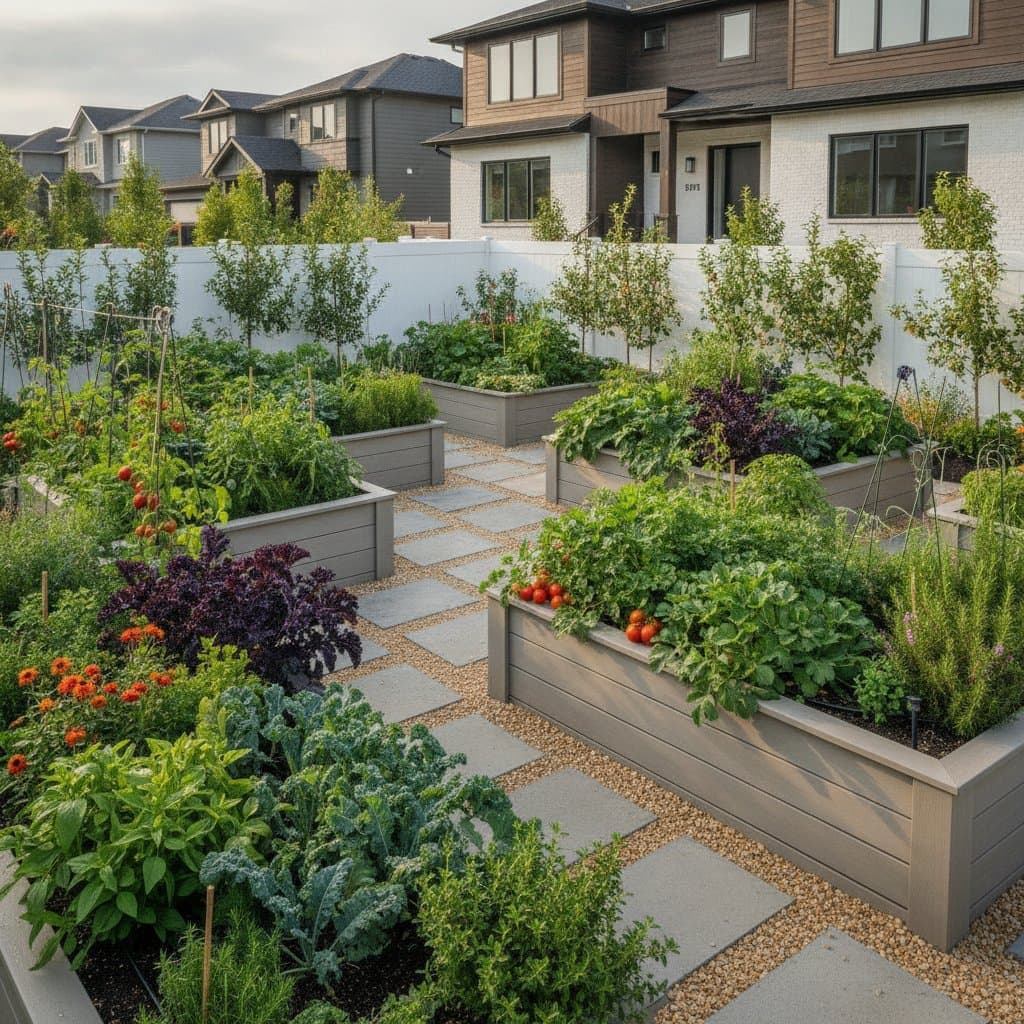
HOAs Now Allow Edible Landscaping in Front Yards
When Jordan and Elise Warner purchased their home, they wanted to grow food near the kitchen. Strict homeowners association rules once limited front yards to turf and ornamentals. Updated local regulations now permit edible landscaping that meets community standards. Landscape designer Maria Torres helped the couple create a productive garden that maintains curb appeal.
Project Overview
- Residents: Jordan and Elise Warner, graphic designers
- Location: Suburban neighborhood near a community park
- Lot size: Quarter acre
- Designer: Maria Torres Garden Studio
- Contractor: GreenScape Outdoor Solutions
- Goal: Replace a high-water lawn with a front yard that yields food while preserving neighborhood appearance
Front Yard Layout
The Warner home stands on a quiet street with mature maples and sidewalks. Raised cedar beds arranged in a grid replace the former lawn. Low boxwood hedges frame the beds. A crushed gravel path leads to the porch and releases fragrance from bordering thyme and oregano.
Beds serve distinct roles. A kitchen garden near the driveway supplies lettuces, kale, and chard. Dwarf blueberries and strawberries soften the transition to the porch. Rosemary, lavender, and sage line the outer edge for year-round structure.
"Many HOAs still want the front yard to look orderly," Torres said. "The key is symmetry, clean lines, and consistent edging. You can grow vegetables if the composition feels intentional."
Materials and Plant Choices
Torres selected untreated cedar for the raised beds because it resists rot without chemical treatments. Gravel paths sit over a permeable base that handles runoff and satisfies HOA requirements. A narrow turf strip along the sidewalk maintains visual consistency with neighboring properties.
Plant selection emphasizes texture and color alongside flavor. Swiss chard and red-veined sorrel supply visual interest. Leafy greens fill spaces rapidly. Trellised sugar snap peas and pole beans add height behind the beds. Herbs such as basil and parsley form lush borders.
"Front yard edibles can be just as decorative as flowers," Elise said. "We pick greens for dinner and still have a yard that looks polished from the street."
Water Management and Upkeep
A drip irrigation system lies beneath the gravel and operates on a smart timer that accounts for rainfall. This setup cuts water use and avoids sidewalk overspray. The Warners spend roughly fifteen minutes each morning on harvest and tidying, followed by a longer weekend session for pruning and replanting.
HOA Approval Process
Residents submitted detailed plans after the new guidelines took effect. Torres supplied plant lists, mature plant photos, and a color rendering. Clear documentation showed that tomatoes would be staked, vines trimmed, and beds evenly spaced. The plan also outlined a seasonal rotation so the yard would never appear empty.
A small composting area behind the garage keeps maintenance discreet. Several neighbors have since explored similar projects. The HOA now offers optional templates that specify acceptable bed heights, border materials, and plant types.
Daily Life in an Edible Landscape
Morning coffee now occurs among the raised beds. Evening meals draw directly from the harvest. The yard invites conversations with neighbors who pause to ask about current crops. The couple plans to add an espaliered fig tree and test edible flowers such as nasturtiums next season. Their priority remains balance between appearance and yield.