
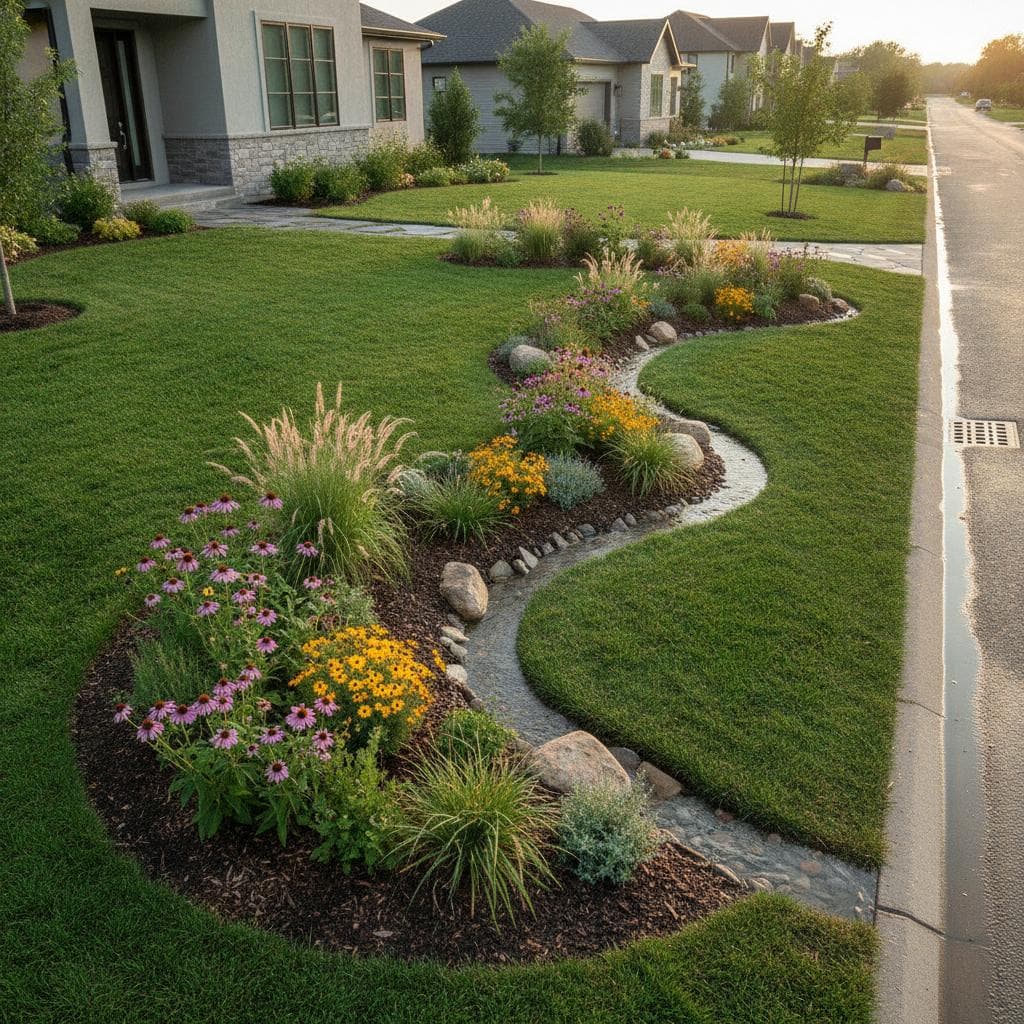
Bioswale Borders Protect Front Yards From Storm Flooding
When heavy rain pours down, many homeowners watch helplessly as water streams across their driveways and lawns. Sometimes it pools against the foundation or carries debris into the street. In regions with compacted soil or limited drainage, these events can quickly turn from a nuisance into costly damage. A well-planned bioswale border offers a lasting, attractive solution that manages stormwater naturally, protects the home, and adds beauty to the landscape.
What a Bioswale Actually Does
A bioswale is a shallow, gently sloped channel planted with vegetation that captures and filters stormwater. Instead of letting water rush straight to the street or gutter, a bioswale slows it down and allows soil and plants to absorb and clean it. This approach supports groundwater recharge and reduces runoff that can erode soil or overwhelm storm drains.
In a front yard setting, a bioswale often runs along the property line or between the sidewalk and the main garden. Designed properly, it looks like a natural border or planting strip rather than a drainage ditch. The vegetation softens paved areas, frames the home entry, and provides habitat for beneficial insects and birds.
Why Front Yards Need Natural Drainage Systems
Front yards in many California neighborhoods sit on graded lots that direct water toward the street. During intense rain, water can collect faster than municipal drains can handle. The result is standing water that seeps into driveways, garages, or basements. Over time this damages foundations and contributes to soil erosion.
A bioswale border intercepts that water before it leaves the property. It reduces the volume of runoff entering storm drains and helps prevent local flooding. It also filters pollutants such as oil, fertilizer residue, and sediment before they enter waterways. For homeowners this means less maintenance after storms and a cleaner, more resilient front yard.
Planning the Layout
The best bioswale design starts with a clear understanding of the site. Begin by observing how water moves across the front yard during rain. Identify low spots, slopes, and hard surfaces such as driveways or paths. The goal is to position the swale where it can naturally collect runoff without creating new drainage problems.
- Identify flow paths. Look at where water naturally travels to determine the most effective placement.
- Choose the right depth and width. Most residential bioswales are six to twelve inches deep and wide enough to manage surface flow yet shallow enough to blend into the landscape.
- Maintain a gentle slope. A grade of one to five percent encourages slow movement of water while preventing stagnation.
- Include an inlet and outlet. Water should enter smoothly, spread across the swale, and exit toward a safe drainage point or rain garden.
Selecting Plants That Work Hard
The success of a bioswale depends largely on the plants that line it. They must tolerate both wet and dry conditions, handle occasional flooding, and possess strong root systems that stabilize the soil. In California, native species are often the best choice because they are adapted to local rainfall patterns and soil types.
Good plant choices include the following.
- Juncus patens (California gray rush) is a hardy perennial that stands upright and thrives in moist soil, perfect for the lowest part of the swale.
- Carex pansa (meadow sedge) provides a lush, grass-like groundcover that tolerates both dryness and brief inundation.
- Muhlenbergia rigens (deer grass) offers texture and height and works well on the upper banks where soil stays drier.
- Iris douglasiana (Douglas iris) adds seasonal color and dense roots that help filter runoff.
- Salvia spathacea (hummingbird sage) attracts wildlife and suits drier edges.
A layered planting design works best. Use moisture-loving species at the center and drought-tolerant plants along the slopes. Mulch between plants to prevent erosion and improve water absorption.
Constructing the Bioswale Border
Once the plan is set, construction moves quickly with clear sequencing. Begin by marking the layout with stakes and string. Then excavate the shallow basin and shape it with smooth curves rather than sharp angles to encourage even water flow. Use the removed soil to build low berms along the sides if needed.
- Excavation and grading: Keep the bottom even and compact the soil lightly to prevent channeling.
- Soil preparation: Mix in compost or sand if the soil is heavy clay to improve percolation.
- Install rock or gravel at inlets to prevent erosion where water enters.
- Planting: Position plants densely enough to stabilize soil quickly but leave space for growth.
- Mulching: Apply two to three inches of shredded bark or wood chips to retain moisture.
- Watering: Until roots establish, water regularly even if rain is expected. Healthy root systems provide the best defense against erosion.
Blending Function with Curb Appeal
A bioswale border does not need to look utilitarian. Thoughtful design can make it one of the most attractive features in the front yard. Use native grasses and flowering perennials to create a natural flow that complements the architecture of the home. Decorative boulders, small stepping stones, or driftwood can add visual interest while helping direct water where needed.
If the home has a modern aesthetic, consider a clean, linear bioswale with structured plantings such as sedges and rushes. For a more relaxed cottage style, mix wildflowers, low shrubs, and ornamental grasses. Lighting can highlight the texture of the plants and make the border a focal point at night.
Maintenance for Long-Term Success
A common misconception is that bioswales require no maintenance. They are low maintenance, yet they do need periodic care. Regular attention keeps the system functional and visually appealing.
- Inspect after heavy rain. Look for erosion, standing water, or clogged inlets.
- Remove debris. Leaves, litter, and sediment can block flow paths.
- Trim vegetation. Cut back grasses and perennials to encourage healthy regrowth.
- Replenish mulch. Replace it as it breaks down to maintain soil protection.
- Weed control. Keep invasive species from crowding out chosen plants.
With proper care a bioswale can last for decades, improving soil health over time and continuing to protect the home from flooding.
Cost and Value Considerations
The cost of building a bioswale border depends on size, site conditions, and plant selection. Many homeowners find that professional design and installation are worth the investment. A landscape contractor can ensure correct grading and compliance with any local drainage regulations. For smaller projects a confident do-it-yourself approach can also work, especially if the soil is easy to shape.
Beyond immediate stormwater management, a bioswale adds measurable long-term value. It reduces erosion repair costs, extends the life of hardscapes, and can lower irrigation needs by capturing more rainwater. Over time the plants mature into a lush, self-sustaining ecosystem that enhances property value while contributing to neighborhood sustainability.
Integrating With Other Rainwater Features
A bioswale border pairs well with other water-wise features. It can connect to a downspout redirecting roof runoff, feed into a rain garden, or channel overflow to permeable paving areas. Each element supports the others and creates a cohesive system that manages rainwater naturally.
For example, a front yard might include a gravel path that leads water toward the bioswale, which then slows and filters it before it reaches a dry well or infiltration pit. The result is a coordinated design that keeps water in the soil rather than the street.
Observing the Garden After Rain
Once established, a bioswale border becomes more than a drainage feature. It transforms the front yard into a living part of the environment. Birds visit for seeds and insects, neighbors admire the lush greenery, and the homeowner enjoys the peace of mind that comes from knowing the property is protected from flooding.
The next time clouds gather and rain begins to fall, the bioswale quietly performs its work. Water flows through its planted channels, clears of sediment, and seeps gently into the earth. The garden stays intact, the driveway stays clear, and the home remains dry. With thoughtful planning and regular care this simple landscape feature delivers beauty and protection for years to come.