
Preparation Checklist
- Map all roof downspouts, paved areas, and low points to trace runoff paths.
- Test soil drainage by digging a small hole and timing water absorption.
- Select native plants suited to local moisture levels and sun exposure.
- Calculate basin size based on a one to five percent slope and expected water volume.
- Choose edging materials that match existing architecture.
- Schedule seasonal inspections for inlets, outlets, and mulch coverage.
Site Planning and Flow Management
Site assessment forms the foundation of any compliant bioswale. Designers map water movement across the property, noting roof downspouts, paved surfaces, and low points in the yard. This analysis determines the correct size and placement for the garden.
A typical residential bioswale maintains a gentle slope between one and five percent. The base stays level enough to capture water evenly while allowing slow movement through the system. Builders combine compost, sand, and topsoil to support drainage without compaction.
Edges receive reinforcement with river rock or concrete pavers to limit erosion at entry and exit points. Larger commercial projects often incorporate perforated pipes beneath the surface to route overflow into municipal drains after soil saturation.
Coordinating Design with Architecture
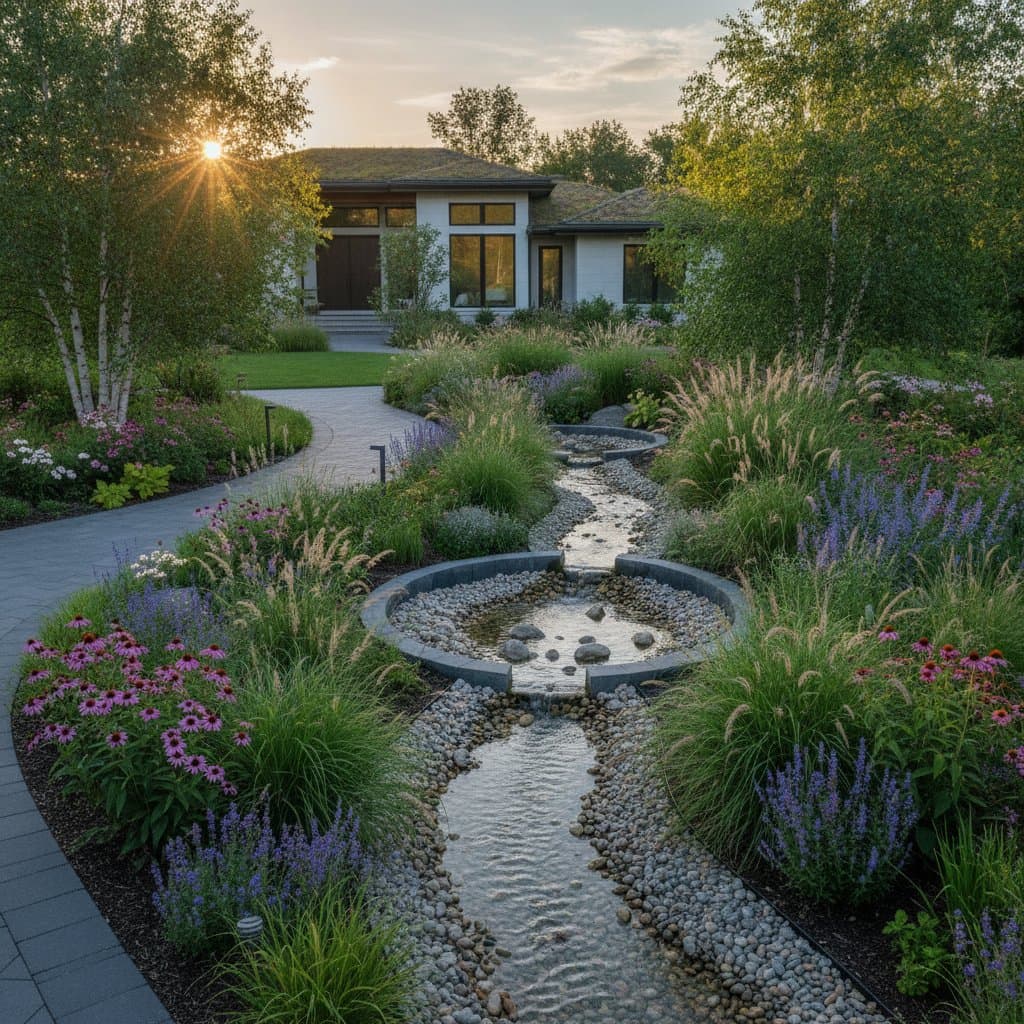
Successful bioswales integrate into the overall landscape rather than appear as isolated utilities. A narrow channel along a driveway can serve as a planting strip. A curved basin near the front walk can shape an entry sequence while satisfying stormwater requirements.
Material choices align with the home exterior. Natural stone edging suits wood siding, while steel borders complement modern structures. Consistent finishes prevent the bioswale from reading as an added element.
Low-voltage path lights or recessed bollards accentuate the garden form and direct movement after dark. Thoughtful lighting elevates the feature from functional infrastructure to a defining part of the outdoor space.
Seasonal Maintenance Tasks
A bioswale requires regular attention to sustain performance and appearance.
Spring tasks
- Remove accumulated leaves and debris from the basin.
- Clear inlet and outlet points of obstructions.
- Add fresh mulch where erosion has exposed soil.
Summer tasks
- Prune plants to improve air circulation.
- Pull weeds before seed production.
- Verify that water infiltrates within twenty-four hours after rain.
Fall tasks
- Cut perennials back to six inches above grade.
- Fill bare patches with new plants to maintain root density.
- Inspect and reset any displaced stone edging.
Maintenance contractor Elise Moreno notes, "Maintenance is about keeping the system alive. If you treat it like a garden, it will reward you with resilience and beauty."
Long-Term Landscape Resilience
After installation the bioswale evolves with the property. Plants mature, soil settles, and root networks expand, increasing water filtration capacity over time.
Homeowners frequently observe added advantages. Native vegetation attracts birds and pollinators, introducing movement and sound. Vegetation also moderates summer temperatures, and the visible commitment to water quality strengthens neighborhood character.
Mandatory bioswales reflect growing awareness that individual sites influence shared waterways. Each installation reduces flooding risk and improves downstream water quality. Early planning allows owners to meet code while creating a durable, attractive landscape feature that functions for decades.