
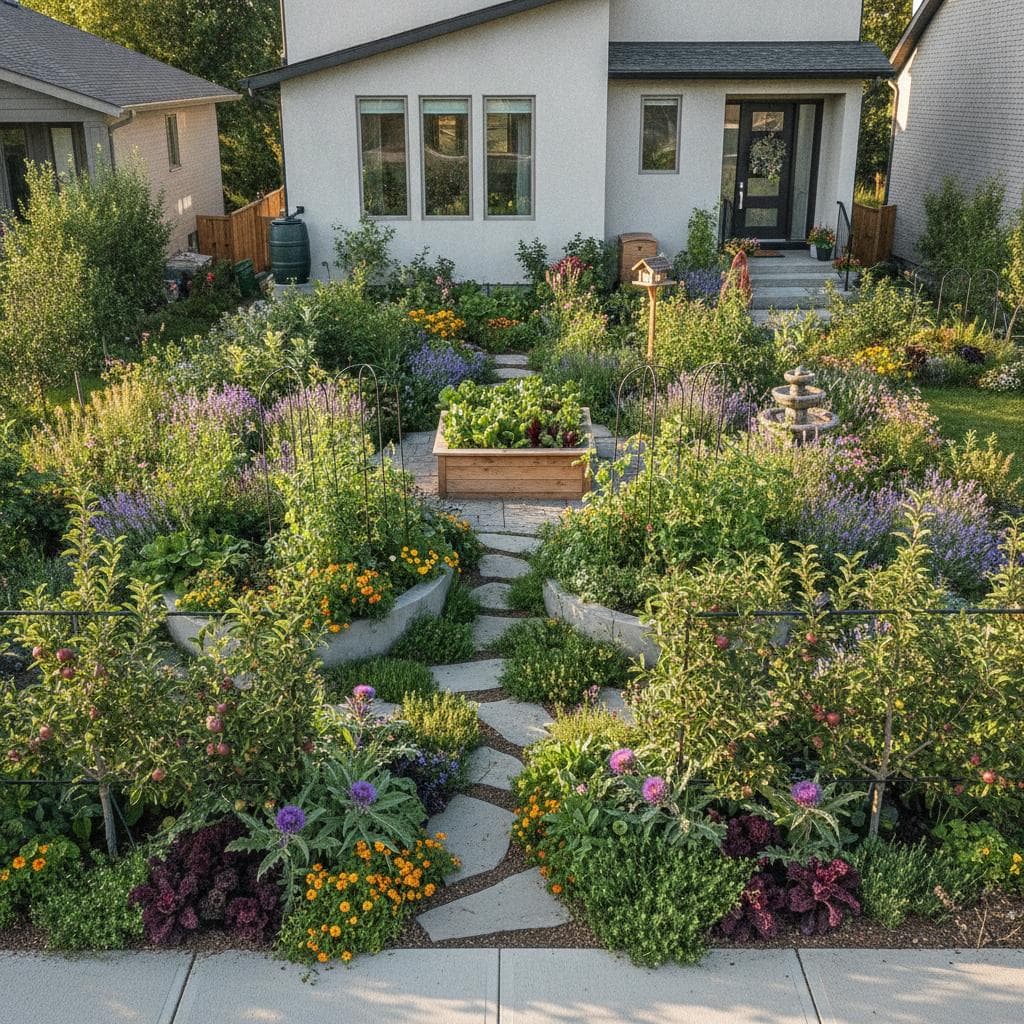
Edible Front Yards Replace Ornamentals for Fresh Food
Front yards are changing. More homeowners are trading decorative lawns and shrubs for edible plants that feed both the eye and the table. The result is a landscape that looks vibrant, supports pollinators, and provides fresh harvests right outside the front door. An edible front yard blends design with purpose, turning every square foot into something useful and beautiful.
At a Glance
- Location: Urban and suburban neighborhoods
- Typical Size: Small to medium front yards
- Climate Zone: Adaptable to most temperate and warm regions
- Project Goal: Replace ornamental plantings with productive, attractive edibles that fit neighborhood aesthetics
Growing food in the front yard is no longer unusual. With careful design, edible landscapes can match the visual appeal of ornamental ones while producing herbs, fruits, and vegetables through much of the year. The key is thoughtful layout, plant selection, and consistent care.
1. Create Defined Zones
Dividing the yard into functional zones helps the space feel structured and intentional. Beds with clear edges look tidy and prevent the garden from appearing like a vegetable patch. Raised planters or low stone borders work well to define zones.
Use gravel or decomposed granite paths between areas for easy access and a finished look. In a small front yard, consider three main zones. These include a central feature bed, narrow side beds for herbs or greens, and a border planting that frames the entrance. This layout keeps the design balanced while allowing for crop rotation and seasonal change.
2. Mix Ornamentals with Edibles
The best edible front yards balance beauty with function. Mixing ornamental plants among edibles softens the transition and ensures curb appeal. Pair leafy greens with flowering perennials. Underplant fruit trees with low herbs like thyme or oregano.
Colorful chard looks striking next to purple coneflower. Lavender and rosemary provide fragrance and structure while attracting pollinators. This mix also supports biodiversity. Pollinator friendly flowers draw bees that help fruit trees and vegetables set better yields.
3. Choose Productive Shrubs and Small Trees
Shrubs and small trees anchor the design and provide long term harvests. Blueberries, serviceberries, and currants offer seasonal fruit while forming attractive hedges. Dwarf apple or pear trees can replace ornamental varieties, giving structure without shading smaller plants.
When selecting species, match the scale of the house and yard. A compact fig tree fits well in a sunny corner. Espaliered apples or pears can line a fence or wall, turning vertical space into productive ground. For visual consistency, repeat forms or leaf colors. Use symmetrical spacing for hedges or mirror plantings on both sides of the entry path.
4. Add Seasonal Layers
A strong edible design thrives through the seasons. Layering crops ensures the garden stays lively even as harvest times change. Cool season greens like kale, arugula, and lettuce fill early months. Summer brings tomatoes, peppers, and eggplant. Late season root crops like carrots or beets extend the harvest window.
Perennial edibles such as rhubarb or asparagus anchor the design and return each year. Layering by height also matters. Tall plants like okra can serve as a soft screen. Mid height peppers and bush beans fill the middle. Groundcovers like strawberries act as living mulch.
5. Incorporate Pathways and Seating
Front yard food gardens should be places to linger, not just work. Adding a small bench, a stepping stone path, or a bistro table invites people to spend time outdoors. It also signals to neighbors that the space is intentional and cared for.
Paths made of flagstone, gravel, or brick help define circulation routes and keep shoes clean after watering or harvesting. Even a single bench beneath a fruit tree can transform the mood of the space. The goal is to make the front yard both productive and welcoming.
6. Use Smart Irrigation and Soil Practices
Healthy soil is the foundation of any edible landscape. Before planting, enrich existing soil with compost or aged manure to support long term fertility. Mulch with straw, shredded leaves, or bark chips to conserve moisture and suppress weeds.
Drip irrigation is ideal for front yard gardens. It delivers water directly to the roots without splashing leaves, reducing disease risk and saving water. If the yard slopes, contour beds along the grade to slow runoff and capture rainfall. Raised beds can improve drainage in heavy clay soils.
7. Highlight Structure with Hardscape Features
Edible gardens benefit from strong structure. Low retaining walls, trellises, and fences give vertical interest and support climbing crops. A simple cedar trellis can hold pole beans or cucumbers while doubling as a privacy screen.
Stone edging or brick walkways tie the design to the architecture of the house. Repeating materials from the home exterior, such as stucco or wood, keeps the look consistent. Consider adding a small arbor at the entry planted with grapevines or climbing roses.
8. Design for Neighborhood Harmony
Front yards are public spaces, and their appearance influences the street character. A well designed edible garden fits naturally within the neighborhood while adding a personal touch. Keep lines clean, maintain consistent heights, and use repetition for unity.
Low growing herbs along the sidewalk edge create a gentle border and release pleasant scents as people pass. Avoid letting tall plants block sightlines or spill over walkways. Signage can also help. A small marker explaining that the garden uses native and edible plants invites conversation.
9. Attract Pollinators and Beneficial Insects
Pollinators are essential for abundant harvests. Integrate flowering herbs and native perennials that attract bees, butterflies, and beneficial insects. Plants like borage, calendula, bee balm, and yarrow provide nectar and habitat.
Avoid broad spectrum pesticides that harm these allies. Instead, rely on companion planting. For example, marigolds deter nematodes near tomatoes. Dill attracts lacewings that control aphids. A shallow birdbath or pebble filled saucer gives pollinators a safe water source.
10. Plan for Year Round Interest
A successful edible front yard never looks bare. Combine evergreen herbs like rosemary with winter greens or colorful stems such as redtwig dogwood for structure when annual crops fade. Decorative trellises or garden art can fill gaps during dormant months.
Use succession planting to keep beds active. After harvesting early lettuce, plant bush beans. Follow summer tomatoes with fall kale or garlic. Even in cooler climates, cold frames or cloches extend the growing season.
Embrace the Productive Landscape
The shift from ornamentals to edibles does not mean losing beauty. It means redefining it through intentional choices that deliver harvests, support wildlife, and create welcoming spaces.