
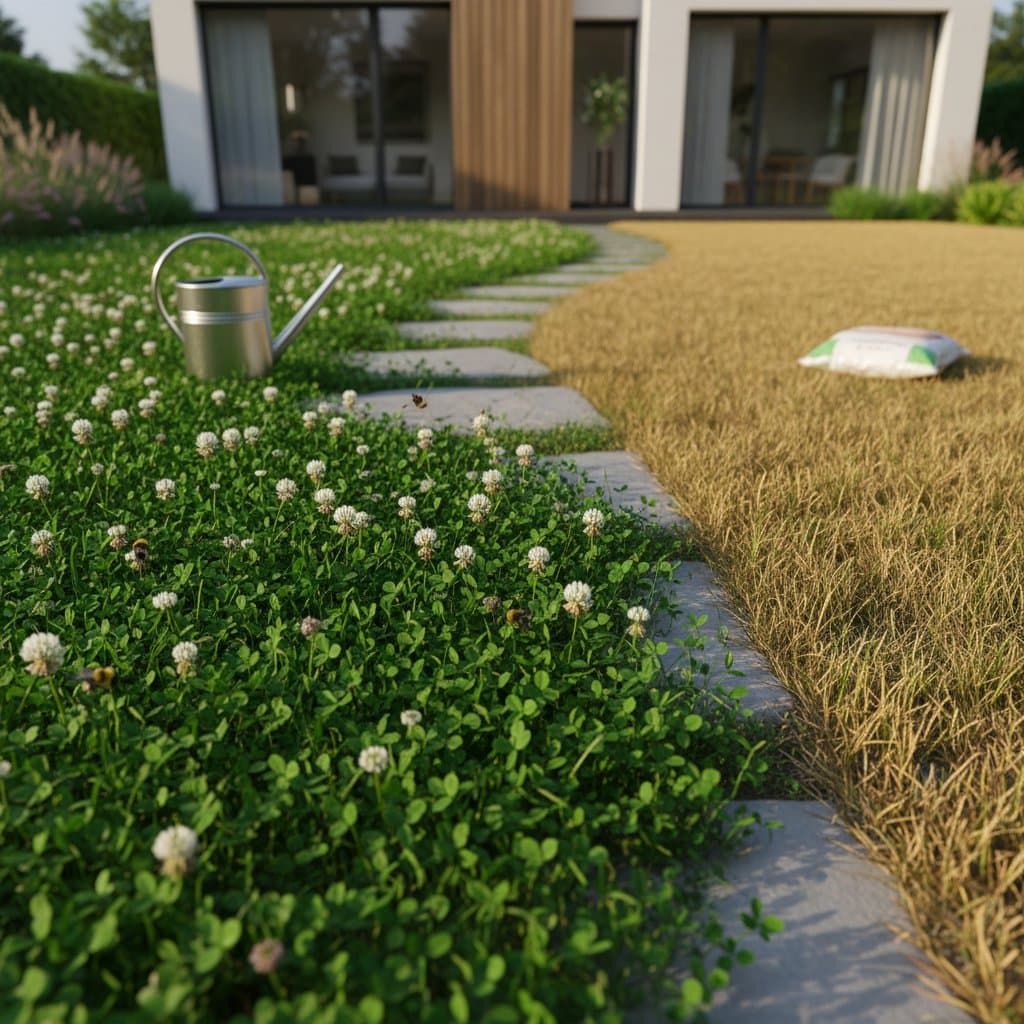
Clover Lawns: A Resilient Alternative to Traditional Grass
Homeowners seek vibrant green spaces that withstand environmental challenges without excessive effort. Clover lawns emerge as a superior option to conventional turf, maintaining their lush appearance during droughts while naturally enhancing soil quality. This approach delivers a manicured aesthetic with reduced water and maintenance demands, aligning with sustainable landscaping practices.
Key Considerations
- Adaptability: Thrives in diverse regions, from humid coastal areas to semi-arid interiors.
- Scalability: Ideal for small urban plots or expansive suburban properties.
- Climate Suitability: Excels in temperate zones featuring periodic rainfall.
- Primary Objective: Substitute or supplement grass to preserve a walkable, verdant surface.
Selecting the Appropriate Clover Variety
Selecting the correct clover species ensures compatibility with specific yard conditions and aesthetic preferences. White Dutch clover reaches approximately six inches in height and establishes rapidly through spreading growth. Microclover, by contrast, maintains a low profile with compact leaves, integrating seamlessly with existing grass or functioning independently.
The chosen variety influences mowing frequency and overall texture. Combining types introduces subtle variations in height and color, promoting fuller coverage. Horticulturists recommend microclover for its turf-like softness paired with soil health benefits. For a meadow-inspired design, blend white clover with low-growing fescue to achieve a deliberate, welcoming appearance.
A velvety expanse results from integrating microclover with fine fescue, offering uniform greenery.
Preparing the Site for Planting
Effective preparation sets the foundation for a thriving clover lawn. Begin by clearing the area of existing weeds and debris, then till the soil lightly to a depth of two to four inches. Test soil pH, aiming for a neutral range of 6.0 to 7.0; amend with lime if acidity prevails or sulfur for alkalinity.
Incorporate organic matter such as compost to improve drainage and nutrient retention. Level the surface to eliminate low spots that could collect water. This step minimizes future issues like uneven growth or erosion.
Designers emphasize that thoughtful site preparation enhances both functionality and visual appeal, creating a stable base for seeding.
Seeding for Uniform Establishment
Clover seeds possess a fine size, necessitating precise distribution for optimal results. Combine seeds with fine sand or sawdust to visualize application patterns during broadcasting. Scatter the mixture over prepared, moist soil and rake gently to achieve shallow incorporation, about one-quarter inch deep.
Initiate light, frequent watering to sustain surface moisture until germination occurs, typically within seven to fourteen days. Reduce irrigation frequency as plants develop deeper roots. Strategic seeding on sloped terrains facilitates natural drainage and contributes to seamless visual contours.
Professionals liken the process to applying a base coat of paint, advocating overlapping passes for consistent density. Employ a hand-crank spreader for expansive areas to maintain precision.
Uniformly seeded clover transforms into a cohesive green carpet within several weeks.
Fostering Natural Soil Fertility
As a member of the legume family, clover facilitates nitrogen fixation via root nodules, supplying essential nutrients to the soil ecosystem. This biological process nourishes adjacent vegetation and bolsters overall soil vitality over time. Enhanced structure reduces compaction, promoting aeration and water infiltration.
Position clover as a living mulch encircling shrubs and perennials to supplant chemical fertilizers. Stronger root networks emerge from this nutrient-rich environment, supporting resilient growth. Horticulturists describe clover as an integrated composting mechanism, fostering self-sufficiency.
The intricate root system of clover not only enriches the ground but also stabilizes nearby garden beds.
Controlling Weeds Through Density
Established clover forms a thick mat that suppresses weed germination by shading the soil surface. Dense foliage limits light availability to competing seedlings, curbing invasions naturally. Address any stubborn intruders through manual extraction, preserving the clover's integrity.
Steer clear of chemical herbicides, as they may damage desirable plants. This method sustains ecological harmony while minimizing intervention. Groundskeepers note that a robust clover cover serves as its primary defense mechanism.
Overlapping mature leaves in clover create a barrier, restricting space for weed development.
Incorporating Seasonal Blooms and Pollinator Support
Clover produces delicate white or pink blossoms that draw bees and butterflies, enhancing biodiversity. Mow regularly to sustain a uniform green if blooms detract from the desired uniformity. Alternatively, designate select zones for flowering to introduce dynamic seasonal elements.
This strategy enriches the landscape's texture and supports vital pollinators. Garden ecologists view blooming clover as evidence of a functional, life-sustaining environment.
Patches of flowering clover introduce gentle motion while inviting beneficial insects.
Defining Boundaries and Integrations
Integrate clover lawns thoughtfully within the garden framework for polished results. Establish borders using gravel paths, compact evergreen hedges, or indigenous perennials to delineate spaces clearly. Such definitions elevate the clover from mere ground cover to a purposeful design component.
These edges inhibit unintended expansion into cultivated areas and streamline upkeep. Designers assert that precise boundaries impart structure to informal plantings.
A subtle stone edging encases the clover, harmonizing it with adjacent features.
Sustaining and Enjoying the Clover Lawn
Transitioning to clover alters the yard's sensory experience and operational ease. The surface remains cooler during warm weather, demands infrequent mowing, and cultivates progressively healthier soil. Established patches require scant supplemental water, relying on natural resilience.
Homeowners observe renewed vitality: pollinators frequent the area, precipitation penetrates efficiently, and the former high-maintenance zone evolves into an effortless asset. Clover lawns represent a forward-thinking solution to climate variability and the pursuit of eco-conscious habitats.