
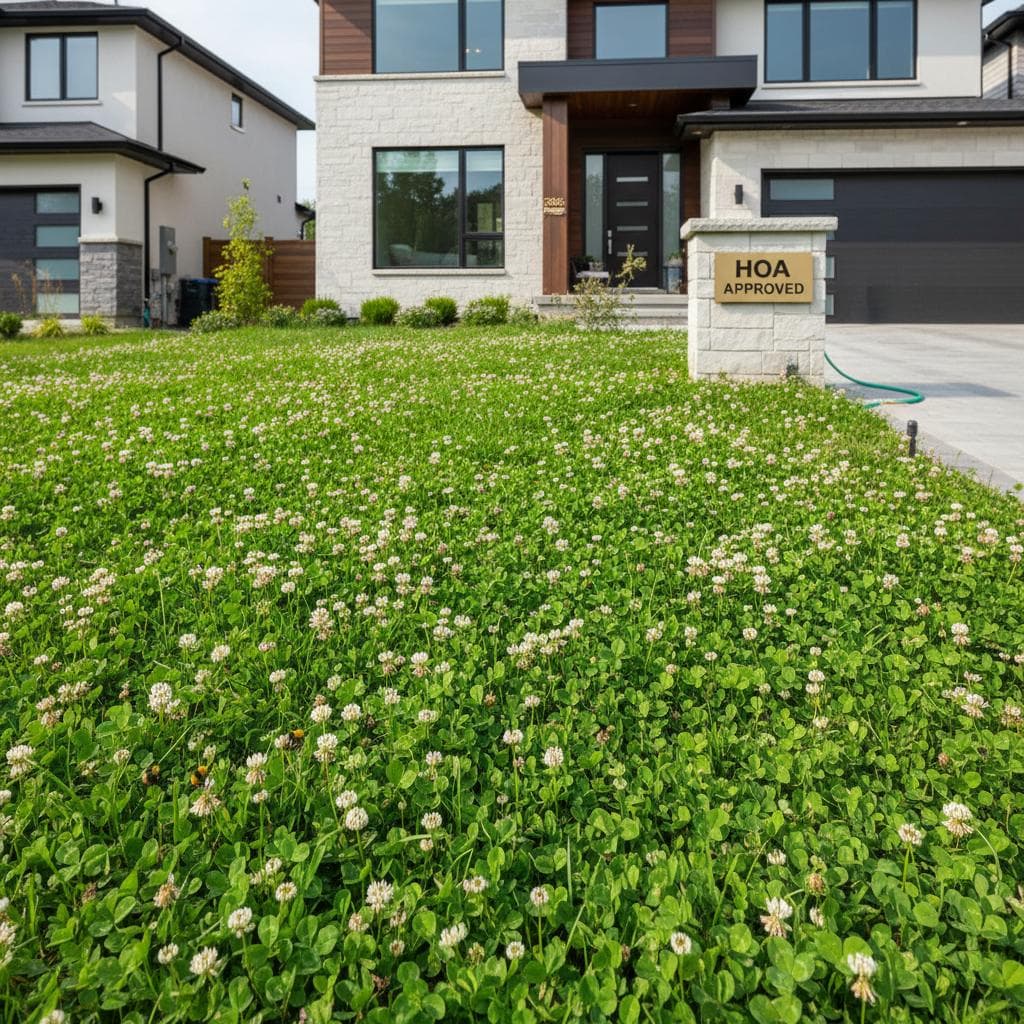
Clover Lawns Secure HOA Approval: Key Changes in 2026
Homeowners like Olivia and Marcus Reed have long sought sustainable alternatives to high-maintenance traditional turf. In their suburban neighborhood, tree-lined streets offered charm, yet the demands of watering and mowing traditional grass proved burdensome. A significant policy evolution in 2026 now permits eco-friendly options such as clover lawns, balancing community aesthetics with environmental responsibility.
Project Overview
- Homeowners: Olivia and Marcus Reed, parents to two young children
- Community: A thoughtfully planned development near a mid-sized urban center
- Property Size: One-quarter acre residential lot
- Design Firm: Terra Verde Landscape Studio
- Installation Team: GreenGrounds Outdoor Works
- Scope: Full lawn renovation incorporating native plantings
- Highlight: HOA-vetted microclover installation for reduced upkeep
Embracing Clover as a Modern Lawn Choice
Clover lawns represent a shift in residential landscaping, gaining traction through collaborative efforts among residents, professionals, and governing bodies. Previously, homeowners associations enforced strict rules favoring uniform grass coverage to maintain visual harmony. Now, updated regulations in 2026 recognize clover's ability to deliver comparable appeal while minimizing resource demands.
This variety, often microclover, grows densely to mimic the texture of conventional turf. It requires minimal irrigation, naturally deters common pests, and attracts beneficial insects like bees. Olivia Reed shared, “We sought a tidy appearance without the endless chores. Learning that clover met the new standards made the decision straightforward.”
To implement such a lawn, start by assessing soil conditions through a simple pH test kit available at garden centers. Amend the soil with organic compost to enhance fertility and drainage, targeting a neutral pH between 6.0 and 7.0. These preparations ensure the clover establishes strong roots within the first growing season.
Exploring the Reeds' Landscape Design
The Reeds' front yard flows seamlessly from the driveway into a vibrant microclover expanse. Landscape architect Laura Chen selected Trifolium repens var. 'Pipolina' for its petite foliage and subtle variegation, which integrates well with neighboring properties. Workers removed the existing sod using a sod cutter, then tilled in a two-inch layer of compost before broadcasting seeds at a rate of one pound per 1,000 square feet.
A meandering flagstone walkway bisects the area, providing practical access while preserving the clover's integrity. Perimeter borders feature a blend of fine fescue grasses and creeping thyme, creating a soft transition to the home's foundation. Viewed from the curb, the design maintains a polished uniformity, proving clover's compatibility with established neighborhood styles.
For similar projects, consider dividing the yard into zones: dedicate the central area to clover for its coverage, and use thyme or fescue along edges for added texture. This zoning approach enhances durability against play and foot traffic, common in family-oriented spaces.
Practical Advantages of Clover Integration
Clover excels in resource-efficient environments, thriving with limited nitrogen inputs since it converts atmospheric nitrogen into usable soil nutrients. This self-fertilizing quality benefits adjacent plantings, such as the Reeds' pollinator-friendly herb garden adjacent to their porch. Bees and butterflies frequent the site, drawn by the clover's delicate white flowers that bloom intermittently.
The installation included a buried drip irrigation network equipped with a moisture-sensing controller, slashing water needs by approximately 50 percent compared to standard lawns. Mowing occurs sparingly, perhaps three to four times annually, at a height of two inches to promote density. Laura Chen noted, “Our aim was a landscape that aligns with community guidelines and fosters ecological balance.”
Homeowners can replicate these efficiencies by installing smart timers on irrigation systems, programmed to activate only after dry spells exceeding three days. Pair this with mulching clippings back into the lawn during rare mows to recycle nutrients and suppress weeds naturally.
Navigating the 2026 HOA Policy Landscape
The 2026 amendments stem from pilot programs where demonstration lawns showcased clover's viability. Associations now outline specific criteria: at least 80 percent coverage with no more than 10 percent bare soil, a consistent green hue year-round, and routine upkeep to prevent overgrowth. These standards preserve collective curb appeal without stifling innovation.
Clover's resilience shines in challenging conditions; it retains color during droughts and rebounds from wear with minimal intervention. This reliability addresses past concerns about unkempt appearances. For those pursuing approval, submit a detailed proposal including seed variety specs, installation timelines, and projected maintenance schedules to streamline the review process.
Engage with your HOA board early by sharing case studies from similar communities. Highlight data on water savings—up to 75 percent less than turf—and pollinator boosts, which align with broader sustainability initiatives.
Sustaining and Enjoying a Clover Lawn
Several months post-installation, the Reeds' property displays a uniform, inviting surface that withstands daily use. The soft texture underfoot appeals to children playing, and the absence of chemical treatments ensures a safer environment. Neighbors have expressed curiosity, prompting informal discussions on replicating the setup.
To maintain vibrancy, overseed annually in early spring with a light application of the same clover variety, focusing on high-traffic spots. Monitor for invasive weeds by hand-pulling rather than herbicides, preserving the lawn's natural health. This proactive care yields a resilient yard that evolves with the seasons.
Landscapes like the Reeds' illustrate the harmony between regulatory updates and practical design. Homeowners gain time for enjoyment rather than labor, while communities benefit from collective water conservation and biodiversity gains. Clover lawns emerge not as a compromise, but as a forward-thinking solution for enduring green spaces.