
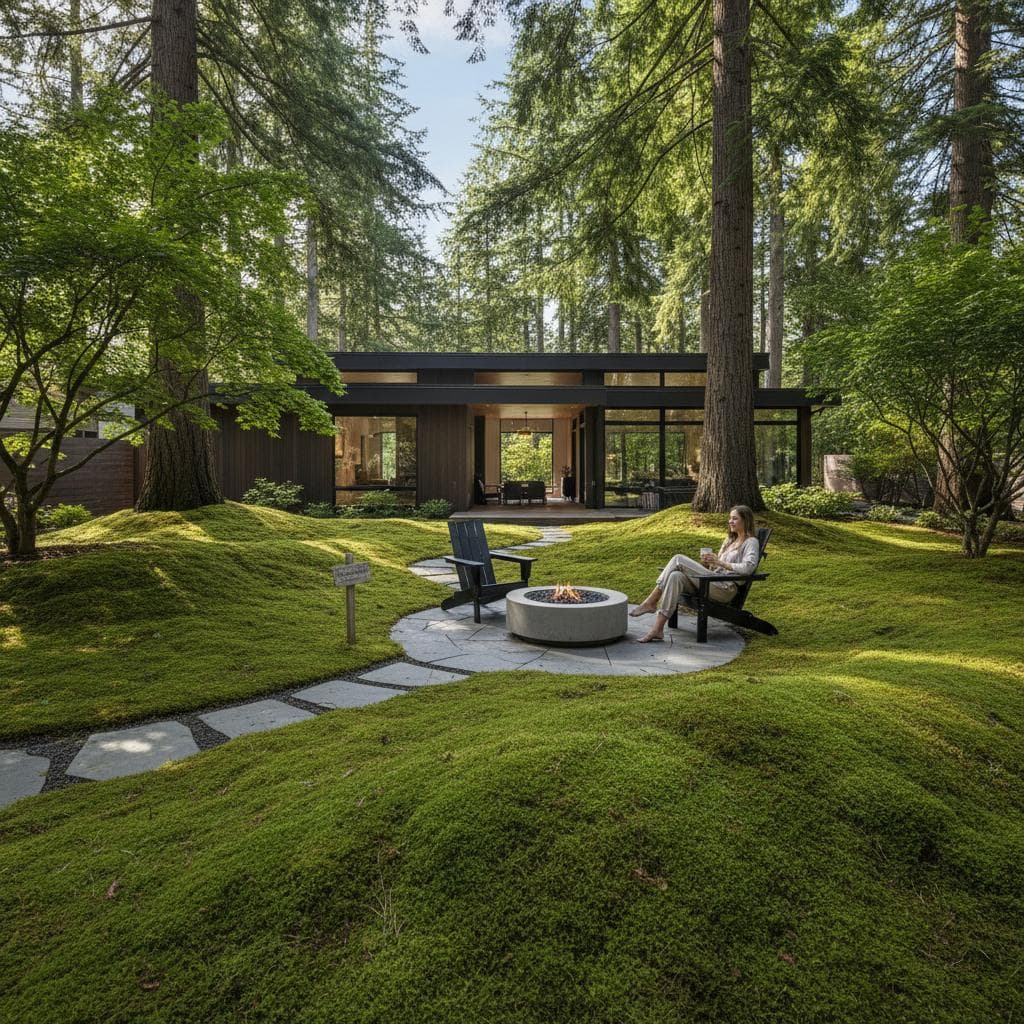
Why Homeowners Embrace No-Mow Moss Lawns
Standing barefoot on a soft, evergreen groundcover brings a profound sense of contentment, free from the noise of lawnmowers or the odor of fuel. In California and other regions, property owners replace conventional turf with moss lawns that flourish in shaded spots, demand minimal water, and require no trimming. This shift in landscaping reflects a pursuit of aesthetic appeal, ease, and ecological responsibility that aligns with contemporary lifestyles.
A moss lawn provides tranquility beyond its appearance. It encourages a relaxed pace, where upkeep remains light and the terrain pulses with vitality yet demands little effort. For those seeking to curb water usage, forgo synthetic fertilizers, and retain a lush expanse, moss emerges as a viable, enduring option.
Challenges of Traditional Grass in Contemporary Yards
Conventional lawns stem from entrenched traditions, yet they frequently clash with local conditions. In areas of California, water shortages, compacted earth, and tree-induced shade hinder grass development. Sustaining a pristine lawn under such constraints involves irrigation, nutrients, and regular maintenance that burden finances and the natural surroundings.
Grass lawns face several persistent issues:
- Elevated water needs. Turfgrass requires consistent irrigation to maintain vibrancy, particularly during arid periods.
- Frequent mowing demands. Regular trimming expends fuel, hours, and effort.
- Reliance on fertilizers and pesticides. Chemical aids often prove necessary for uniform growth.
- Soil degradation from erosion and compaction. Mowing and trampling compact the ground, promoting runoff and instability.
Moss overcomes these obstacles by prospering in locales where grass falters. It favors shaded, moist, or dense soils that challenge turf enthusiasts. Individuals weary of battling uneven patches or persistent weeds find liberation in the prospect of a resilient, self-perpetuating verdant layer.
Establishing a Moss Lawn: Step-by-Step Guidance
Converting turf to moss demands thoughtful groundwork rather than complexity. The method calls for diligence and precision, akin to preparing any new planting zone.
1. Site Clearance and Preparation
Start by eliminating current grass and weeds. Excavate the upper soil layer or employ a sod cutter for expansive zones. Smooth the surface with a rake, then compact it gently to form a solid base. Moss adheres more effectively to firm terrain than to aerated, loose earth.
2. Soil pH Adjustment
Assess the soil acidity and, if necessary, reduce the pH using elemental sulfur or acidic organic matter. Moss performs poorly in basic soils, rendering this adjustment essential. Garden supply stores offer simple testing kits to guide the evaluation.
3. Selecting Appropriate Moss Varieties
Numerous moss types adapt to specific settings. In shaded lawns, Hypnum (sheet moss) or Thuidium (fern moss) serve as favored selections. For areas with some sunlight, Bryum or Leucobryum withstand increased exposure. Procure mats or fragments from regional vendors or specialized growers for transplantation.
4. Planting and Initial Watering
Secure moss sheets or pieces against the prepped ground. Apply a gentle watering to aid adhesion. Sustain even dampness for weeks as the moss takes root. Employ a mist nozzle or fine spray device to avoid disturbance during establishment.
5. Sustaining Conditions and Exercising Patience
Full coverage may require several months. In this interval, restrict foot traffic, clear accumulating litter, and ensure reliable hydration. Established moss propagates on its own, needing only sporadic irrigation thereafter.
Addressing Myths Surrounding Moss Lawns
Moss lawns gain traction, yet lingering misconceptions warrant debunking to inform potential adopters.
Myth: Moss Thrives Exclusively in Damp, Dim Environments
Although moss prefers shade, select species endure average illumination and typical moisture levels. Success hinges on pairing the variety with the location. Sun-tolerant mosses manage with periodic hydration in less humid regions.
Myth: Moss Spreads Aggressively and Overtakes Landscapes
Moss lacks invasiveness. Its expansion occurs gradually and confines to favorable conditions. Shifts in light or aridity prompt natural retreat without intervention.
Myth: Moss Perishes Without Perpetual Moisture
Moss enters dormancy during dryness but rebounds swiftly upon rehydration. It lightens in hue amid shortages while staying viable, regaining depth after precipitation.
Myth: Moss Poses a Slippery Hazard
Dry moss offers a stable, textured surface. Slipminess arises only under heavy saturation, comparable to damp wood or rock. Strategic site selection and drainage mitigate this concern.
These clarifications equip homeowners to adopt moss lawns with assured, grounded perspectives.
Integrating a Moss Lawn into Daily Life
After rooting, a moss lawn integrates seamlessly into residential settings. It invites light tending, far below that of grass.
Routine Seasonal Care
- Remove debris promptly. Use a soft broom or blower to clear leaves and prevent overlay.
- Provide hydration as needed. Mist during prolonged droughts to preserve hue and vigor.
- Control foot traffic. While resilient, moss appreciates defined paths or low-impact zones for durability.
Ensuring Enduring Vitality
Moss evolves with local nuances, densifying in optimal spots and sparsening elsewhere. Such organic diversity enhances allure over time. Bare areas yield to simple infills via relocated fragments or new plantings.
Sustaining Visual Appeal Over Years
Moss lawns mature into textured tapestries that evolve subtly with seasons. Their soft contours and muted greens complement surrounding flora, fostering a cohesive, timeless yard. Regular observation allows for minor tweaks, ensuring the landscape remains a source of quiet delight and ecological harmony.