
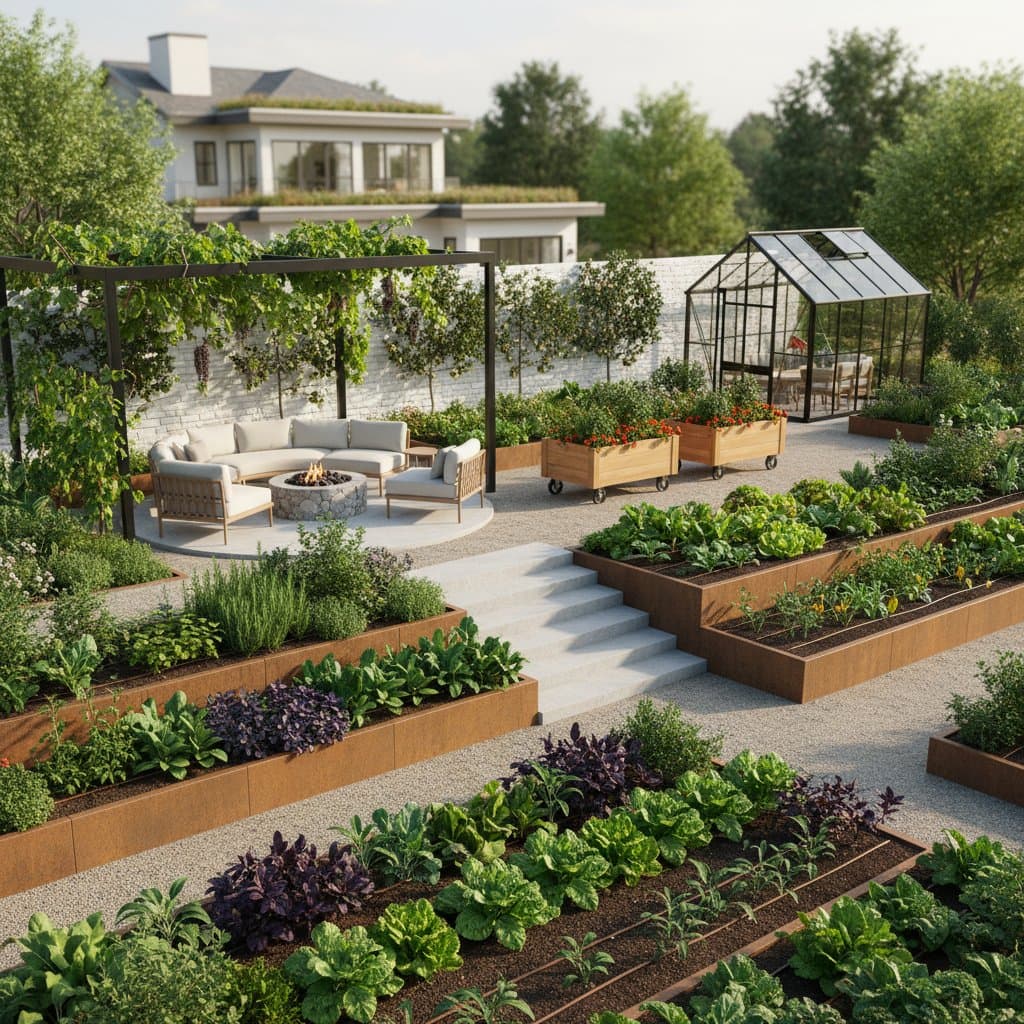
Enhance Food Security Through Stunning Edible Gardens
A thoughtfully designed edible garden serves as both an artistic feature and a dependable provider of fresh produce. Homeowners once viewed growing food as a labor-intensive task suited only to expansive rural settings. Now, it represents a strategic approach to bolstering food security, trimming grocery expenses, and crafting outdoor environments that delight the senses as much as they sustain the table. Through intentional planning, these gardens integrate effortlessly into diverse landscapes, whether compact urban terraces or generous suburban lots.
The Importance of Edible Gardens
Food security begins in your immediate surroundings. Cultivating personal fruits, vegetables, and herbs grants oversight of dietary quality and cultivation methods. This practice diminishes reliance on volatile global supply networks. Compact gardens deliver substantial yields of nutrient-dense foods. For instance, three raised beds might produce enough salad greens, fresh herbs, and root vegetables to feed a family of four weekly, while drawing in pollinators that enrich the broader ecosystem.
Edible gardens offer more than utility; they foster fulfillment and linkage to nature. The act of gathering a ripe tomato warmed by the sun or snipping rosemary for a meal instills profound satisfaction. This seasonal cadence ties individuals to natural rhythms, regardless of whether the space spans a vast plot or a simple balcony.
Strategies for Balancing Aesthetics and Yield
Productivity in an edible garden originates from meticulous planning. Evaluate sunlight exposure, soil composition, and watering resources first. Edible plants generally require a minimum of six hours of direct sun each day, so designate sunlit zones for primary crops. Shaded spots suit shade-tolerant options such as arugula, kale, or chives.
Approach the edible garden as a full landscape endeavor, not merely a utilitarian plot. Layer varying textures, hues, and elevations akin to ornamental arrangements. Position towering elements like pole beans or hollyhocks behind mid-height squash or low-growing lettuces. Incorporate vibrant edible blooms, including violas or borage, to infuse color and summon pest-repelling insects.
Employ raised beds or pots to delineate growing areas and simplify upkeep. These structures enhance drainage and minimize soil disturbance. Opt for sustainable options like untreated pine or recycled composite for alignment with existing yard features. Echo motifs from nearby patios or fences to achieve unified visual harmony.
Selecting Suitable Plants
Choose varieties aligned with local climate, soil conditions, and culinary habits. In temperate zones like the Pacific Northwest, root crops such as carrots, beets, and potatoes perform reliably. Heat-loving selections including zucchini, cucumbers, and melons excel in southern climates. Herbs like parsley, cilantro, and dill offer versatility across regions and pair well with diverse dishes.
Blend perennial and annual species for sustained vitality. Perennials such as rhubarb, strawberries, and fruit-bearing raspberries establish permanence and lessen annual labor. Annuals like radishes, peas, and sunflowers inject seasonal variety and maximize output. Implement crop rotation, shifting families like nightshades to legumes yearly, to preserve nutrient balance and curb disease cycles.
Blending Edibles into Overall Landscape
Edible elements need not isolate from the yard's core design. Seamless incorporation elevates appeal and optimizes functionality. Line pathways with berry brambles or fava beans as living borders. Substitute decorative hedges with productive alternatives, such as currant shrubs or fig trees, which yield harvests alongside form.
Incorporate vertical features to maximize limited areas. Install wire frames for climbing peas or vining tomatoes, or train apples into fan shapes against walls. An arbor draped in kiwi vines delivers dappled shade over seating zones and supplies tangy fruits in autumn. Define walkways with gravel or brick to facilitate access and maintain order amid abundant growth.
Prioritize water conservation, particularly in arid areas. Install soaker hoses or targeted emitters to deliver precise hydration. Apply a two-inch layer of straw or bark mulch around bases to conserve moisture, block weed emergence, and gradually enrich the earth as it decomposes.
Maintenance and Harvest Practices
Established gardens demand steady, straightforward attention to flourish. Conduct weekly inspections for issues, prune spent foliage, and apply balanced fertilizers quarterly. Amend soil with homemade compost or fish emulsion to promote robust growth without synthetic inputs.
Leverage companion planting for natural pest management. Pair garlic near roses to repel aphids, or intersperse onions among carrots to thwart root maggots. Harvest promptly to sustain production; remove outer leaves from cabbages continuously, and snip flowers from basil to prolong leaf output.
For extended use, adopt succession sowing. Plant quick-maturing seeds like spinach every two weeks to avoid shortages. Preserve surplus through simple techniques: blanch and freeze berries, or infuse vinegars with herb clippings. Clear spent plants and debris promptly to deter fungal issues.
Fostering Community Through Edible Spaces
Edible gardens extend benefits beyond the household, nurturing communal resilience. Exchange surplus produce or starter plants with neighbors to build reciprocal networks. Visible front-yard plots spark discussions and motivate collective adoption of home growing.
Youth gain lessons in stewardship by tending seedlings and tracking growth stages. In constrained urban settings, join or initiate community plots where groups divide tasks and shares. Such arrangements optimize resources, minimize excess, and cultivate social cohesion.
Achieving Enduring Sustainability
A refined edible garden elevates real estate appeal by merging utility with elegance. It bolsters ecological diversity, revitalizes depleted soils, and cuts emissions from commercial agriculture. Select hardy, drought-resistant varieties and permeable surfacing to ensure longevity.
View the garden as an appreciating asset. Off-season, evergreen options like bay trees and structural perennials preserve allure. Annual refreshes with cover crops like clover maintain fertility without exhaustive replanting.
Cultivating Lasting Abundance
Observe your garden's progression across cycles to appreciate its vitality. Each phase of growth and renewal underscores life's enduring patterns. Consistent tending transforms the space into a resilient haven that sustains physical health and emotional well-being.
Initiate modestly with one container of mixed greens or a single bed of herbs. Test soil pH with a basic kit, adjust with lime or sulfur as needed, and track progress in a journal. Refine approaches based on results, embracing the garden's inherent flexibility.
Through deliberate design and diligent care, the result transcends mere sustenance. It forms a foundation for vitality, shared experiences, and fortified independence. Each planting embodies foresight and ingenuity, yielding a sanctuary of plenty and equilibrium.