
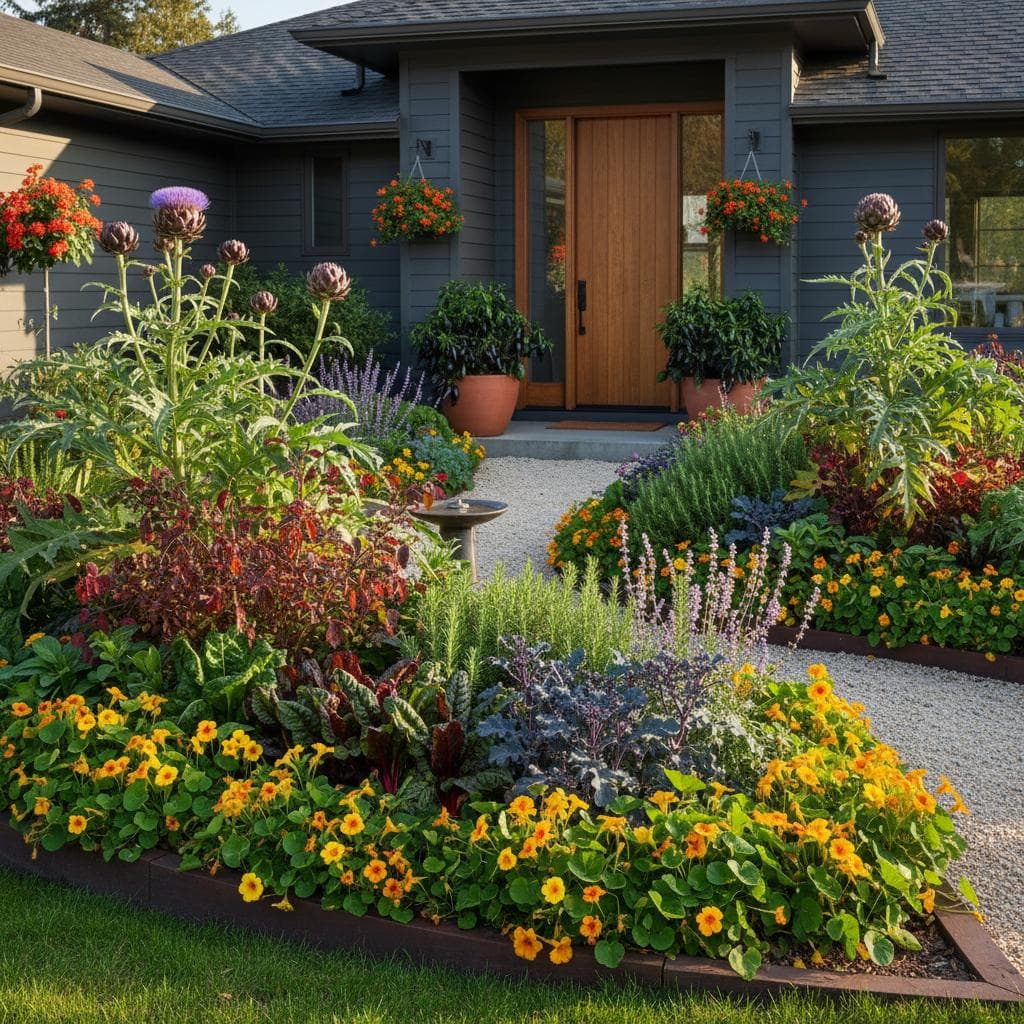
Transform Your Front Yard into a Vibrant Edible Landscape
A front yard brimming with fresh produce rivals the elegance of a traditional flower garden. Homeowners increasingly embrace the concept of growing food in visible spaces, blending beauty with functionality. Thoughtful design allows edible plants to provide structure, color, and texture while yielding harvests steps from your door.
Edible landscaping involves more than substituting vegetables for flowers. The approach integrates visual appeal and productivity to harmonize with your home and neighborhood. Careful planning results in a garden that invites admiration and delivers ongoing satisfaction.
Select Plants That Serve Dual Purposes
Success in edible landscaping hinges on choosing plants that combine ornamental qualities with culinary value. Vegetables, herbs, and fruiting shrubs often feature vibrant foliage, blossoms, and shapes comparable to decorative varieties.
Recommended options include:
- Kale and Swiss chard: These offer stems in shades of red, pink, and green, paired with ruffled leaves for dynamic texture.
- Artichokes: Silver-green leaves and towering buds create bold, architectural focal points.
- Blueberries: Expect white spring flowers, juicy summer fruit, and fiery autumn leaves on compact shrubs.
- Herbs like rosemary, thyme, and sage: Use them as evergreen borders, low hedges, or ground covers for year-round form.
- Edible flowers such as nasturtiums, calendula, and violas: Scatter their bright petals for pops of color in salads or garnishes.
To maintain interest across seasons, incorporate a mix of plant types. Plant cool-season options like lettuce and peas alongside warm-season selections such as peppers and eggplant. Perennials like herbs and berry bushes anchor the design, while annuals fill central areas for rotation.
Consider your climate and soil when selecting varieties. For instance, in milder zones, extend harvests with everbearing strawberries. Test soil pH for acid-loving blueberries, aiming for 4.5 to 5.5, and amend with sulfur if necessary. These steps ensure plants thrive and enhance the yard's aesthetic longevity.
Design with Hardscape for Definition and Flow
Edible gardens in front yards gain polish through strategic hardscape elements. Raised beds, containers, and edging materials organize plantings and ease upkeep. Select options that align with your home's architecture; sleek metal suits contemporary styles, while wood or stone complements traditional ones.
Incorporate pathways using gravel, bricks, or irregular stones to guide foot traffic and protect soil. Install arbors or trellises for vertical growth of vining crops like pole beans, grapes, or cucumbers. Position these to frame entrances or screen views, allowing light penetration for healthy growth.
Achieve unity by mirroring your home's palette. If exterior accents feature muted blues, choose containers or mulches in similar hues. This cohesion extends the house's lines into the landscape, creating a seamless outdoor room.
For practicality, elevate beds 12 to 18 inches to reduce bending and improve drainage. Line pathways with permeable materials to manage rainwater runoff. These features not only beautify but also support sustainable gardening practices.
Incorporate Decorative Elements for Style
Even utilitarian spaces benefit from artistic flourishes. Thoughtful accents tie the edible theme to your home's character, turning a functional plot into an artistic one.
Enhance with:
- Unique containers: Place galvanized buckets for herbs or espaliered dwarf citrus against walls.
- Ornamental supports: Paint trellises in coordinating colors for indeterminate tomatoes or sweet peas.
- Wildlife attractors: Install shallow birdbaths or pollinator hotels to draw bees and birds, boosting yields.
- Subtle illumination: Use solar-powered stakes along borders to accent nighttime views.
Balance elements to avoid overcrowding. Leave open areas for visual breathing room, ensuring the garden feels intentional rather than haphazard. These touches elevate daily enjoyment and impress visitors.
Adapt to Seasonal Rhythms
Edible front yards shift gracefully with the calendar, revealing fresh palettes as plants progress. This natural cycle sustains visual and productive appeal throughout the year.
During cooler periods, prioritize leafy greens, broccoli, and carrots for lush coverage. As temperatures rise, introduce heat-tolerant choices like zucchini, basil, and sunflowers. Intersperse quick-growing fillers such as radishes to occupy spaces between slower-maturing crops.
Practice crop rotation to prevent disease buildup; follow brassicas with legumes to fix nitrogen naturally. Apply compost annually, mixing two to three inches into the topsoil before planting. This routine fosters fertile ground, yielding robust plants with minimal intervention.
Monitor local frost dates to time successions. In transitional zones, use row covers to extend seasons for tender greens. Such adaptations keep the yard productive and prevent bare patches that detract from curb appeal.
Foster Connections Through Your Garden
A visible food garden sparks interactions with passersby. Neighbors might inquire about ripening figs or pause to enjoy blooming dill's fragrance. Distribute surplus yields or swap seeds to build local bonds and encourage similar projects.
Within the household, the space serves as an educational hub. Involve children in sowing seeds or harvesting microgreens, fostering appreciation for fresh food sources. Simple tasks like pruning mint yield tangible rewards, strengthening family routines.
Host casual gatherings around the garden, such as harvest picnics. These moments highlight the yard's role in promoting wellness and community spirit.
Sustain and Evolve Your Edible Haven
Maintaining an edible front yard demands ongoing attention to thrive as a harmonious feature. Regular weeding, watering, and pruning preserve neatness and health. Mulch beds with organic layers to suppress weeds and retain moisture, reducing maintenance time.
Observe performance each season; relocate underperformers or experiment with new varieties. Integrate companion planting, like marigolds near tomatoes to deter pests naturally. These habits refine the design, enhancing both beauty and output.
Ultimately, this landscape embodies resourcefulness and delight. It welcomes admiration, supplies nourishment, and elevates your property's presence. As your garden matures, it reflects a commitment to vibrant, self-sufficient living.