
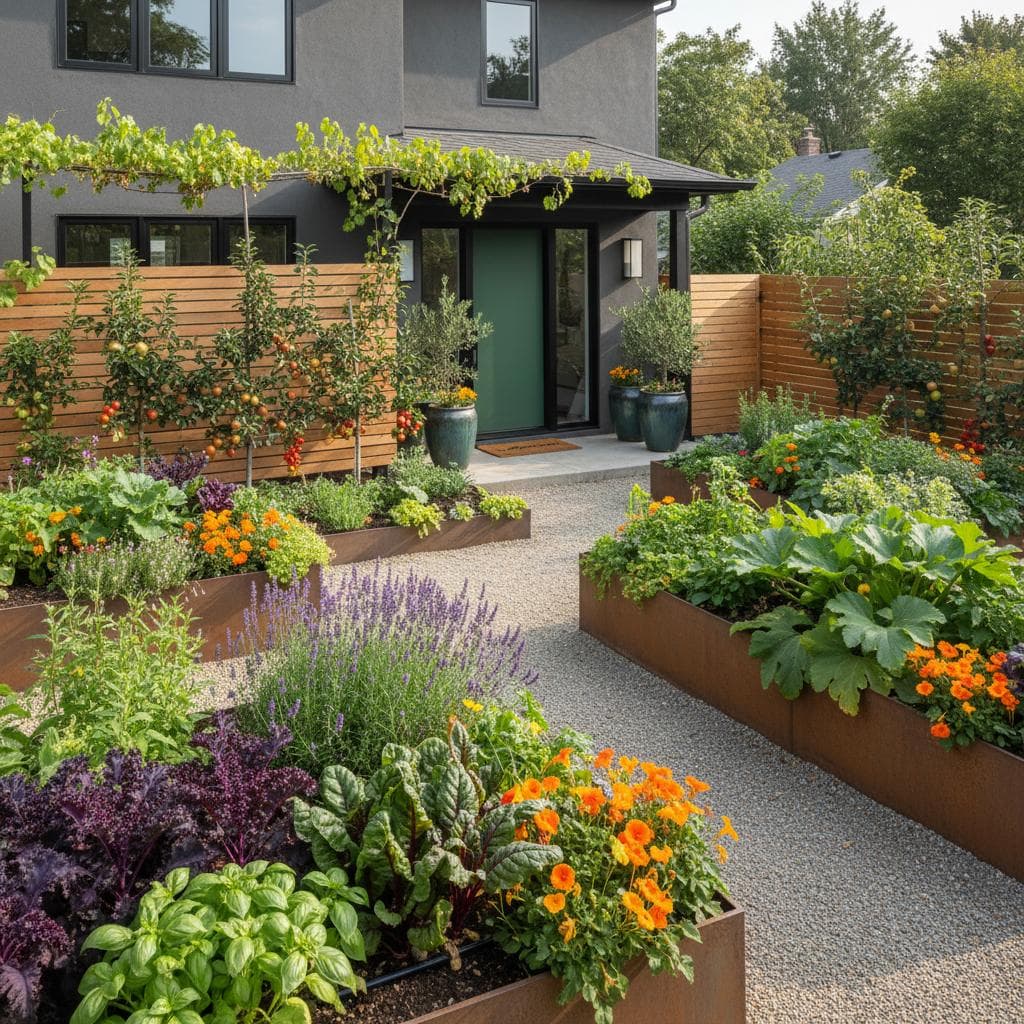
Front Yard Gardens: Integrating Edibles for Aesthetic and Practical Benefits
Homeowners Hannah and Luis sought to revitalize their front yard beyond a traditional lawn. They envisioned a space that enhanced visual appeal while yielding fresh produce for daily meals. Through careful integration of ornamental elements and edible plants, their landscape now combines elegance with functionality, drawing admiration from the street and supporting family nutrition.
Designing an Inviting Edible Entryway
The garden presents a lush, multi-layered vista from the sidewalk. Boxwood hedges define gentle curves around planting beds, complemented by a winding stone path leading to the entrance. Upon closer examination, edible elements emerge: blueberry shrubs neighbor lavender, rainbow chard borders the walkway, and thyme cascades between stepping stones.
This style, known as foodscaping, integrates ornamental and edible flora into a unified design. It redefines vegetable gardening by placing produce in visible, prominent areas. Form and utility coexist harmoniously in this setup.
Hannah noted, "We aimed for passersby to admire the garden's charm before noticing its culinary potential."
Blending Ornamental and Edible Plants Effectively
The garden's appeal stems from strategic plant pairings based on color, texture, and height, rather than strict categorization. This method maintains visual interest across seasons.
Effective combinations include:
- Kale 'Lacinato' paired with purple basil and ornamental grasses for contrasting foliage.
- Strawberries serving as groundcover under dwarf blueberry bushes to maximize space.
- Chives and garlic positioned near roses to naturally repel pests.
- Golden oregano framing beds of vibrant lettuce for edge definition.
These selections ensure both productivity and aesthetics. Leafy greens provide backdrop for blooming herbs, while fruit-bearing plants introduce timely accents.
Designer Marisol Vega from Meadowline Landscape Studio explained, "Approach edibles as integral design components. Consider their hues, forms, and seasonal evolution. Yield enhances the overall visual depth."
Implementing a Seasonal Rotation Plan
The landscape adapts through deliberate seasonal changes. Early spring features cool-season options such as spinach, peas, and radishes in elevated planters. Warmer months transition to heat-tolerant choices like tomatoes, peppers, and basil.
Perennial herbs offer stability amid these shifts. Rotations prevent gaps in coverage; as one planting matures, successors fill the space. Position taller specimens in bed centers and compact varieties along borders to foster a deliberate, tiered appearance.
During late fall, ornamental cabbages and Swiss chard provide enduring color. This strategy ensures the garden remains an attractive frame for the home, even during reduced harvests.
Enhancing Pollination and Plant Health Through Companions
Pollinators prove essential for a thriving edible garden. Vega incorporated nectar-rich herbs including lavender, thyme, and borage to draw bees and butterflies. These additions contribute ornamental value while fulfilling ecological needs.
Companion planting supports sustainability. Marigolds ward off soil nematodes, basil enhances tomato growth, and dill with fennel summons predatory insects for natural pest management. This self-regulating system minimizes external inputs.
Homeowners favor organic methods, applying compost and mulch alongside diverse plantings to forgo synthetic fertilizers and pesticides.
Selecting Compact, Attractive Edible Varieties
Front yard constraints demand plants that maintain tidiness, compact growth, and ornamental qualities. Prioritize selections suited to prominent display.
Recommended varieties for yield and visual merit:
- Rainbow chard, with stems in reds, yellows, and pinks for bold color.
- Loose-leaf lettuce blends, forming neat, varied textures.
- Eggplants, featuring glossy fruits and striking purple blooms.
- Bell peppers, producing petite, multicolored pods.
- Woody herbs like rosemary, thyme, and sage for form and fragrance.
These perform well in sunlit raised beds. They retain neatness through maturation, preserving the garden's polished look.
Vega advised, "Achieve plentiful harvests without disorder. Thoughtful variety choices sustain elegance amid abundance."
Incorporating Fruit Trees for Vertical Interest
Dwarf fruit trees introduce elevation and temporal structure. Two apple trees, espaliered against the fence, form an artistic branch framework that evolves seasonally.
A container-grown fig tree and a pomegranate shrub near the path round out the upper layer. Limited to under ten feet, these require straightforward pruning and accessible harvesting. Spring flowers deliver initial vibrancy, followed by autumn fruits.
Beneath the canopy, shade-tolerant herbs such as mint and lemon balm cover the ground, optimizing every inch.
Adding Subtle Lighting for Extended Use
Low-voltage LED lights prolong the garden's usability after dusk. Path illuminators guide footsteps, while uplights accentuate foliage textures on the fig and porch-side rosemary.
The scheme employs soft, ambient tones to avoid starkness. This integration makes the landscape an extension of the home's interior ambiance.
Luis commented, "Evening enjoyment was a priority. The lights infuse vitality into the space after sunset."
Fostering Community Through Shared Gardening
The productive front yard sparks neighborhood interactions. Visitors inquire about plant choices or exchange cultivation advice. Local children participate in strawberry gathering.
This installation inspires a shift from maintenance-heavy lawns to functional plantings. Neighbors experiment with herbs and berries, demonstrating harmony between utility and attractiveness.
Sustaining and Evolving the Garden Over Time
Several months post-installation, Hannah and Luis report transformed routines. Daily meals incorporate freshly harvested herbs and greens, gathered during brief outdoor forays. The space fosters family involvement in care and appreciation.
Ongoing refinements occur seasonally, testing new combinations and varieties while preserving core layout. These adaptations yield unexpected rewards.
Hannah shared, "The connection runs deep. Preparing dinner with child-planted herbs reinforces our bond."
Such designs affirm that aesthetic and nutritional goals align seamlessly. Strategic front yard planning nourishes physical well-being and enriches daily life.