
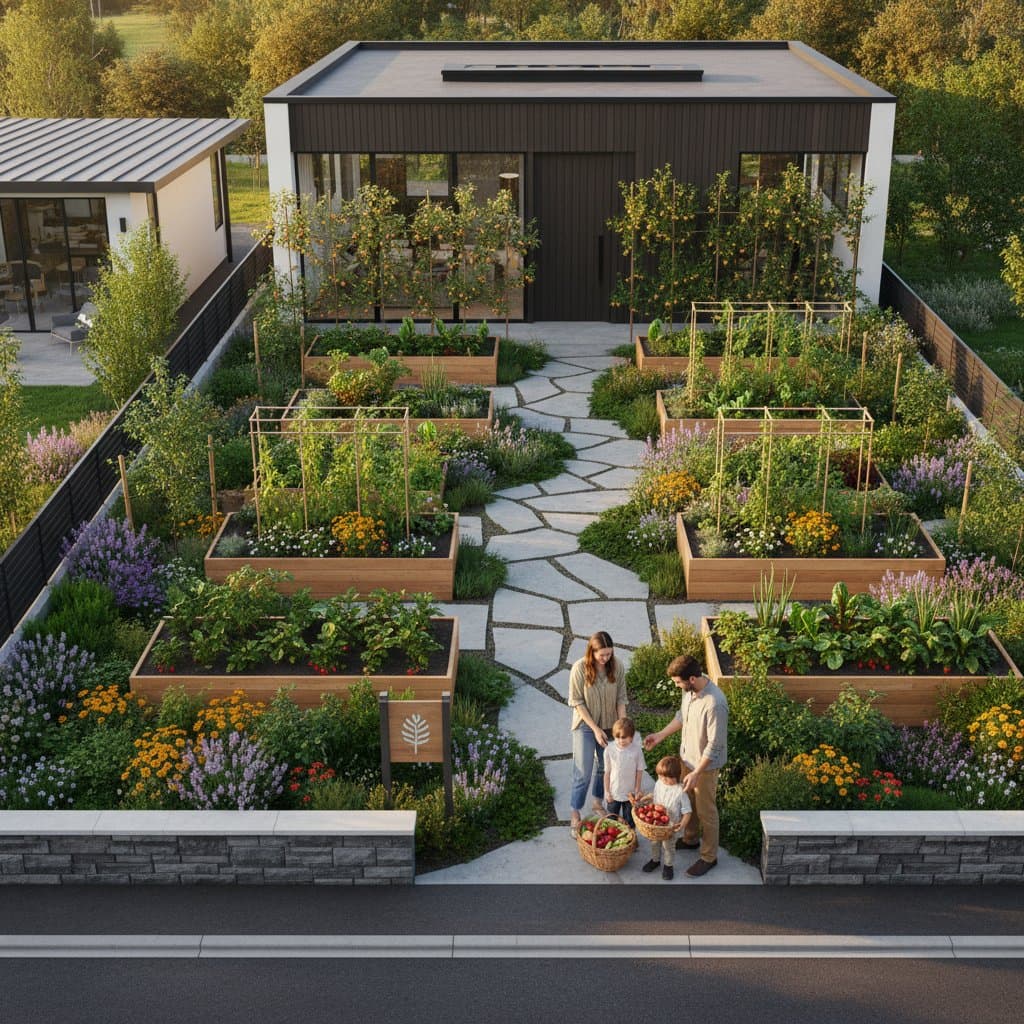
Edible Front Yards: HOAs Embrace Food Gardens in 2026
Front yards evolve from ornamental displays into productive spaces that sustain households and strengthen neighborhood ties. Homeowners associations increasingly permit these edible landscapes, allowing residents to integrate visual appeal with practical yields. Homeowners achieve this balance through strategic plant selections and structured layouts that enhance both aesthetics and functionality.
At a Glance
Location: Suburban areas spanning diverse climate regions
Size: Standard front yards ranging from 400 to 1200 square feet
Climate Zone: From temperate to arid environments
Project Goal: Merge aesthetic curb appeal with sustainable food production
Edible front yards fuse decorative elements with purposeful cultivation. This trend underscores commitments to environmental stewardship, personal resilience, and communal exchange. Effective designs preserve formality and discipline while embracing natural bounty.
1. Establish Clear Zones
Effective edible front yards rely on distinct divisions for planting sections. These boundaries promote visual harmony and streamline upkeep tasks. Incorporate raised beds, gravel pathways, and modest retaining walls to impose order without sacrificing accessibility.
A landscape designer observes, "An organized layout transforms perceptions from chaotic plot to curated retreat." Such intentionality secures approval from homeowners associations.
Defined zones curb unchecked growth and optimize irrigation efforts. Select materials that complement the residence's architecture, such as brick borders, metal containers, or wooden frames. For instance, position two 4-by-8-foot raised beds on either side of a main path to convert a monotonous lawn into a symmetrical vegetable patch.
Visual callout: Corten steel planters frame a pathway edged with thyme and chives.
2. Integrate Ornamentals and Edibles
Blend food-producing plants with decorative varieties to sustain lushness and variety throughout the year. Incorporate salad greens, culinary herbs, and berry bushes seamlessly alongside blooms and turf alternatives.
A horticulturist notes, "Visual dynamics like hue and form contribute as vitally as output in visible gardens." Varieties such as multicolored Swiss chard, deep-hued basil, and vivid scarlet runner beans deliver striking palettes comparable to traditional flowers.
This approach attracts beneficial insects and diversifies soil applications. Unify the composition by echoing forms or shades between categories. Consider lining a path with alternating lavender and kale plants to provide scent, visual relief, and unity.
Visual callout: Crimson chard pairs with blue salvia along an edge for harmonious tones and silhouettes.
3. Incorporate Proportioned Structures
Elements like arbors, trellises, and subtle fences introduce vertical elements that guide sightlines and accommodate vining produce such as beans, peas, or cucumbers.
A designer comments, "Measured supports direct attention and delineate areas without overwhelming the scene." Proper proportions ensure the garden integrates with the home rather than dominating it.
Vertical features conserve ground space and enhance air circulation for robust growth. Align materials with the property's exterior details, like siding or accents. Place a cedar trellis adjacent to the entryway to support indeterminate tomatoes and ease the shift from structure to greenery.
Visual callout: A wooden trellis bears pole beans next to a crisp white porch.
4. Emphasize Perennial Choices
Perennial food plants minimize annual labor and provide enduring skeletal support. Selections like rosemary, rhubarb, and asparagus reemerge reliably, delivering seasonal structure and sustained benefits.
A garden consultant remarks, "Perennials impart stability and cadence to productive yards." Their forms and surfaces shift gradually across seasons, anchoring the overall scheme.
These plants disturb soil less and demand reduced care over time. Intersperse enduring herbs with rotating annuals to build depth. A cluster of sage or artichokes can stabilize a bed where successive lettuce plantings occupy the foreground during peak warmth.
Visual callout: Silver-green artichoke foliage offsets a field of tender greens.
5. Optimize Water Delivery
Precise watering proves crucial when replacing grass with crops. Drip irrigation targets root zones directly, conserving resources and preserving dry surfaces on walkways.
A landscape technician advises, "Intelligent systems sustain vitality discreetly, eliminating exposed tubing or soggy areas." Conceal lines beneath organic mulch or stone coverings.
This method cuts consumption and suppresses weed emergence. Cluster species with comparable hydration requirements to streamline operations. For example, position citrus saplings and strawberry patches, both favoring steady dampness, along one irrigation circuit.
Visual callout: Mulch conceals tubing that nourishes citrus and herb groupings.
6. Implement Tiered Illumination
Strategic evening lights convert utilitarian gardens into welcoming venues. Low-voltage units accentuate routes, elevated planters, and standout specimens.
A designer suggests, "Graduated illumination prolongs outdoor hours with gentle radiance." Opt for 2700 K warm LEDs to softly illuminate leaf patterns.
Such setups enhance security and nighttime navigation. Integrate fixtures unobtrusively into borders or stone margins. Install embedded lights along a pebble trail directing to a modest bench surrounded by rosemary and lavender.
Visual callout: Gentle uplights accentuate olive tree contours at the approach.
7. Align with Community Standards
In governed communities, policy evolution enables these transformations. Associations revise covenants to accommodate ordered edible displays.
A property manager emphasizes, "Intentional care and crisp maintenance bridge productivity with polish." Precise contours, firm perimeters, and routine grooming affirm that utility aligns with refinement.
Adherence prevents conflicts and liberates innovation. Employ contained edges paired with compact varieties near public paths for neat presentation. Substitute dwarf blueberries or parsley borders for conventional hedges, respecting stature restrictions.
Visual callout: Neat herb rows define the path edge sharply.
8. Plan for Seasonal Continuity
Designs must captivate across cycles, even amid crop successions. Backbone features and tactile elements sustain engagement during lulls. Persistent evergreens, swaying grasses, and steadfast herbs occupy voids left by temporaries.
A landscape planner states, "Structures buffer seasonal ebbs, ensuring fluid evolution." Elevated frames, stone routes, and intimate rest spots preserve vibrancy into dormant periods.
This strategy upholds exterior allure and facilitates care. Schedule overlapping yields to avoid sparsity. Follow warm-season crops with garlic and onions to sustain foliage and output.
Visual callout: Enduring kale and rosemary frame a rock boundary through winter.
Sustaining the Edible Landscape
An edible front yard reshapes daily routines and social bonds. Plucking fresh basil by the entrance or offering surplus zucchini to neighbors fosters connections. As the plantings establish, they integrate into habits beyond fleeting endeavors.
Consistent pruning, organic waste recycling, and targeted renewals preserve vigor. Residents gradually identify climate-adapted selections, tidy cultivars, and synergistic pairings that optimize form and harvest. Ultimately, the space nourishes individuals and collectives, demonstrating harmony between utility and grace.