
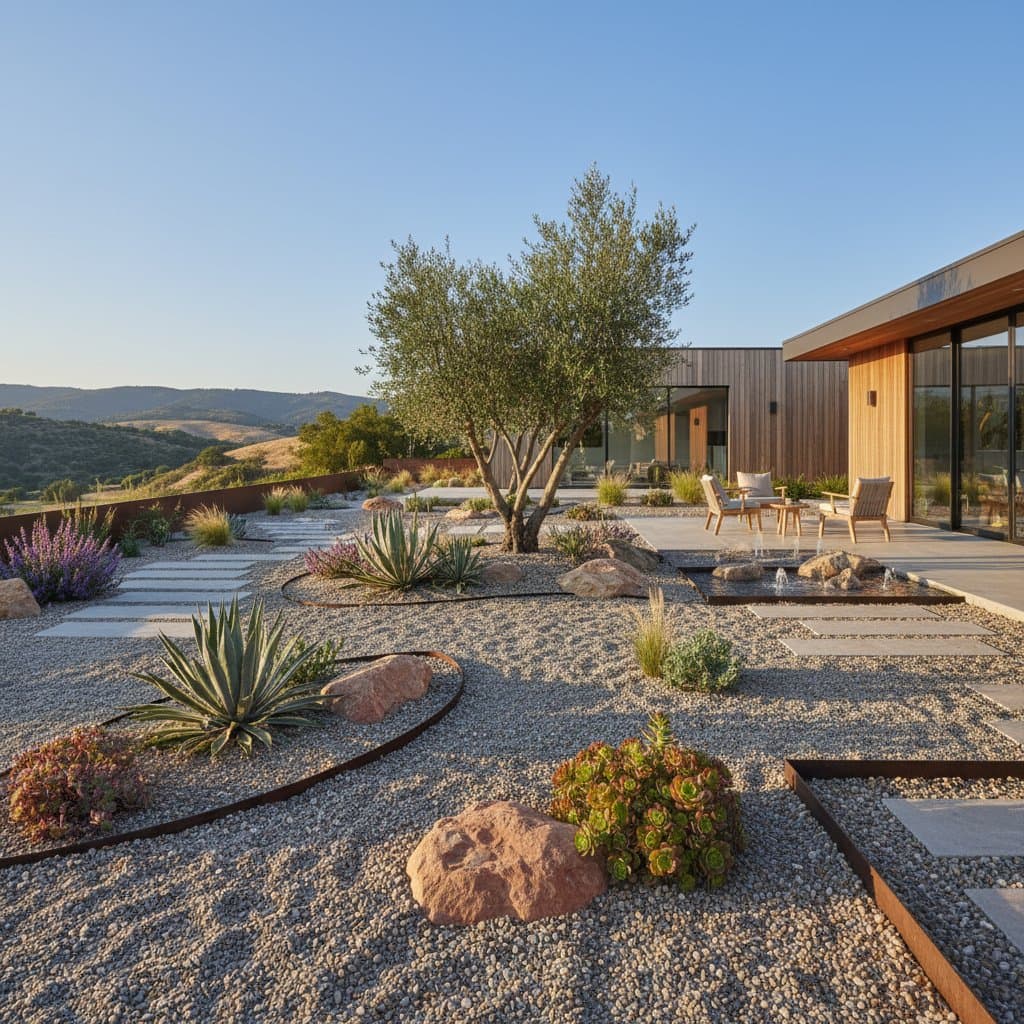
Visual Highlight: "Warm beige gravel sets off the silver-green leaves of Artemisia, creating striking contrast."
Prepare the Site for Lasting Weed Suppression
Site readiness precedes planting and establishes long-term ease. Thorough initial efforts prevent persistent issues and sustain a tidy appearance.
Practical Advantages: Early intervention curbs invasive growth, minimizing future interventions. Design Guidance: Clear all current growth, then install permeable geotextile fabric under the gravel base. Steer clear of non-breathable plastics that hinder aeration and biological activity.
Concrete Illustrations: In modest areas, manual removal suffices for the initial growing period; as vegetation densifies, the combined barrier of fabric, gravel, and plants handles remaining intrusions. Edge borders with metal or stone to contain materials neatly.
A maintenance authority might advise: "Invest effort at the outset. A pristine base ensures decades of straightforward care."
Visual Highlight: "Spotless gravel foundation awaits planting, fabric secured beneath aligned stones."
Incorporate Plants for Texture and Vitality
Dynamic planting elevates gravel gardens through varied elevations and forms. Strategic combinations introduce rhythm and encourage visual discovery.
Practical Advantages: Thick arrangements shield the earth, limit weed emergence, and anchor the substrate. Design Guidance: Blend vertical elements like Russian sage with ground-hugging options such as creeping thyme. Replicate signature species throughout to unify the composition.
Concrete Illustrations: Elevated perennials including Echinops or Gaura rise above foundational layers of compact herbs and sedges. Incorporate evergreens for winter structure and seasonal bloomers for color shifts. Native selections like lavender or yarrow bolster ecological benefits.
A plant expert might comment: "Motion infuses vitality into these spaces. Breezes through foliage impart distinctive personality."
Visual Highlight: "Delicate Gaura hovers over thyme carpets, tempering the gravel's solidity."
Integrate Lighting to Extend Enjoyment
Thoughtful illumination redefines gravel gardens at dusk, accentuating surfaces and guiding movement. Layered approaches provide ambiance without overwhelming brightness.
Practical Advantages: Prolongs usability into evenings and secures navigation along routes. Design Guidance: Pair low-energy pathway fixtures with gentle upward beams on vertical features. Select 2700 K sources to mimic natural warmth.
Concrete Illustrations: Solar-powered stakes delineate gravel trails, while recessed wall units diffuse light over rugged walls or boulders. Timers automate cycles, conserving energy while highlighting nocturnal plant silhouettes.
A illumination specialist might suggest: "Layered effects prolong outdoor hours softly, evoking lantern glow rather than stark beams."
Visual Highlight: "Gentle pathway illumination follows gravel lines to an inviting, shadowed seat."
Design for Effective Rainwater Integration
Gravel gardens inherently aid conservation efforts. Intentional contours transform precipitation management into an aesthetic element.
Practical Advantages: Slows surface flow, averts soil loss, and promotes groundwater recharge. Design Guidance: Introduce gentle inclines or minor channels to channel water toward absorbent zones. Favor porous gravel over solid hardscapes for infiltration.
Concrete Illustrations: A simulated stream of smoothed river rocks serves dual purposes as runoff guide and ornamental path. Integrate rain gardens with deeper gravel pockets to capture and filter excess.
A architectural expert might explain: "Superior hydrology blends seamlessly. Rainfall integrates quietly, nourishing the landscape invisibly."
Visual Highlight: "River stone dry stream directs water through the design, blending utility with form."
Sustain with Seasonal Care Routines
These gardens demand sparse attention to remain vibrant. Periodic actions preserve intent and vitality.
Practical Advantages: Limits routine labor while fostering robust development. Design Guidance: Gently redistribute gravel to renew patterns and clear accumulations. Trim back faded growth in late winter ahead of spring emergence. Replenish layers periodically to uphold thickness.
Concrete Illustrations: Post-storm, a brief clearing of foliage maintains clarity. Monitor for pest indicators and apply organic remedies if needed. Annual soil tests guide any nutrient adjustments without excess.
A cultivation specialist might remark: "These designs value mindful presence over relentless toil. Upkeep focuses on refinement, not resistance."
Visual Highlight: "Smoothly raked gravel reveals precise patterns and renewed vibrancy."
Experiencing Life in a Gravel Garden
Established gravel gardens transcend simple landscaping; they cultivate supportive habitats for pollinators, avian life, and insects alongside resource efficiencies. Maturing flora merge fluidly with stone bases, yielding nuanced strata that shift with illumination and weather.
Residents frequently discover increased outdoor time, drawn by the space's accessibility and comfort. Stable furnishings, moisture-resistant routes, and the soft gravel tread promote relaxation. Even in arid periods, the area pulses with light play and gentle foliage sway.
To nurture ongoing success, track seasonal responses. Modify densities where overgrowth or gaps occur, and trim for circulation. Gradually, equilibrium emerges, requiring progressively less adjustment.
Steps to Implement Your Design
Commence by consulting local experts for site-specific advice on materials and species. Gather tools like rakes, edgers, and wheelbarrows for installation. Budget for initial outlays, noting long-term savings in time and utilities. Begin small if uncertain, expanding as confidence grows. Professional assistance ensures precision, particularly for larger transformations.