
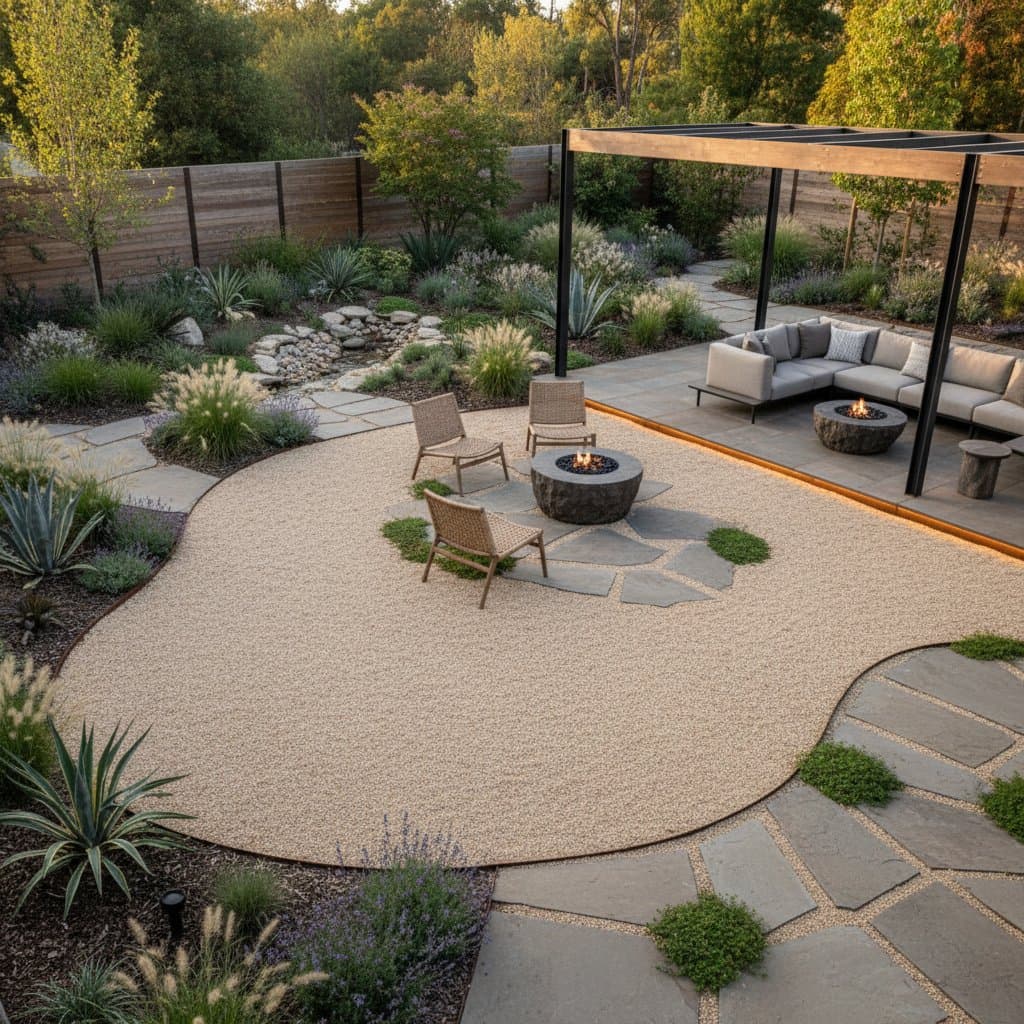
Why Gravel Outperforms Concrete for Affordable Patios
A gravel patio offers a relaxed, natural refinement that integrates seamlessly with the surrounding landscape. Homeowners who prioritize style on a budget find gravel provides superior flexibility, quicker installation, and genuine environmental advantages. This material suits both contemporary and traditional gardens, maturing gracefully with little maintenance required.
Key Features at a Glance
- Location Suitability: Performs well in diverse climates
- Surface Type: Loose or compacted aggregate
- Material Options: Pea gravel, crushed stone, or decomposed granite
- Primary Goals: Cost-effective, versatile, and environmentally responsible patio surface
Permeability for Landscape Protection
Concrete forms an impermeable barrier that traps water on the surface, while gravel permits natural infiltration. This feature supports healthy root systems and minimizes runoff that might otherwise erode nearby planting beds or pathways.
Core Advantage: Permeable surfaces aid in natural stormwater management. Rainfall percolates into the soil rather than accumulating and causing issues.
Design Considerations: Gravel complements plantings adapted to local climates. In arid zones, it enhances xeriscaping with species like agave, yucca, or desert spoon. In humid regions, it pairs with fescue or sedge lawns that require effective drainage.
Practical Example: On a gently sloped backyard, gravel terraces control water flow effectively. The surface remains stable during intense downpours, allowing adjacent vegetation to flourish without waterlogging.
A contractor observes: “Concrete repels water. Gravel manages it.”
Visual Suggestion: Fine gravel channels rain between flagstone steps, maintaining a dry walking area.
Comfort and Texture for Everyday Use
Concrete often reflects intense sunlight, becoming uncomfortably warm by midday. Gravel remains cooler and delivers a satisfying crunch reminiscent of traditional garden paths and historic courtyards.
Core Advantage: The textured surface muffles footsteps, fostering a serene outdoor ambiance. It absorbs rather than reflects heat, ensuring comfort throughout the day.
Design Considerations: Select finer gravel for areas intended for bare feet. In zones for dining or lounging, opt for compacted decomposed granite to provide a stable base that supports furniture without sinking. For pathways, coarser pea gravel adds a sensory, engaging element.
Practical Example: Beneath a pergola in a shaded patio, golden decomposed granite harmonizes with the earthy soil tones. This choice creates a tranquil, unified space that balances firmness with subtle softness.
A designer notes: “Gravel offers subdued hues but vibrant sound and feel.”
Visual Suggestion: Golden decomposed granite shimmers gently under climbing vines.
Visual Warmth and Seamless Integration
Concrete appears stark and utilitarian, whereas gravel introduces nuanced color variations and textures that echo natural surroundings.
Core Advantage: The inherent palette of gravel diminishes glare and enhances compatibility with organic elements. Hard surfaces thus feel integrated rather than imposed upon the environment.
Design Considerations: Match gravel shades to prevalent features in the yard. Gray crushed stone aligns with slate walls in woodland settings. Warm decomposed granite accents terracotta containers in sunlit spaces, yielding a harmonious, enduring composition.
Practical Example: Adjacent to a Craftsman-style home, a modest patio employs crushed limestone. The pale gray expanse diffuses light softly, avoiding chilliness and complementing wooden furnishings amid verdant borders.
A garden builder comments: “Gravel provides patio functionality while preserving garden serenity.”
Visual Suggestion: Silver-gray gravel mirrors the subtle tones of adjacent limestone walls.
Durability Across Seasons
Freeze-thaw cycles can fracture concrete over time. Gravel accommodates shifts without permanent damage, adapting to environmental fluctuations.
Core Advantage: Movements from seasonal changes or soil settling require no extensive fixes. Simple regrading restores the surface affordably.
Design Considerations: In regions with harsh winters, angular gravel interlocks for enhanced stability. In milder climates, rounded pea gravel promotes coolness and ease of traversal. Appropriate selection guarantees consistent performance year-round.
Practical Example: On a mountainous site, crushed basalt endures snowfall intact. Come spring, a brief raking revives the pristine condition.
A contractor remarks: “Gravel adapts to the seasons. Concrete resists them.”
Visual Suggestion: Crushed basalt holds firm post-winter melt.
Installation Essentials for Lasting Results
Success with a gravel patio hinges on thorough site preparation. Start by compacting a four-inch layer of crushed stone as the sub-base. Install landscape fabric to suppress weeds, then apply two inches of selected gravel on top.
Core Advantage: A robust foundation prevents settling and optimizes drainage. Edging materials define boundaries cleanly, stopping gravel from spreading into adjacent turf or plantings.
Design Considerations: Organic curves enhance informal garden aesthetics, whereas linear edges fit sleek, modern designs. Layering coarser stone beneath finer gravel achieves both stability and comfort.
Practical Example: For a compact patio, decomposed granite caps a compacted limestone base. The outcome delivers a sleek, resilient finish that withstands rainfall without issue.
A builder advises: “Proper preparation is key. A strong base turns gravel into a reliable surface.”
Visual Suggestion: Multi-layered gravel setup delivers enduring firmness.
Maintaining and Enjoying Your Gravel Patio
Gravel patios deliver long-term value through straightforward care. Regular raking ensures evenness, while periodic additions refresh depth and vibrancy. The design handles heavy rains with efficient drainage and resists summer heat buildup. Furniture remains steady, and the subtle footfall sounds contribute to a harmonious outdoor experience.
Opting for gravel over concrete elevates outdoor spaces from fixed installations to dynamic retreats. This choice unites economic sense with aesthetic appeal, functionality with thoughtful design.