
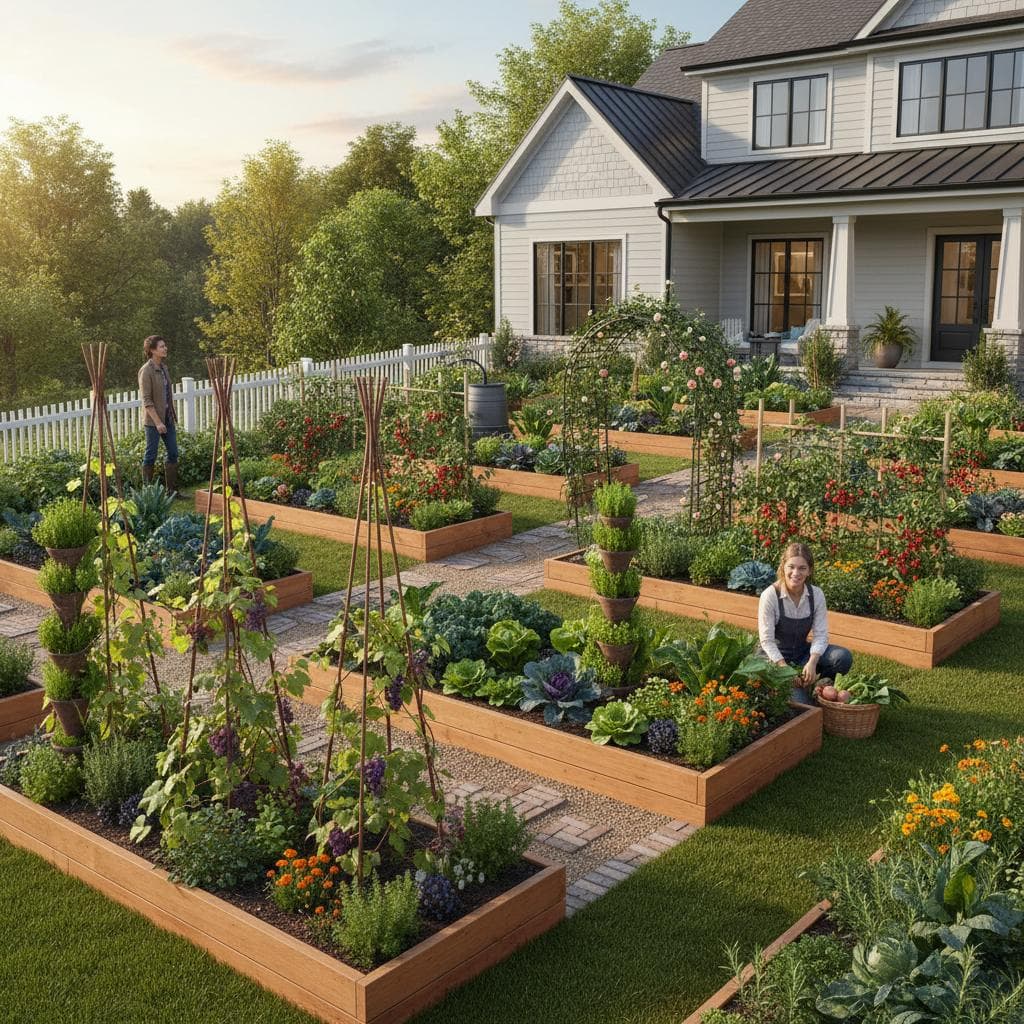
Planning Your Edible Front Yard
An edible front yard merges aesthetic appeal with practical productivity and neighborhood appeal. This approach reimagines the often underutilized space in front of a home as a dynamic mini-farm capable of nourishing a family and producing substantial income. Beyond mere gardening, it creates a vibrant landscape that enhances street visibility while yielding fresh vegetables, herbs, and fruits valued at thousands of dollars per season.
Key Project Overview
Suitable Locations: Urban or suburban residential properties
Applicable Yard Sizes: From compact plots to quarter-acre areas
Climate Considerations: Tailored to regional growing zones
Primary Objectives: Achieve visual attractiveness alongside food production and economic benefits
A thoughtfully designed edible front yard can produce produce worth up to $3,000 each year. This estimate includes cost savings from self-grown foods and revenue from sales at local markets or to nearby residents. Success hinges on integrating functionality with design principles, allowing even limited areas to exceed typical performance levels.
Selecting High-Value Crops
Profitability begins with deliberate choices in plant varieties. Prioritize crops that deliver strong returns and high outputs suited to local conditions. Options such as leafy greens, herbs, and space-efficient fruit bearers frequently surpass larger-scale plants like corn or squash in efficiency.
Practical Advantages: Efficient selections minimize unused space and optimize the ratio of harvest to labor invested.
Design Recommendations: Combine perennial and annual species for consistent performance and diversity. Perennial herbs including rosemary, oregano, and sage offer foundational structure, while annual vegetables occupy interim spaces.
Practical Illustration: In an eight-foot raised bed, plant twenty lettuce heads, each retailing for several dollars at farmers markets. Intersperse basil or cilantro among rows to increase overall productivity.
One experienced grower notes: "Consider dollars per square foot. Microgreens and herbs typically yield the highest returns."
Suggested Visual Element: Compact tomato trellises positioned behind borders of basil and nasturtiums.
Preparing Soil and Maximizing Vertical Space
Healthy soil forms the foundation of any successful garden, while vertical elements expand usable area without encroaching on ground space. Begin by testing and amending soil to support robust growth, then incorporate trellises, walls, and hanging planters to grow upward.
Practical Advantages: Proper soil preparation ensures nutrient availability, and vertical techniques multiply growing capacity in constrained yards.
Design Recommendations: Amend soil with compost and organic matter for fertility. Use espalier techniques for fruits against fences or install wire frames for vining crops like peas and beans.
Practical Illustration: Build a simple trellis along a fence to support cucumbers and pole beans, freeing ground level for root vegetables. In a 10-square-foot vertical setup, harvest enough greens to cover weekly salad needs.
A gardening expert advises: "Vertical growth turns tight spaces into abundant producers—focus on sturdy supports for heavy yields."
Suggested Visual Element: A fence adorned with climbing peas and hanging strawberry pots beside ground-level herb beds.
Blending Ornamentals with Edibles
Maintaining visual interest remains essential, as a yard dominated by vegetables may look unkempt by summer's peak. Incorporating ornamental plants preserves year-round elegance and bolsters the health of edible varieties.
Practical Advantages: Flowering plants draw pollinators, repel insects, and sustain attractiveness across seasons.
Design Recommendations: Match vegetables with blooms that require comparable sunlight and moisture. Marigolds safeguard tomato roots from nematodes, while echinacea and rudbeckia provide vibrancy as leafy crops wane.
Practical Illustration: Pair purple basil with coneflowers, or position dwarf sunflowers to frame pepper plantings.
A landscape professional observes: "Edible beds that mimic ornamental gardens comply with municipal regulations and meet neighbors' aesthetic preferences."
Suggested Visual Element: Vivid zinnias interspersed with lettuce and carrots in a geometric bed layout.
Incorporating Edible Trees and Shrubs
Dwarf fruit trees and berry-producing shrubs provide enduring framework and ongoing harvests. These elements establish the garden's core structure while delivering fruits seasonally.
Practical Advantages: Trees offer shade, screening, and produce, stabilizing the overall planting scheme.
Design Recommendations: Select compact or semi-dwarf cultivars scaled to the home's proportions. Position lower shrubs such as blueberries or currants beneath taller specimens.
Practical Illustration: Place a dwarf apple tree adjacent to the entrance path, surrounded by blueberry bushes and thyme as ground cover, forming an inviting focal point.
One designer comments: "Trees provide design stability and signal to passersby that this space functions as a cultivated garden rather than an utilitarian farm."
Suggested Visual Element: A small apple tree bordered by lavender and strawberries to enhance the entryway's softness.
Creating Paths and Social Areas
A front yard designed for interaction transforms it from a solitary space into a communal asset. Well-defined paths and modest seating arrangements promote organization and ease of access.
Practical Advantages: Clear pathways reduce soil damage and simplify crop collection.
Design Recommendations: Choose paving materials harmonious with the home's style, such as gravel, flagstone, or decomposed granite. Include a compact bench or cafe table to facilitate neighborly exchanges.
Practical Illustration: Install a winding path through elevated beds culminating at a bench under a fig tree's canopy.
A landscape specialist remarks: "Well-placed paths link individuals to the garden, cultivating community as effectively as they support output."
Suggested Visual Element: A flagstone trail meandering through verdant beds to a basic wooden seat.
Monitoring Yields and Optimizing Returns
Achieving a $3,000 annual return demands diligent oversight. Maintain logs of investments, outputs, and costs to pinpoint effective strategies.
Practical Advantages: Detailed records enable design adjustments and highlight top-performing varieties.
Design Recommendations: Account for direct financial gains alongside indirect benefits like reduced food expenses and elevated home worth.
Practical Illustration: If basil and greens surpass root vegetables in profitability, allocate more area to them in subsequent seasons. Allocate earnings toward enhanced watering systems or soil enhancements.
A consultant suggests: "Manage your yard as a modest enterprise. Data clarifies optimal plantings and areas for elimination."
Suggested Visual Element: A journal and weighing scale next to a basket of gathered produce for precise documentation.
Sustaining Your Edible Landscape
An edible front yard alters the essence of home life. Daily care near the entrance instills routine and purpose. Interactions with neighbors increase, children gain insights into food origins, and the property acquires enhanced character and utility.
Sustain vitality through consistent pruning, mulching, and prompt replanting post-harvest. Recycle unsold or uneaten portions via composting to enrich future growth. Gradually, the garden achieves greater independence, with improving soil quality and biodiversity each year.
One designer affirms: "Superior edible yards pulse with life throughout the seasons, delivering visual, aromatic, and culinary delights daily."
Compact front yards hold potential for significant rewards. Through intentional planning, precise crop choices, and ongoing care, residents can reap thousands in fresh bounty annually. True value extends beyond finances to foster profound ties with nature, taste, and local bonds at the home's threshold.