
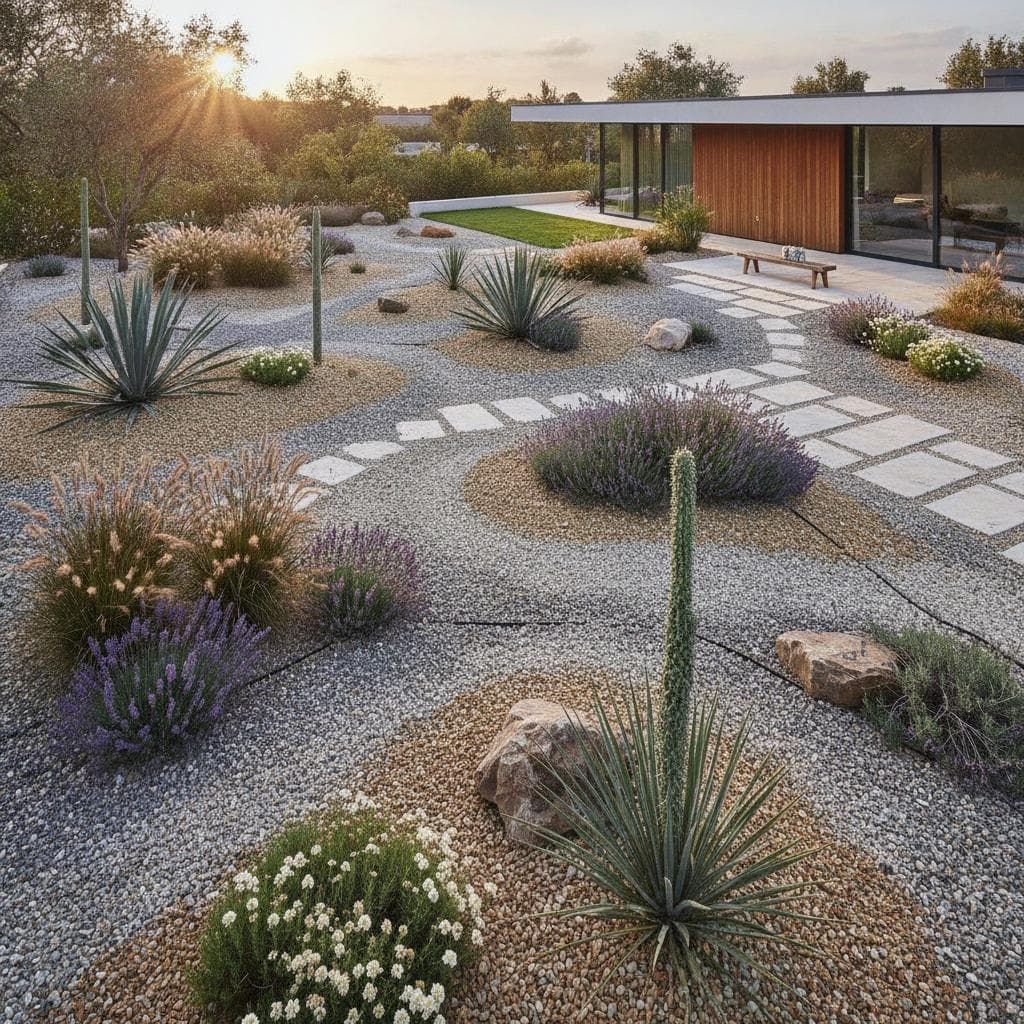
Gravel Gardens as Low Maintenance Lawn Alternatives
A lush green lawn has long been the dream of many homeowners. In water conscious regions that dream often comes with steep costs in maintenance and resources. Gravel gardens offer a fresh answer to that challenge. They deliver visual appeal, easy upkeep, and strong efficiency with water use.
A well designed gravel garden does not appear sparse or barren. Instead it feels intentional, textured, and alive with subtle movement and color. If you plan a landscape refresh, a gravel garden supplies evergreen charm without constant mowing, watering, and fertilizing. This smart shift brings long term value while supporting biodiversity and conserving resources.
Planning Your Gravel Garden
Before any gravel arrives, plan the space carefully. A gravel garden performs best when it matches site conditions.
- Assess sunlight and soil type. Most gravel gardens prefer full sun and well drained soil. If your area has heavy clay, improve drainage with organic matter or a layer of coarse sand beneath the gravel.
- Design flow and boundaries. Use curves and natural shapes rather than rigid lines. This approach helps the garden blend with existing structures. Define pathways with boulders, steel edging, or recycled pavers.
- Select a gravel type. Pea gravel, crushed granite, or decomposed granite each create different textures. Choose one that complements your home color palette and architectural style.
- Plan irrigation wisely. A drip system beneath the gravel layer provides targeted watering during establishment. Once mature, most plants need only minimal supplemental moisture.
Good planning ensures the garden looks deliberate and performs reliably through the seasons.
Installation Steps for Lasting Results
Creating a gravel garden is achievable for most homeowners. Attention to detail makes a difference. Follow a deliberate sequence to avoid costly rework later.
- Clear and grade the site. Remove existing grass or weeds completely. If needed, solarize the area by covering it with dark plastic for several weeks before installation.
- Install edging. Choose metal, stone, or wood edging that keeps gravel contained while defining the garden shape.
- Prepare the soil. Loosen compacted areas and amend with compost or sand depending on drainage needs.
- Lay weed barrier fabric. Secure it with landscape pins, leaving openings for plants. This step keeps the gravel clean and reduces maintenance.
- Plant selections first. Arrange plants while they remain in containers, step back, and adjust spacing for balance.
- Add gravel. Spread a two to three inch layer evenly, avoiding piles around plant bases. Water lightly to settle the surface.
Once complete, the garden should feel cohesive and stable underfoot, with just enough softness from the plantings to invite exploration.
Integrating Gravel Gardens Into Outdoor Living Spaces
Gravel gardens are not limited to planting beds. They can anchor outdoor living areas and create continuity between built and natural elements. Extend gravel pathways toward patios or seating areas for a unified aesthetic. Combine smooth flagstone with gravel joints to form walkways that drain well after rain.
For modern homes, fine crushed gravel complements concrete surfaces. In rustic spaces, a mix of river rock and decomposed granite feels warm and relaxed. Add a fire bowl, sculptural planters, or low lighting for evening ambiance. Treat the gravel garden as part of the living environment rather than a decorative border.
Seasonal Adjustments and Long Term Benefits
A gravel garden matures gracefully. Plants settle into the soil, textures deepen, and the surface develops a natural patina. With each passing season the space becomes more self sufficient and visually grounded. The absence of a traditional lawn does not mean sacrificing beauty.
Plan carefully, invest in quality materials, and respect the natural balance of water and soil. Your gravel garden will reward you with enduring charm, low maintenance, and a sense of calm.