
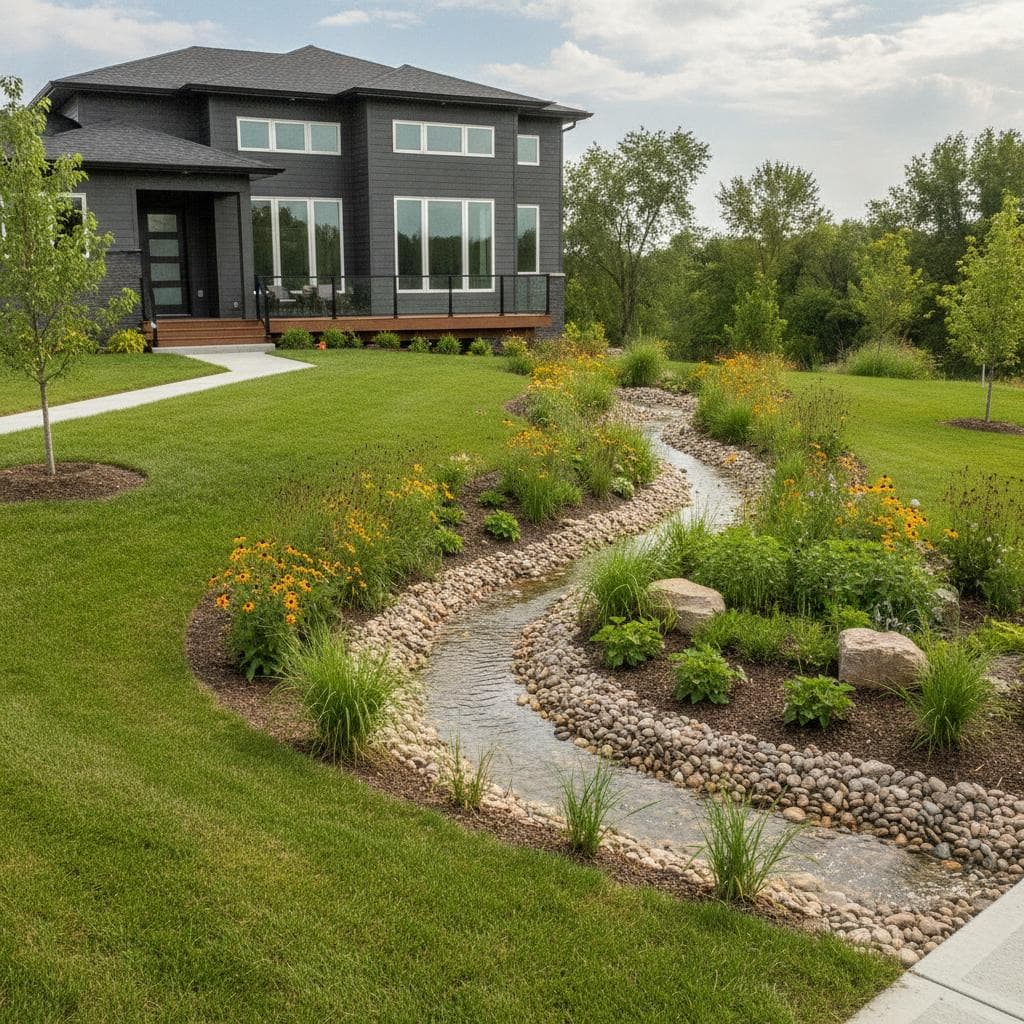
Why Bioswales Suit Front Yard Stormwater Management
Front yards shape the first impression of a home. They also direct how water travels across a property. When stormwater lacks an outlet, it gathers along driveways, sidewalks, and foundations. A bioswale converts that issue into a planted channel that filters, slows, and absorbs runoff.
A bioswale is a shallow, vegetated channel that captures and cleans rainwater through soil, plants, and gravity. It follows natural drainage patterns instead of routing water directly to storm drains. Homeowners gain both a functional system and an attractive landscape element.
Key Characteristics
- Location options include front yards, parkways, and driveway edges.
- Size ranges from narrow strips to wider planted channels.
- Climate adaptability covers wet, dry, and mixed regions.
- Primary goals center on runoff control, erosion reduction, and visual improvement.
Shape Water Flow Through Gentle Grading
Effective bioswales start with subtle slopes that direct water naturally. These grades move rainfall from roofs or driveways into the planted zone for slowing and filtration. Slopes of two to four percent prevent an engineered appearance while allowing easy mowing.
This approach limits pooling near foundations and reduces pressure on storm drains. A shallow channel lined with river rock at the base carries flow safely and integrates with surrounding plantings. Smooth stone bands can trace the path through low native grasses.
Select Plants for Alternating Moisture Conditions
Bioswale plants must endure both temporary flooding and dry periods. They stabilize soil, absorb excess nutrients, and remove pollutants before water reaches groundwater. A balanced mix combines deep-rooted native species with varied textures for year-round interest.
Blue flag iris, switchgrass, and black-eyed Susan provide color and durability. Sedges such as Carex stricta perform well where water remains longest. Native grasses and sedges function as living filters that clean water and anchor the soil.
Build Layered Soil for Effective Filtration
A bioswale depends on a structured soil profile that manages water movement. The topsoil layer supports plant growth. A sand layer promotes infiltration. A gravel base distributes percolation evenly. Well-draining mixes with organic matter prevent compaction and maintain absorption capacity.
A three-layer arrangement of composted topsoil, washed sand, and pea gravel accommodates heavy rainfall without surface flooding. Proper soil construction supports long-term performance with minimal intervention.
Define Edges With Hardscape Materials
Clear transitions between the bioswale and adjacent lawn areas require intentional edging. Stone or concrete borders retain soil during storms and direct flow accurately. Materials should complement the home architecture, such as limestone that matches foundation veneer or steel for a precise modern line.
These edges supply structure while preserving the natural character of the planted channel. Steel edging, for example, follows the soft curve where lawn meets native plantings.
Link Bioswales With Complementary Water Features
A bioswale operates independently or connects to rain gardens and cisterns for greater capacity. Overflow from downspouts or rain chains enters the swale, with excess routed to a buried cistern or infiltration trench. This combination stores water for later use and reduces municipal system loads.
A small rain garden at the lowest point of the swale can feature Joe Pye weed and cardinal flower. Connected systems convert rainfall into a managed resource rather than an unmanaged problem.
Apply Seasonal Maintenance Practices
Routine care preserves permeability and prevents invasive growth. Mow or trim once or twice annually, clear sediment accumulation, and fill bare areas with native plugs. Early spring cutting of previous growth allows new shoots while retaining seed heads for winter wildlife value.
Approach the bioswale as a low meadow that receives periodic attention rather than frequent grooming. Freshly trimmed sedges highlight the channel curve after spring work.
Add Lighting to Emphasize Contours
Low-voltage fixtures outline the bioswale for nighttime visibility and safety. Warm color temperatures near 2700 K accent natural tones in grasses and stone without creating glare. Bollard lights along a stone edge reveal gentle contours after dark.
Subtle illumination maintains the feature as part of the overall landscape experience once daylight fades.
Long-Term Advantages of Integrated Design
A front yard bioswale restores natural drainage patterns, supports pollinators, and introduces varied texture. Plants and soils improve over time, increasing both effectiveness and visual appeal. Lawns remain drier after storms, and the planting often sparks neighbor interest in sustainable options.