
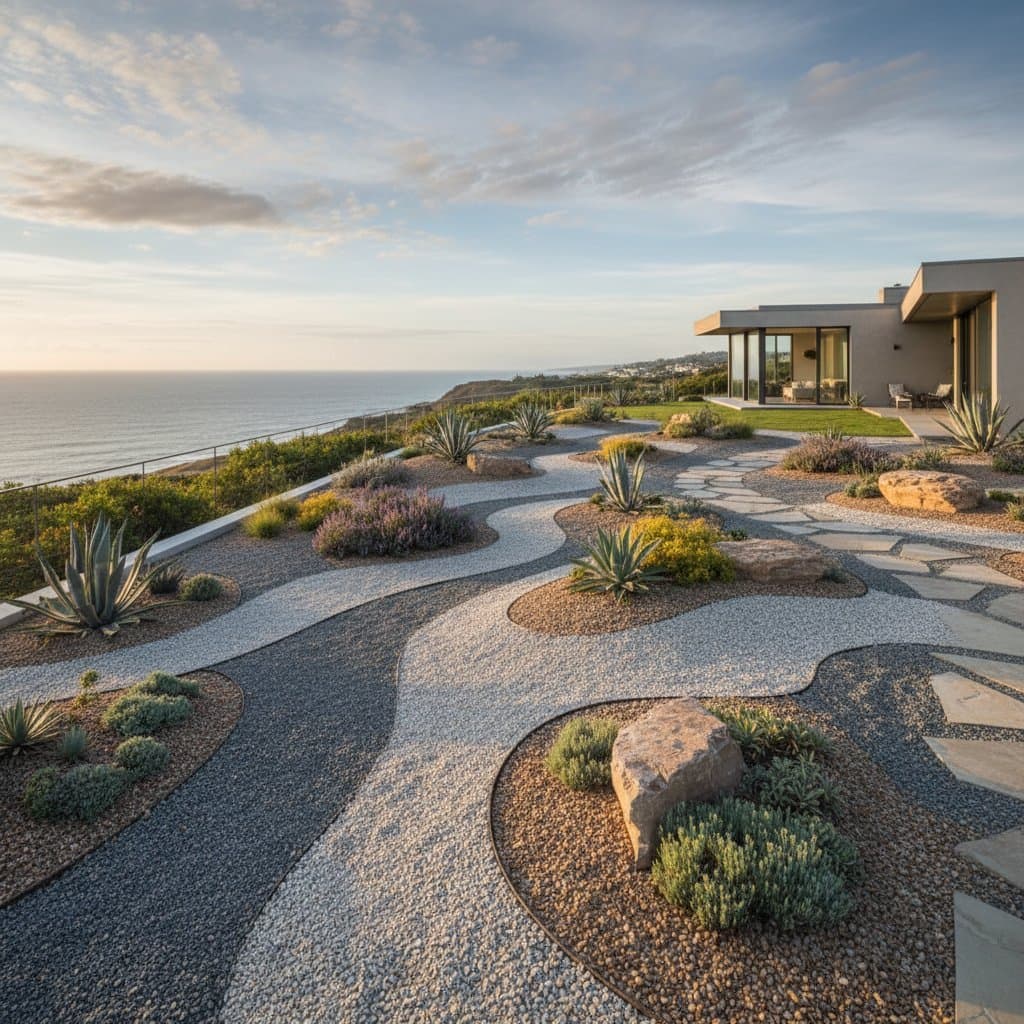
Gravel Gardens: Embrace the Low-Maintenance Shift for 2026
Landscape designer Erin Wallace and her partner James sought a garden that maintained vibrancy across seasons without demanding frequent irrigation or intensive labor upon moving into their compact hillside residence. Frustrated by mulch that deteriorated and required annual replacement, they transitioned to a gravel garden. This choice yielded a verdant, sculptural environment that demands little attention and retains its form throughout the year.
Transitioning from Mulch to Gravel
Mulch serves certain purposes in landscaping, yet an increasing number of homeowners recognize the aesthetic and functional advantages of gravel gardens. A thoughtfully installed gravel layer stabilizes soil temperatures, inhibits weed growth, and enhances drainage. It integrates seamlessly with plants adapted to arid conditions and nutrient-poor soils.
Erin notes, "I grew tired of watching mulch wash away after every heavy rain. Gravel gave me permanence and a clean frame for the planting." Her installation incorporates two gravel varieties: fine decomposed granite for pathways and coarser crushed limestone for planting areas. These textures delineate circulation routes and simplify upkeep.
Creating Intentional Structure and Movement
Effective gravel gardens rely on deliberate spatial planning. Erin started by establishing fixed boundaries with steel edging and precast concrete elements. These features delineate planting zones, contain gravel particles, and facilitate ongoing maintenance. "You have to think about containment early," she explains. "Without clear boundaries, gravel can look messy fast."
The layout adheres to core principles: expansive gravel expanses for navigation, compact pockets for vegetation, and graduated elevations for visual rhythm. Consistent use of materials fosters unity. Steel edging recurs in planter edges, terrace perimeters, and the custom fire pit surround, unifying the composition.
Install low-voltage lighting prior to adding gravel. Select fixtures with warm light tones to accentuate plant textures after dark. Route wiring through conduits buried beneath the gravel, ensuring it remains concealed while allowing straightforward access for repairs.
Selecting Optimal Gravel Types
Gravel selection parallels interior tile choices, as particle size, color, and form affect both aesthetics and functionality.
Essential factors to evaluate:
- Size: Opt for fine gravel that compacts firmly underfoot in pathways; choose larger aggregates for planting beds to permit root aeration.
- Shape: Angular stones interlock to form stable surfaces, ideal for high-traffic zones; rounded pebbles offer fluidity in informal settings.
- Color: Align gravel tones with nearby architecture or regional geology for contextual integration.
Erin sourced materials locally to harmonize with the site's natural palette. She advises placing test samples in position before full installation. "You need to see how it reads in sunlight and shadow," she says. "A color that looks neutral in the yard can appear too bright once spread over a large area."
Advancing Sustainability Through Gravel Design
Gravel gardens promote eco-friendly practices by minimizing water use and curtailing waste from decomposing materials. Unlike organic mulch, gravel endures without breakdown or carbon emissions. Superior drainage mitigates erosion and stormwater runoff, particularly on inclines.
Erin's setup includes a subsurface drip irrigation system that delivers moisture efficiently to plant roots, reducing surface evaporation. Light-toned stones reflect sunlight to temper soil heat, safeguarding roots during extreme temperatures.
Durability stands out as a key asset. Gravel withstands pedestrian activity without compromising underlying soil integrity. Adjustments prove straightforward. "If I want to add a new bed or shift the path, I just move the gravel aside," Erin states. "It is flexible but still feels finished."
Integrating Gravel Aesthetics Indoors and Outdoors
Gravel gardens align well with modern and transitional architectural styles. Their minimalist lines and subdued colors enhance pairings with concrete, timber, and metal elements. Erin echoed the garden's palette in the home's interior flooring, forging a seamless indoor-outdoor connection.
On the patio, oversized concrete pavers align flush with adjacent gravel, producing an expansive, cohesive plane. Furnishings in powder-coated steel and aged teak uphold the understated vibe. Planters clad in matte gray ceramic capture the stone's subtle hues.
Evening illumination from the gravel generates gentle patterns of light and shadow, imparting depth without additional lighting. The garden functions as a living room annex, suitable for meals, leisure reading, or serene contemplation.
Experiencing Daily Life in a Gravel Garden
Several months post-installation, Erin and James report that the gravel garden has reshaped their outdoor routines. It draws them outside each day, from morning terrace coffee to observing sunset glows on the stones. Routine tasks like mulch renewal or post-rain soil management have vanished.
Erin observes, "A gravel garden teaches patience. You watch plants find their rhythm in the space, and the gravel holds everything steady."
For those contemplating a mulch alternative, initiate with a contained area like a courtyard or border strip. Monitor gravel performance across weather variations. Test drought-adapted plant pairings suited to sunny, dry exposures. Gradually apply the approach to larger sections.
This evolution in landscaping emphasizes intelligent design attuned to environmental constraints and personal schedules. Gravel gardens deliver enduring form, tactile interest, and tranquility. They support rather than overshadow living greenery, demonstrating that elegance and utility coexist effectively.