
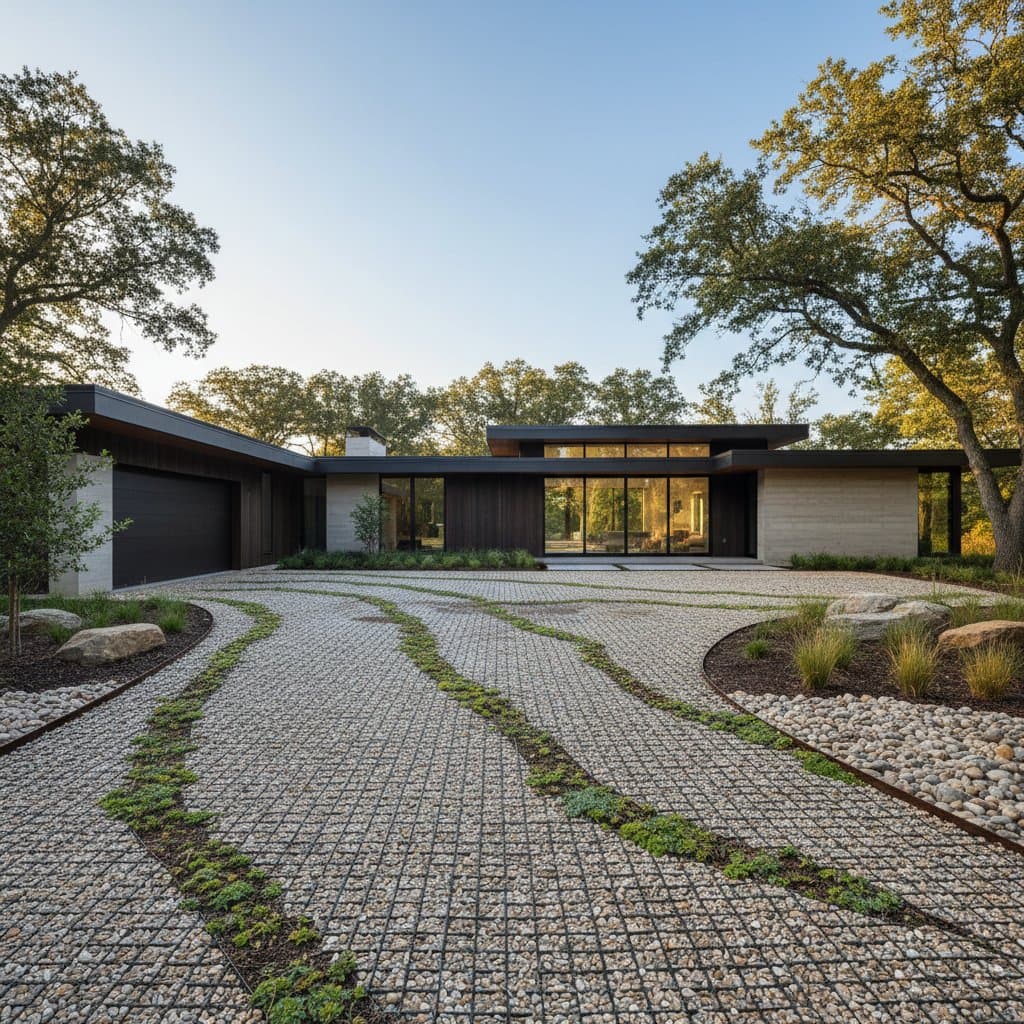
Gravel Grids: A Sustainable Shift from Concrete Paving
Homeowners frequently face issues such as water pooling on driveways or cracks appearing in concrete slabs. These problems highlight the drawbacks of traditional paving methods. In regions like California, gravel grids offer an innovative remedy. These interlocking panels form durable, permeable surfaces ideal for driveways, patios, and pathways. They support environmental goals while delivering consistent performance.
Key Advantages of Gravel Grids
Concrete serves as a popular option for driveways because of its widespread use. However, it poses environmental and functional challenges. Impermeable surfaces block water from seeping into the ground, which increases stormwater runoff and contributes to urban heat accumulation. Cracks form due to soil movement or temperature changes, necessitating regular repairs.
Gravel grids resolve these issues by containing loose gravel within a honeycomb framework. This structure allows water to pass through while providing a stable base for pedestrians and vehicles. When installed properly, the grids prevent erosion and the formation of ruts. They deliver reliability in residential and commercial settings alike.
Environmental Benefits of Permeable Systems
Gravel grids facilitate groundwater recharge by permitting rainwater to penetrate the soil. This process reduces the transport of pollutants to nearby waterways. Such capabilities prove vital in areas prone to flooding and aid water conservation initiatives in coastal regions like California. These systems simplify adherence to local stormwater management regulations.
Manufacturers produce gravel grids from recycled plastics, including high-density polyethylene. This approach demands less energy than concrete production. Installation involves limited excavation, which helps preserve natural soil layers. In the long term, the grids lower carbon emissions thanks to their extended lifespan and potential for recycling.
Installation Process for Gravel Grids
Gravel grid systems consist of modular panels that lock together to create a load-bearing foundation. Once filled with gravel, they distribute weight uniformly and resist shifting. Professionals recommend the following steps for successful installation:
-
Prepare the Site
Excavate to a depth of four to six inches below the desired final surface level. Compact a sub-base layer of three-quarter-inch crushed rock to a thickness of two inches. This preparation ensures proper drainage and structural support. -
Place the Panels
Position the grids in alignment and secure them with integrated clips. Cover the entire area without overlaps or gaps. Verify that edges meet precisely for a seamless fit. -
Add Gravel Fill
Choose angular gravel sized between three-eighths and three-quarters of an inch. Fill each cell to the top edge and use a screed board to level the surface evenly. -
Compact the Surface
Apply a plate compactor to settle the gravel securely. Allow the installation to settle for 24 hours prior to normal use.
This process allows completion in a single day, in contrast to concrete projects that require extended curing times. Future adjustments can occur with minimal disturbance to the area.
Everyday Advantages for Property Owners
Gravel grids provide tangible benefits that improve routine property management. Maintenance consists of raking away debris and replenishing gravel once a year, a task far simpler than sealing or patching concrete.
Material and labor costs generally run lower than those for concrete. Repairs involve only targeted gravel additions rather than extensive work. Property owners can select gravel colors and sizes to complement garden designs or architectural elements, ranging from contemporary sleekness to rustic natural tones.
These surfaces remain cooler under direct sunlight by reflecting heat, which enhances comfort in warm climates. The grids endure for decades, accommodating ground shifts through flexible design that prevents cracking. They offer secure footing for wheelchairs, bicycles, and other mobility devices, outperforming unsecured gravel paths.
Gravel Grids Versus Traditional Paving
When choosing paving materials, consider these key differences:
- Setup Speed: Gravel grids install in hours, while concrete requires days for pouring and curing.
- Drainage: Grids permit complete water percolation; concrete and asphalt channel water off-site.
- Upkeep: Grids need only occasional refreshing; solid surfaces require repeated treatments.
- Long-Term Expenses: Grids reduce total costs via durability and low intervention needs.
- Design Options: Grids conform to various styles; rigid slabs restrict customization.
These distinctions demonstrate how gravel grids combine practical utility with aesthetic versatility.
Ideal Applications for Gravel Grids
Gravel grids suit a range of uses, including parking zones, walkways, and patios. Municipalities often approve them for commercial properties to satisfy permeable surface requirements.
On inclined terrain, the grids hold gravel in place to combat erosion. In garden settings, they create seamless paths that weave through plantings. Around swimming pools, they lower surface temperatures and reduce slipping hazards while maintaining an elegant appearance. In rural areas, their lightweight components simplify transportation and setup.
Addressing Common Concerns
Prospective users sometimes doubt the robustness of gravel grids. High-strength variants handle substantial loads when paired with a well-prepared sub-base, making them appropriate for driveways and light commercial vehicles.
Compacted gravel fills ensure stability during vehicle turns and parking. The modular design allows straightforward assembly by capable individuals, as long as attention goes to achieving a level base.
Once covered with gravel, the grids remain hidden, producing a natural look that integrates with surrounding landscapes.
Ensuring Lasting Performance
Gravel grids allow for easy disassembly and relocation during property modifications. Their recycled materials continue to offer ecological advantages even after initial use.
In fluctuating weather conditions, they handle moisture variations without deterioration, avoiding water buildup or soil erosion. This adaptability extends the lifespan of both the paving system and the underlying site.
Steps to Implement Gravel Grids
Begin implementation by evaluating soil drainage characteristics and expected traffic loads. Choose grids engineered for your specific weight demands and resistant to ultraviolet degradation in sunny locations.
Engage experts experienced in permeable paving to achieve optimal results. Gravel grids unite precise engineering with natural landscape integration, yielding long-term advantages.
As emphasis on sustainability grows, gravel grids pioneer the development of practical, environmentally conscious outdoor spaces. For refreshing driveways or designing new patios, they present a sturdy, visually pleasing choice that supports broader ecological objectives.