
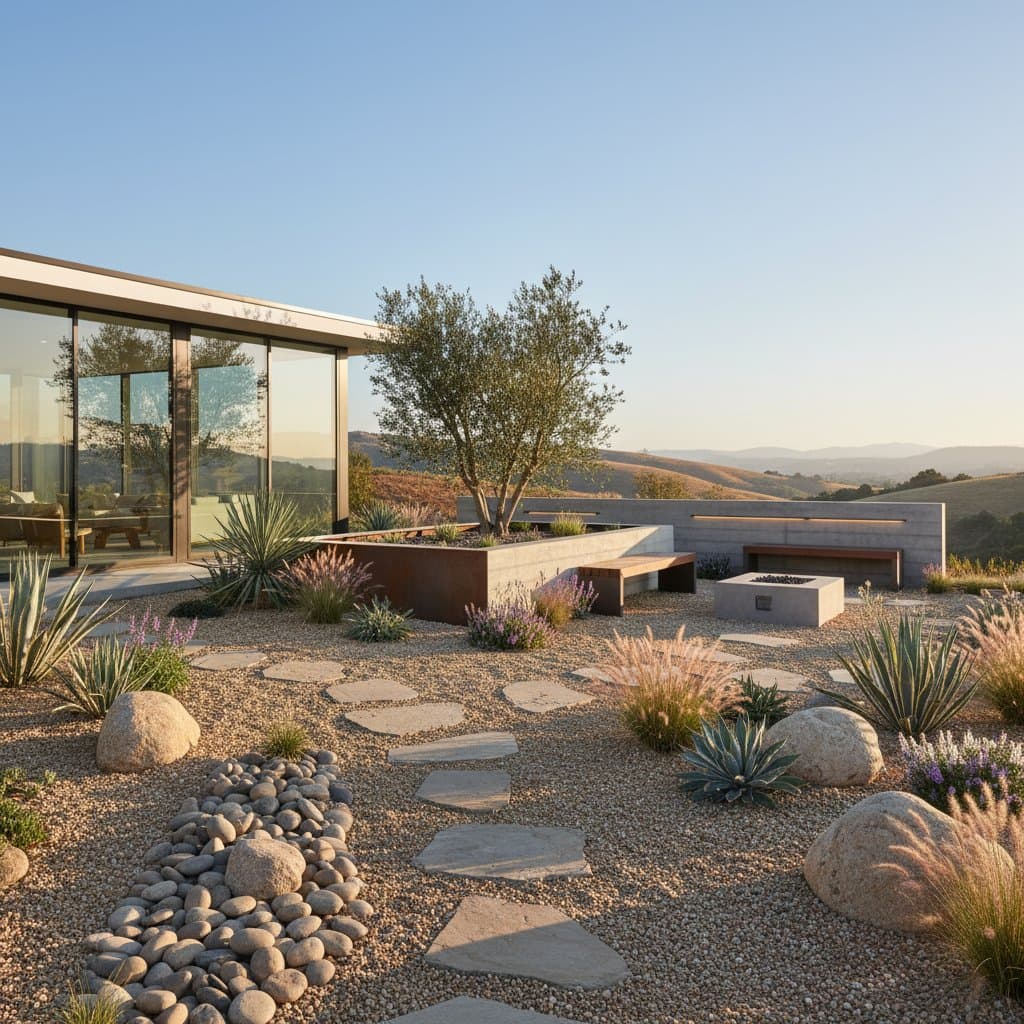
Gravel Gardens: 2026's Low-Maintenance Mulch Alternative
Homeowners who envision an elegant garden requiring minimal upkeep will find gravel gardens ideal. These landscapes gain popularity among California residents and designers seeking water-efficient designs that endure dry periods. They deliver a clean, modern aesthetic while minimizing watering, pruning, and fertilizing demands. For those weary of annual mulch replacement, gravel emerges as a durable, stylish, and sustainable option.
Why Gravel Gardens Are Making a Comeback
Gravel gardens trace origins to arid regions where water scarcity influenced planting traditions. The concept involves selecting plants adapted to dry conditions and employing gravel for both mulching and textural enhancement. This approach yields a layered, sculptural landscape that appears deliberate rather than haphazard.
In contrast to bark or wood chips, gravel resists decomposition and pest attraction. It effectively suppresses weeds, insulates soil, and permits natural rainwater infiltration. Homeowners confronting drought restrictions or high water costs view gravel gardens as a strategic solution rather than a concession.
California designers adopt this style for its harmony of aesthetics and utility. A gravel garden suits contemporary urban courtyards, rustic hillside escapes, or naturalistic coastal settings. Success depends on meticulous planning, material selection, and comprehension of plant-gravel interactions over time.
Understanding the Core Principles
A proficient gravel garden transcends mere decorative covering. It functions as a dynamic system fostering growth, drainage, and enduring stability. Three foundational principles direct its creation.
-
Prioritize soil preparation over visual appeal. Excellent drainage proves essential to avert plant rot. Incorporate coarse sand, decomposed granite, or fine gravel into the soil to enhance structure and mitigate compaction.
-
Select plants aligned with site conditions. Drought-resistant varieties like lavender, sage, yarrow, and ornamental grasses excel in gravel settings. These species favor nutrient-poor soil and sporadic irrigation. Native options bolster resilience and aid local pollinators.
-
Employ layering for visual and ecological equilibrium. Regard gravel as an integral layer in a composed arrangement. Position breathable landscape fabric or a compacted base underneath to facilitate water passage while impeding weed growth.
Integration of these elements produces a garden that conveys natural intent and withstands seasonal changes without diminishing allure.
Choosing the Right Gravel
Gravel selection demands consideration of type, size, and color, as each influences aesthetics and functionality.
-
Pea gravel: Composed of small, rounded stones, this suits pathways and planting zones. It provides a gentle underfoot texture and complements Mediterranean plantings seamlessly.
-
Crushed granite: With angular particles that interlock, it forms stable surfaces for seating areas. Fine elements ensure drainage while maintaining firmness.
-
River rock: Featuring larger, polished stones, it imparts sculptural accents near water elements or as borders. Apply it judiciously to achieve contrast.
-
Decomposed granite: This fine, sandy aggregate delivers a consistent appearance. It fits modern or minimalist schemes emphasizing crisp lines.
Color selection matters equally. Light gravel bounces sunlight to illuminate shaded spots, whereas darker shades evoke a subdued, earthy ambiance. In coastal or desert locales, warm neutrals harmonize with ambient terrain. Opt for locally sourced gravel to lower transportation expenses and align with regional soils.
Planning the Layout
Effective gravel gardens originate from defined layouts. Assess intended space usage first, whether as a front yard, border, or courtyard haven. This evaluation informs design decisions.
-
Establish zones. Gravel delineates areas for seating, paths, and beds, imposing structure and directing circulation.
-
Incorporate site features. Integrate slopes, boulders, or established trees to enhance authenticity rather than resist them.
-
Apply repetition for cohesion. Consistent gravel varieties, plant types, or forms unify the composition, fostering tranquility amid potential complexity.
-
Address drainage needs. Ensure subtle surface grading allows rainwater to disperse without accumulation, even in drought-adapted designs.
Drafting a sketch clarifies relationships among paths, plant groupings, and open expanses. Engage a landscape professional for refinement on challenging terrains like slopes or expansive lots.
Selecting Plants that Thrive in Gravel
Optimal gravel garden plants endure dry roots and sparse soil. Focus on Mediterranean, coastal, and California native species for texture, aroma, and seasonal shifts with little attention.
Recommended selections include:
-
Lavandula (lavender): Evergreen with fragrance that attracts pollinators.
-
Salvia (sage): Offers diverse hues and extended bloom periods.
-
Achillea (yarrow): Produces flat flower clusters suitable for drying in arrangements.
-
Festuca glauca (blue fescue): Delivers compact, blue-tinged foliage.
-
Thymus serpyllum (creeping thyme): Serves as scented groundcover activated by foot traffic.
-
Artemisia (wormwood): Provides silver foliage contrasting dark stones effectively.
-
Echeveria and Sedum: Succulents that withstand heat and add architectural form.
Cluster plants by comparable water and light requirements to optimize irrigation. Allocate space for full maturity, using gravel to fill interstices instead of overcrowding. As growth advances, plants temper gravel's rigidity, forming organic ensembles.
Installation Steps for Long-Term Success
Gravel garden installation involves initial effort, yet subsequent care remains light. Adhere to these procedures for durability.
-
Clear the area. Eliminate weeds, roots, and refuse to prevent future disruptions.
-
Contour the ground. Adjust slopes mildly and define shapes to promote drainage and visual dynamics.
-
Enhance soil. Blend coarse sand or decomposed granite to boost permeability.
-
Install borders. Employ metal, stone, or concrete to confine gravel and outline edges.
-
Lay weed barrier. Choose permeable fabric over plastic to permit air and moisture exchange.
-
Distribute gravel uniformly. Apply two to three inches deep, then rake for evenness.
-
Position plants. Excavate holes broader than root balls; reposition gravel around bases post-planting for support and insulation.
Irrigate thoroughly initially to root establishment. Reduce watering thereafter to plant necessities.
Maintenance and Seasonal Care
Gravel gardens demand scant attention post-installation, though targeted practices preserve vibrancy.
-
Manage weeds: Gravel curbs most, but extract stragglers manually prior to seeding.
-
Replenish gravel: Weather may displace material; add sparingly to sustain coverage.
-
Prune and deadhead: Lightly shear perennials to stimulate regrowth and prolong blooms by removing faded flowers.
-
Refresh paths: Rake periodically to reinstate texture.
-
Optimize watering: Established plants require infrequent applications; conceal drip lines or soaker hoses beneath gravel for precision.
Gravel avoids mulch's pitfalls like breakdown, termite draw, mold, or fungal issues, suiting coastal humidity.
Integrating Gravel into Broader Landscape Design
Gravel gardens excel independently or in tandem with other features. Pair with wood, concrete, or native stone for layered depth. In expansive yards, gravel paths link zones from patios to succulent beds or edibles.
For living areas, gravel facilitates drainage beneath furniture, forms fire pit foundations, and pairs comfortably with pavers. In compact urban plots, it amplifies light and perceived scale.
Blend with raised beds or pots to introduce elevation and diversity, yielding unified transitions between hardscape and verdure.
Sustainable Benefits Beyond Low Maintenance
Gravel gardens align with California's environmental priorities. They conserve water, eliminate fertilizer needs, and foster biodiversity via natives. Permeable surfaces aid aquifer replenishment over stormwater diversion.
Longevity spans decades, minimizing waste from frequent mulch turnover. Cumulative mulch expenses in resources and effort exceed gravel's modest upkeep.
Environmentally aware owners gain refined aesthetics alongside tangible ecological gains.
Evolving with Your Gravel Garden
As a gravel garden matures, its essence deepens gradually. Plants expand, stones patina, and textures interweave more intricately. This progression occurs with little oversight, freeing time for appreciation over toil.
Seasonal rhythms reveal the garden's narrative: grasses undulate in winds, lavender buzzes with insects, gravel crunches reassuringly. Details underscore that simplicity amplifies rather than diminishes appeal.
Patient planning yields enduring grace, water conservation, and serenity attuned to California living.