
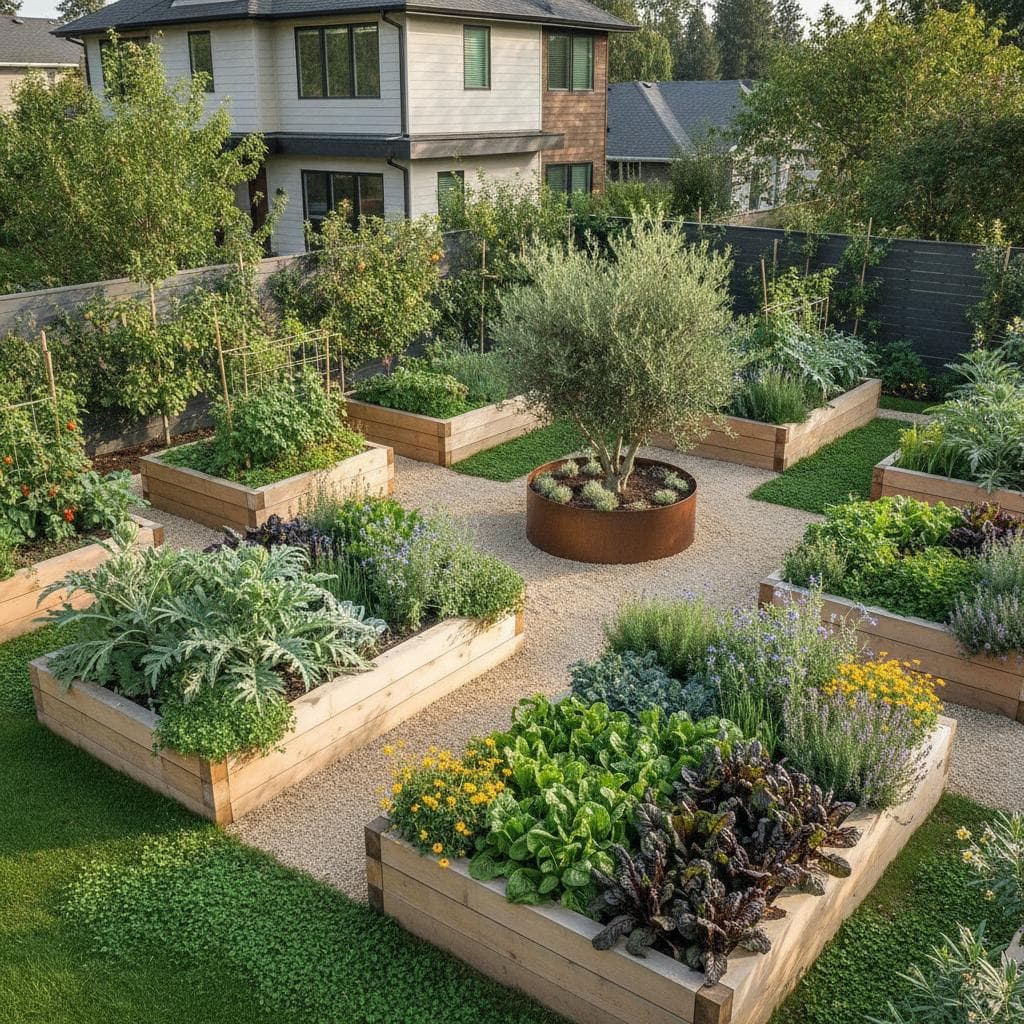
HOA-Approved Edible Front Yards That Boost Curb Appeal
A front yard can frame a home with greenery while also feeding a family and attracting pollinators. Careful design allows edible plants to fit within homeowners association regulations. Many Californians seek this combination of beauty and sustainability. The key is to maintain a polished appearance that satisfies community standards and delivers fresh herbs, vegetables, and fruit.
An edible front yard that meets these standards requires planning and a balanced approach. When executed properly, the space functions as an attractive landscape that produces kitchen ingredients.
Designing for Harmony and Function
An HOA-friendly edible front yard begins with clear structure. Layered plantings that mix edibles with ornamentals help the garden appear designed rather than agricultural.
Create a Framework with Hardscape
Define boundaries using materials that complement the home architecture. Low stucco walls, stone edging, or decomposed granite pathways produce a finished effect. Raised beds constructed from smooth concrete block or corten steel appear modern and purposeful. Pathways must permit easy harvesting while preserving symmetry and order.
Blend Ornamentals and Edibles
Visual appeal comes from thoughtful plant combinations. Pair colorful leafy greens with flowering herbs and compact ornamentals. Purple basil next to silver-leaved lavender creates contrast. Kale or chard supplies vertical structure similar to boxwood. Rosemary and thyme serve as fragrant ground covers.
Add flowering edibles such as nasturtiums and calendula for seasonal color. These selections draw pollinators and align with typical HOA preferences for tidy, colorful displays.
Use Trees and Shrubs Strategically
Fruit trees contribute both ornament and production. Dwarf citrus, espaliered apples, or pomegranate shrubs add seasonal interest without dominating the space. Regular pruning maintains shape and prevents unwanted shade. In Mediterranean designs, olive or fig trees act as focal points that match regional aesthetics.
Maintenance Practices That Support Community Standards
An edible front yard requires consistent care to remain presentable. Regular attention demonstrates respect for the property and neighbors.
- Prune and harvest on a schedule to remove spent growth and encourage new production.
- Apply a generous layer of mulch to suppress weeds, conserve moisture, and unify the appearance.
- Replace finished annual crops immediately or cover gaps with decorative mulch to prevent bare soil.
- Edge pathways and sweep surfaces to maintain crisp lines.
Select perennials, evergreen herbs, and self-sowing flowers when maintenance time is limited. These choices reduce replanting needs while keeping the garden full.
Coordinating with the HOA and Neighbors
Open communication improves approval chances. Share the design concept with nearby residents before construction begins. Describe the planned attractive and maintained outcome. Later sharing of fresh herbs can build goodwill.
Submit plans to the HOA that include a rendering or photo examples. Specify materials, plant species, and irrigation details. Organized presentations that address long-term upkeep receive more favorable responses.
Adhere to the approved plan after installation. Gradual seasonal adjustments avoid concerns about sudden changes in height or color.
Sustainable Practices That Increase Lasting Value
Edible front yards gain value when built with resource efficiency in mind. Drought-tolerant selections, targeted irrigation, and organic soil methods create resilience.
Install a rain barrel or permeable paving to handle stormwater. Compost kitchen scraps to enrich soil without additional fertilizers. These steps lower ongoing costs and appeal to boards focused on reduced maintenance.
Add soft path lighting or uplights on trees to enhance evening views. Low-voltage systems limit energy use and prevent glare.
Steps for Ongoing Garden Success
An approved edible front yard demonstrates that productive growing and attractive design can coexist. Continued observation reveals which plant varieties perform best in the specific conditions. Adjust combinations based on performance and community feedback. This approach yields both practical harvests and sustained neighborhood approval.