
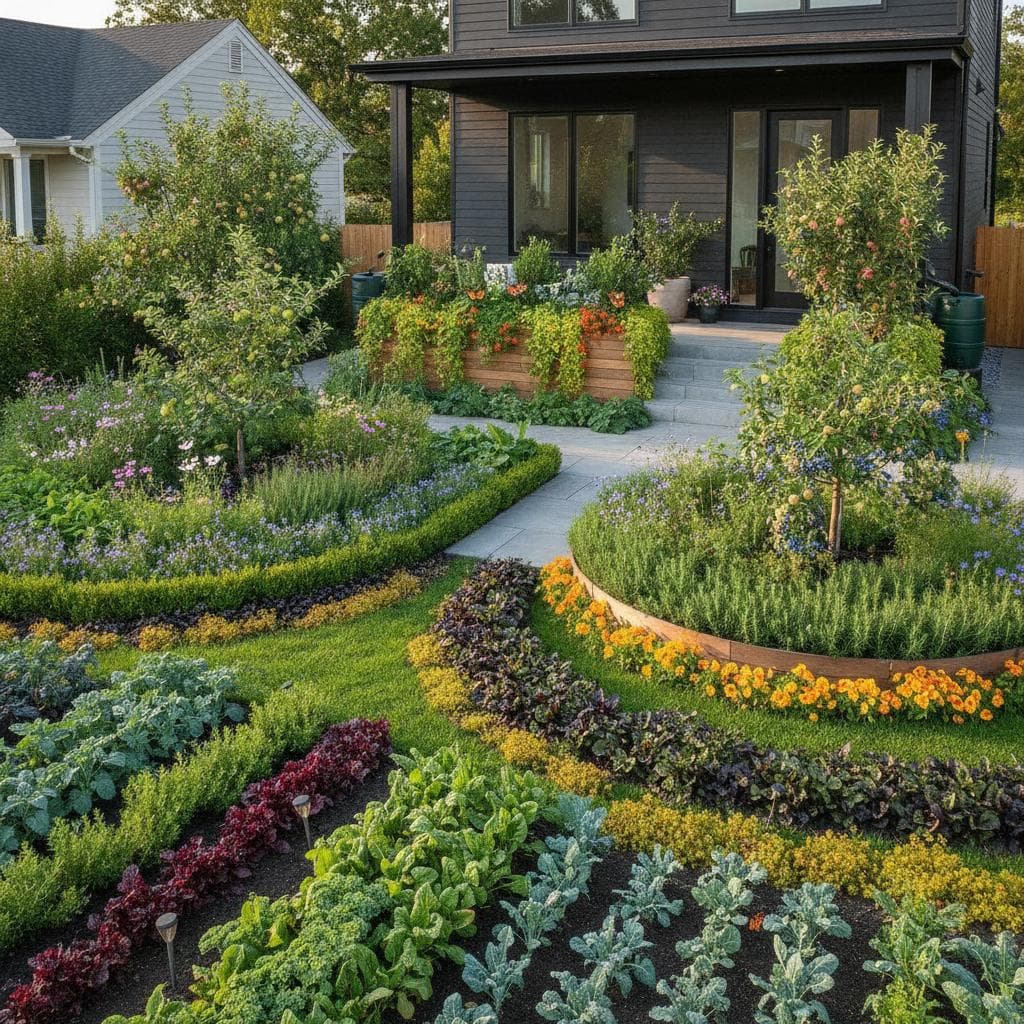
Replacing Ornamentals with Edible Front Yard Designs
A front yard filled with edible plants can be both beautiful and productive. The idea blends the visual appeal of traditional landscaping with the satisfaction of growing fresh food just steps from the door. Thoughtful design makes it possible to replace ornamental plants with edible ones without losing curb appeal or structure.
When done well, an edible front yard becomes a living landscape that changes through the seasons. It feels abundant, looks intentional, and connects the home to its environment. With the right planning, it can match the style of any house, from cottage to contemporary.
At a Glance
- Location: Residential front yards
- Size: Adaptable from small plots to large lawns
- Climate Zone: Works in most temperate and warm climates with plant selection adjustments
- Project Goal: Replace ornamentals with edible plants while maintaining beauty and structure
Mix Texture and Color for Visual Appeal
Edible plants bring surprising texture and color. The trick is to layer them as you would flowers and shrubs.
Functional benefit: Varied foliage hides seasonal gaps when crops are harvested.
Design insight: Combine leafy greens with upright herbs and fruiting plants for contrast. Choose varieties with interesting hues like purple basil or chartreuse lettuce.
Example: A border of kale, sage, and nasturtiums offers a mix of leaf shapes and blossoms that rival any ornamental bed.
A horticulturist might say, "Color echoes are what tie an edible garden together. Repeating tones across beds keeps the scene cohesive."
Visual callout: "Curly kale mirrors the texture of nearby ornamental ferns."
Design for Year-Round Interest
A front yard that changes with the seasons keeps the landscape alive and engaging.
Functional benefit: Continuous visual interest ensures the space looks finished even between harvests.
Design insight: Combine perennials like rhubarb and asparagus with annuals such as chard and tomatoes to create seasonal layers.
Example: In cooler months, evergreen herbs and ornamental cabbages fill gaps left by summer crops.
A garden planner might say, "Think in layers of time, not just space. Every month should have something happening."
Visual callout: "Winter kale maintains structure when other beds rest."
Use Groundcovers and Borders Wisely
Groundcovers and edging plants tie the design together while suppressing weeds.
Functional benefit: Low-growing plants protect soil, reduce maintenance, and keep the space tidy.
Design insight: Select edible or pollinator-friendly options that replace purely ornamental choices.
Example: Creeping thyme fills gaps between pavers, strawberries form lush borders, and oregano spreads under taller herbs.
A landscape manager might say, "Groundcovers make the edible garden feel intentional, not patchy."
Visual callout: "Strawberry runners spill softly over the stone edge."
Match Materials to the Home Style
Hardscape choices influence whether the edible design looks cohesive or chaotic.
Functional benefit: Consistent materials create flow from the house to the garden.
Design insight: Use pavers, edging, or containers that echo existing architectural elements.
Example: A modern home may suit sleek steel planters, while a cottage-style house pairs well with reclaimed brick paths.
A designer might say, "Material choice connects the edible garden to the home personality. It completes the visual story."
Visual callout: "Corten planters echo the color of the front door trim."
Add Seating or Gathering Areas
A front yard designed for food can also be a place to relax and connect with neighbors.
Functional benefit: Seating areas encourage outdoor use and community interaction.
Design insight: Keep furniture simple and durable, using materials that blend with plantings.
Example: A small gravel patio with a bistro table near the herb bed invites morning coffee or casual visits.
A landscape architect might say, "When people pause in the garden, it becomes a lived space, not just a showcase."
Visual callout: "A bench tucked under a fig tree offers shade and scent."
Living with Your Design
A well-designed edible front yard changes how people see the space around their home. It turns the front lawn into a productive, ecological, and social asset. With structure, texture, and thoughtful plant choices, the yard remains as polished as any ornamental garden.
Harvesting herbs by the walkway, watching pollinators visit blossoms, or sharing produce with neighbors all add meaning to daily routines. The design works both aesthetically and functionally because it connects beauty with purpose. Over time, it becomes an evolving landscape that reflects care, creativity, and respect for the environment.
Replacing ornamentals with edible plants is not about giving up appearance for utility. It is about designing a space that feeds both body and spirit while keeping the inviting look that defines a welcoming home.