
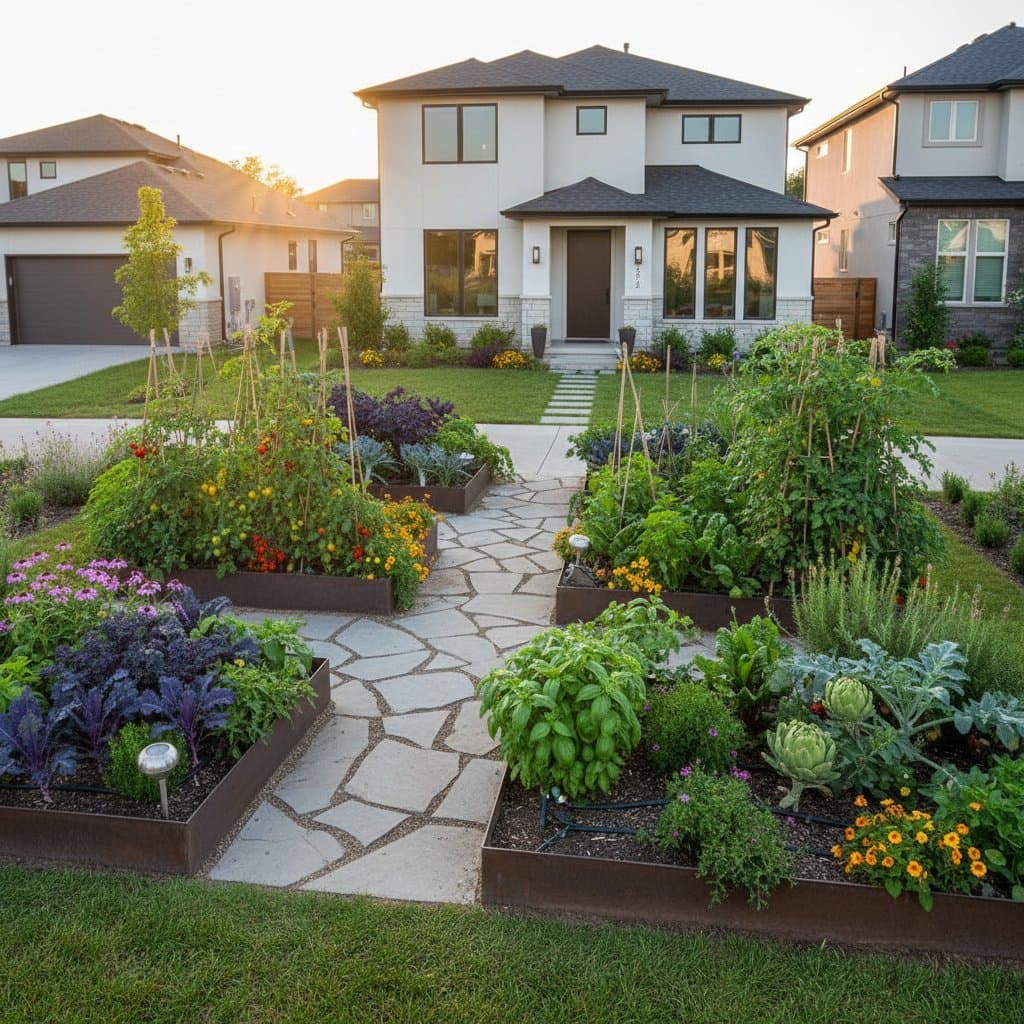
HOAs Now Embrace Edible Front Yard Gardens
Front yard gardens are no longer limited to ornamental shrubs and manicured lawns. Across many communities, homeowners associations are beginning to welcome edible landscapes that mix beauty with purpose. These changes open the door for residents to grow food in a way that looks polished, sustainable, and neighbor-friendly. The result is a landscape that feeds both the eye and the table.
At a Glance
Location: Suburban neighborhoods
Size: Typical single-family front yards
Climate Zone: Temperate to warm regions
Project Goal: Integrate edible plants into front yard design while staying within HOA guidelines
1. Start with Structure
A successful edible front yard begins with clear structure. Defined planting beds, low borders, and pathways make the space feel intentional. Raised planters of cedar or corten steel keep vegetables contained and tidy. Gravel paths allow easy access for harvesting and maintenance.
A landscape designer might say: “Formal edges signal that the garden is cared for, which reassures both neighbors and HOAs.”
The functional benefit is clarity. Structured beds prevent the look of a patchwork vegetable plot, while helping with soil drainage and weed control. Try grouping edibles by height or growth habit. Tall plants like okra or sunflowers can anchor the back, while herbs or lettuces fill the front edge.
Visual Callout: “Raised beds framed with steel edging create a crisp outline for leafy greens.”
2. Mix Ornamentals with Edibles
Blending food crops with ornamentals keeps the garden decorative. Pairing kale with lavender or rosemary brings scent, color, and form together. Bright chard stems add contrast beside ornamental grasses. Fruit trees like espaliered apples or figs can double as sculptural features along a fence.
This approach turns a productive garden into a designed landscape. It also supports pollinators through flowering herbs and native plants.
A horticulturist said, “When edibles blend with ornamentals, they become part of the neighborhood aesthetic instead of standing apart from it.”
Visual Callout: “Purple basil and coneflower share a sunny border.”
3. Choose Low-Maintenance Crops
Front yard gardens need to stay neat between harvests. Select crops that hold their structure and look good even as they mature. Herbs like thyme and sage form small, evergreen mounds. Swiss chard and dwarf peppers provide long seasons of color. Strawberries can fill groundcover spaces while producing fruit.
Perennial edibles such as asparagus, rhubarb, and blueberries reduce yearly replanting. They also fit naturally into mixed beds.
The benefit is longevity and consistent appearance. Homeowners can keep gardens productive without reworking them every season.
A designer said, “Consistency is key in front landscapes. Choose plants that maintain form and color while offering something to eat.”
Visual Callout: “Compact blueberry shrubs line a front walk, offering both spring blooms and summer fruit.”
4. Use Smart Irrigation and Mulch
Water efficiency matters in any landscape, and front yard gardens often face more scrutiny. Drip irrigation delivers moisture directly to plant roots, keeping leaves dry and reducing waste. Organic mulch like shredded bark or straw helps maintain soil moisture and suppress weeds.
A landscape contractor said, “A tidy, well-mulched bed looks finished and keeps maintenance low. It also demonstrates responsibility to the HOA board.”
This method saves time and supports healthy growth. It also keeps pathways clean and prevents muddy runoff.
Visual Callout: “Drip lines hidden beneath mulch keep the vegetable beds thriving without overspray.”
5. Add Subtle Screening
Some homeowners prefer partial screening for a cleaner street view. Low hedges of dwarf yaupon holly or boxwood define the edge without blocking sunlight. Trellises with climbing beans or cucumbers provide vertical interest while creating a soft partition.
This balance allows privacy while still showcasing the garden’s character. A framed space feels curated instead of crowded.
A designer said, “A bit of structure at the front edge keeps the space organized. It’s the difference between a garden that looks accidental and one that feels designed.”
Visual Callout: “A trellis with pole beans forms a living screen near the sidewalk.”
6. Keep Color and Texture in Play Year-Round
Seasonal interest keeps an edible front yard looking lively. Use a mix of evergreens, flowering herbs, and vegetables with colorful foliage to maintain visual flow. In cooler months, ornamental cabbages and winter kale add structure. In warmer seasons, peppers and marigolds bring bright tones.
Rotating crops in small sections keeps the composition fresh. The goal is to maintain rhythm between harvest cycles so the garden never appears bare.
A gardening expert said, “Even when beds are between crops, a few structural plants or decorative mulch details keep the garden attractive.”
Visual Callout: “Winter kale holds deep color through the colder months.”
Living with Your Design
Edible front yard gardens foster connection, both to the land and to neighbors. A well-planned design demonstrates that productivity and curb appeal can coexist. As HOAs adapt to changing preferences, they recognize that these gardens represent care, not neglect.
Homeowners who invest in thoughtful layouts, tidy edges, and balanced plant choices find that their gardens invite conversation and admiration. The landscape becomes more than a backdrop; it becomes part of daily living. The front yard, once a place for uniform lawns, now celebrates individuality through shared values of beauty, sustainability, and nourishment.