
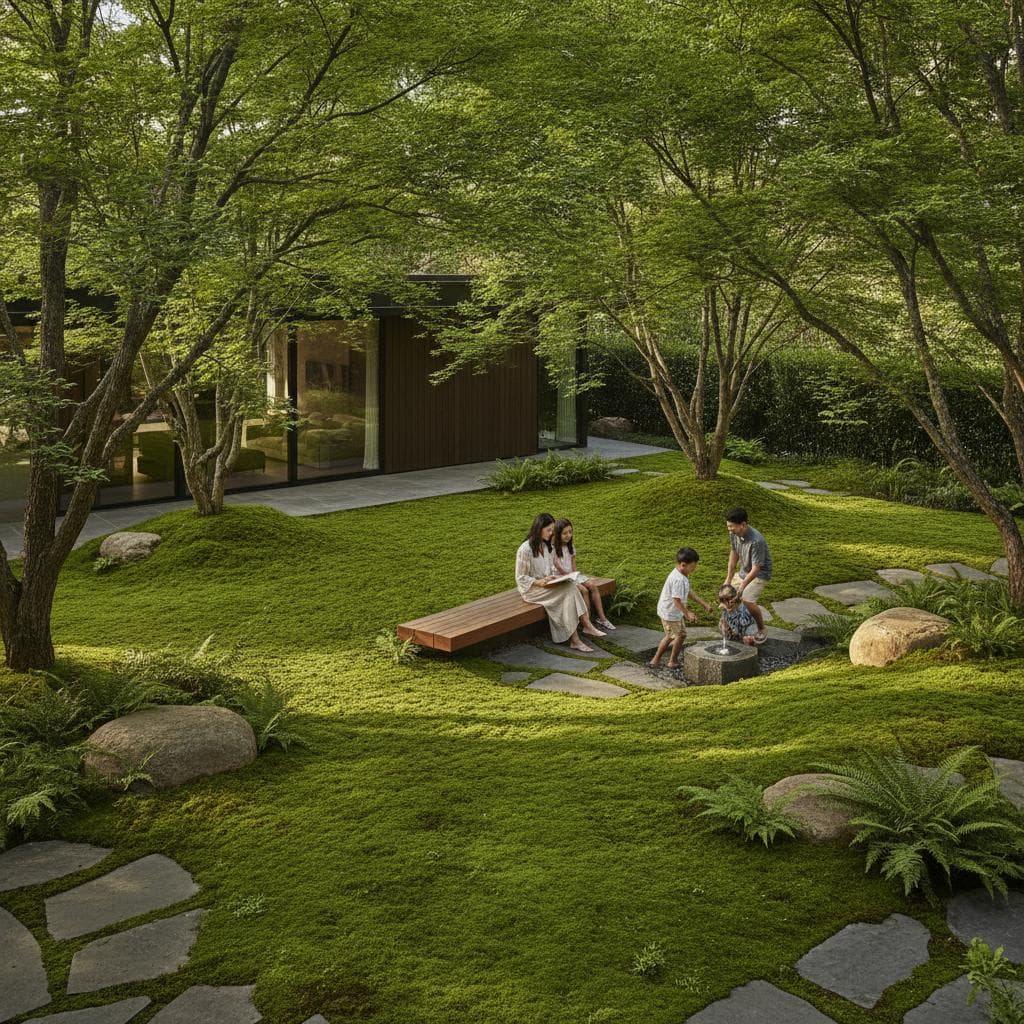
A Shaded Yard Transformed
Jenna and Luis Rivera struggled for years with grass that refused to grow under the dense tree cover in their yard. They turned to designer Claire Morton for a solution that works with the existing conditions rather than against them. The result is a thriving moss lawn composed of native species that remains green throughout the year without any mowing.
Morton selected moss varieties suited to the local climate and soil conditions. Stone pathways wind through the space and connect to clusters of shade loving perennials. The design delivers a cohesive, low impact landscape that requires minimal intervention after establishment.
Advantages of Moss Over Traditional Turf
Moss tolerates deep shade where grass thins and turns brown. It needs far less water once established and eliminates the need for regular mowing, fertilizing, and edging. Homeowners report reduced noise and lower equipment costs along with improved curb appeal.
The soft texture of moss also creates a comfortable surface for barefoot walking. Because moss lacks true roots it stays in place on slopes where grass might erode. These traits make it especially practical for urban lots with mature trees.
Site Assessment and Preparation Steps
Examine light levels throughout the day to confirm the area receives less than four hours of direct sun. Clear away existing grass and weeds by hand or with a flat shovel, taking care not to disturb the soil structure. Lightly rake the surface to remove debris while preserving any existing organic layer.
Test soil pH if possible and aim for a range between 5.0 and 6.0, which favors most moss species. Add leaf mold or compost sparingly only if the soil appears compacted. Avoid tilling deeply because moss prefers a firm base.
Establishing Native Moss
Divide healthy moss mats into small sections and press them firmly onto prepared soil. Water the area thoroughly after placement and keep it consistently moist for the first three weeks. New growth typically appears within four to six weeks under suitable conditions.
Space sections six to twelve inches apart to allow natural spreading. Choose species such as sheet moss or cushion moss that match regional rainfall patterns. Local nurseries or specialty suppliers can provide regionally appropriate stock.
Adding Functional and Visual Elements
Incorporate flat stones or pavers to create dry pathways that protect moss from heavy foot traffic. Position shade tolerant ferns and woodland wildflowers at the edges to add seasonal interest. These additions enhance biodiversity without increasing maintenance demands.
Long Term Maintenance Practices
Remove fallen leaves once or twice each autumn to prevent smothering. Water only during extended dry spells after the first year. Occasional weeding by hand keeps invasive plants from gaining a foothold.
Inspect the lawn each spring and fill any thin spots with fresh moss divisions. The surface will gradually thicken and develop a uniform appearance over several seasons.
Sustaining an Effortless Green Space
A moss lawn rewards initial planning with years of reliable performance. Property owners gain time previously spent on mowing and gain a distinctive landscape that supports local ecology. The approach demonstrates how working within site conditions can produce lasting, attractive results.