
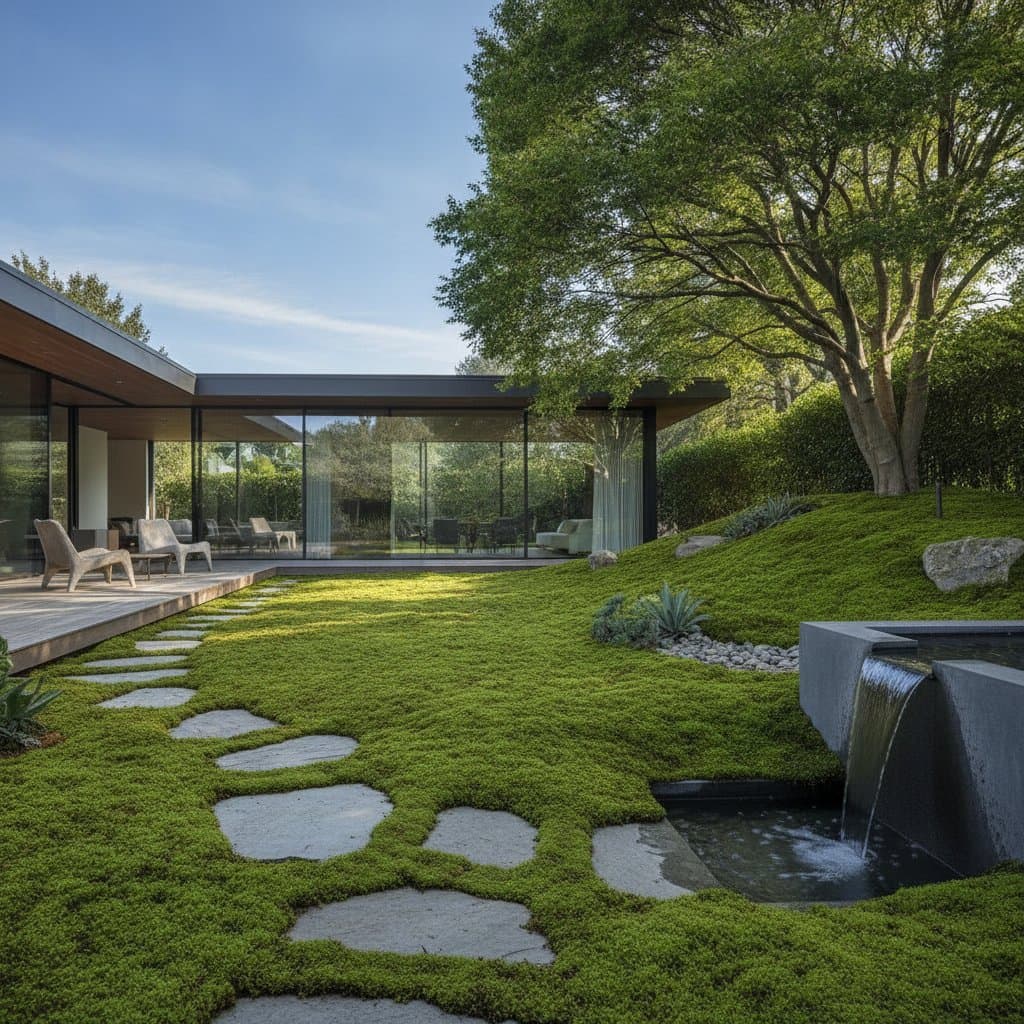
Why Moss Lawns Are Becoming the Popular No-Mow Choice
A moss lawn softens the landscape in a way that turf grass rarely can. Its dense, velvety texture and vivid green color create a calm ground layer that stays beautiful through dry spells and shade. For homeowners and designers looking for low maintenance and eco friendly alternatives, moss lawns prove to be a practical and visually rich choice.
They reduce mowing, conserve water, and thrive in places where grass struggles. The result is a living carpet that feels timeless, natural, and surprisingly tough.
Choose the Right Moss for Your Site
Not all mosses behave the same. Some spread horizontally and create a smooth, even surface, while others form mounds or tufts that add texture. Selecting the right type helps the lawn look unified and grow evenly.
Choosing compatible species ensures consistent coverage and long term health. Match growth habit to the desired look. Sheet moss forms a fine, uniform surface, while cushion moss builds gentle contours that catch light beautifully.
Start with the moss that already grows naturally in your region. It is adapted to your soil and climate, and it will expand faster with less fuss. In a shaded backyard, a mix of sheet moss and fern moss can create a soft green floor that feels cool and inviting underfoot.
Embrace the Shade
Moss thrives where turf gives up. Shady spots under oaks or maples, the north side of a house, or between garden walls are perfect zones for it to flourish. This approach converts underused, bare areas into lush, low care green space.
Treat shade as an advantage. Pair moss with ferns, hostas, or wild ginger to create a cohesive woodland palette. Moss loves dappled light. The more consistent the moisture and shade, the denser and richer the color.
A courtyard shaded by tall trees uses moss as the main groundcover, with stone seating and planters adding structure without disturbing the natural feel. Shade loving moss softens the base of a stone wall, linking built and natural elements.
Forget the Mower and Focus on Grooming
Once established, moss requires no mowing. Instead, maintenance involves gentle cleaning and occasional weeding. This eliminates noise, fuel use, and the weekly chore of cutting grass.
Use a soft broom or leaf blower on low setting to remove leaves and twigs. Keep the surface clear so the moss can photosynthesize evenly. Treat moss like a fine rug. Keep it clean, and it will stay beautiful for decades.
A backyard moss lawn edged with flagstone paths stays tidy all year with only seasonal brushing and a few minutes of hand weeding. A homeowner sweeps light debris from a moss lawn, revealing a dense emerald surface beneath.
Use Moss to Manage Drainage
Moss naturally stabilizes soil and reduces erosion in damp or sloped sites. It holds moisture yet allows water to pass through easily, preventing puddles and runoff. This improves soil stability and reduces maintenance in areas prone to moss or algae growth.
Position moss where water flows gently rather than pooling. Combine with rain gardens or permeable surfaces for a cohesive water wise design. Moss acts like a sponge that breathes. It slows water enough to soak in but never stays soggy.
On a gradual slope, patches of moss between flagstones keep soil from washing away while maintaining a soft, natural look. Moss catches dew and rain, turning a slope into a plush green tapestry.
Understand Seasonal Changes
Moss lawns shift subtly through the seasons, deepening in color after rain and turning paler in dry spells. These variations add character instead of signaling decline. The approach maintains visual interest year round without reseeding or fertilizing.
Accept the natural rhythm. Slight color shifts emphasize texture and light, especially in morning dew or after rainfall. Moss does not fade. It breathes. Its tone reflects the weather, which keeps the garden alive in every sense.
In a coastal garden, moss brightens after foggy mornings, creating a luminous green foundation beneath driftwood accents.
Living with a Moss Lawn
A moss lawn changes how a landscape feels and functions. It slows the pace of maintenance, reduces resource use, and invites closer observation of texture and light. For homeowners, it means less noise, less fuel, and more time to enjoy the yard. For designers, it offers a surface that blends ecology and artistry in equal measure.
Once established, moss becomes remarkably self sufficient. Occasional misting, debris removal, and monitoring for weeds are all it needs. Over time, it often expands into adjacent areas, weaving paths and plantings into one continuous, natural surface.
For many, that tactile connection is the reason they switch. Moss lawns are not only no mow. They are no stress.