
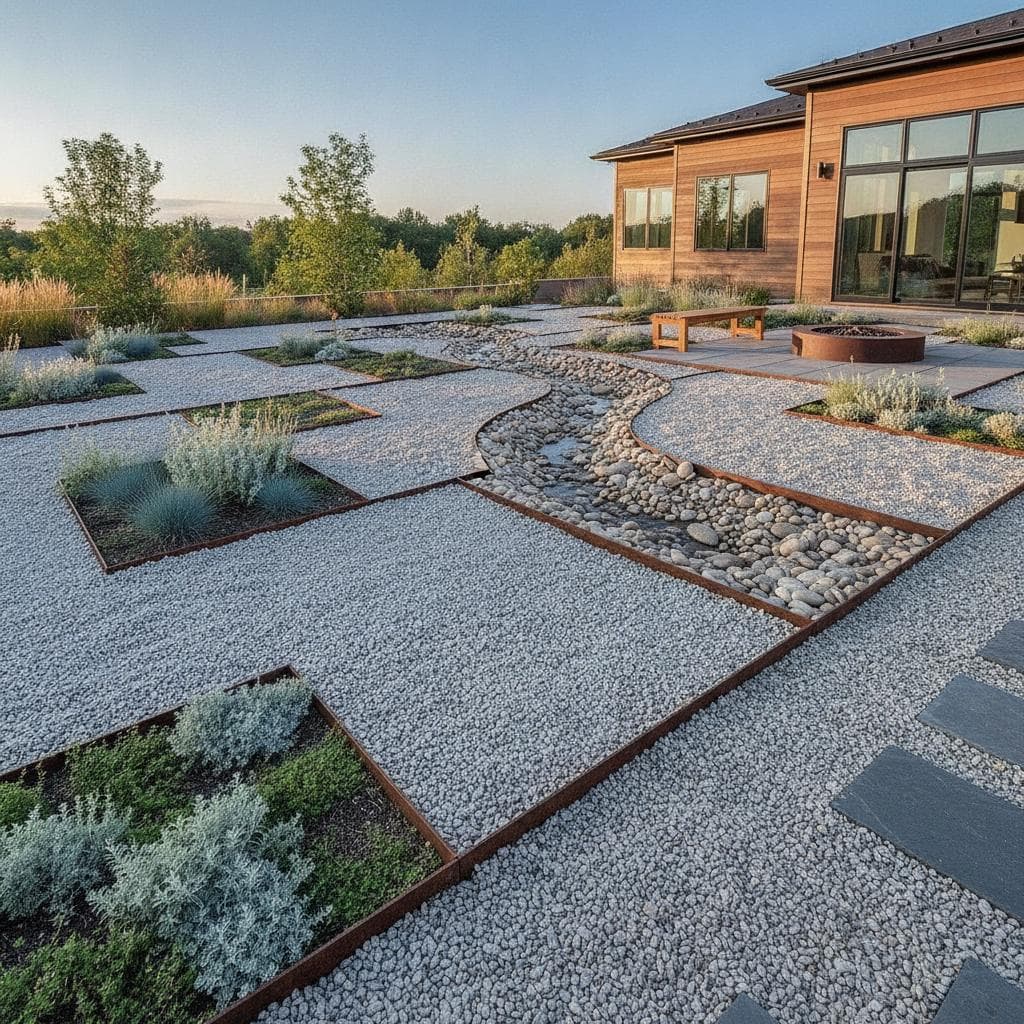
Gravel Lawns Offer Low-Maintenance Alternative to Turf
Gravel lawns are gaining attention as a sustainable, stylish replacement for traditional turf. They create a relaxed, contemporary look that works in many climates and soil types. The appeal lies in their simplicity. A gravel lawn stays neat without mowing, fertilizing, or constant watering, yet still feels like a finished and welcoming outdoor surface.
At a Glance
Location: Works across temperate, arid, and coastal zones
Size: Adaptable for small courtyards or large open landscapes
Climate Zone: Performs best in regions with moderate rainfall or water restrictions
Project Goal: Reduce maintenance, conserve water, and maintain a clean, usable outdoor space
1. Define the Surface and Edges
A gravel lawn starts with strong definition. Edging materials like steel, brick, or stone keep gravel contained and create crisp borders. This clarity helps the space feel intentional instead of like a leftover patch of ground.
A designer might say: "Edges are what make gravel feel designed, not accidental."
Functionally, edging prevents gravel from spilling onto paths or garden beds. Visually, it gives structure to an otherwise soft surface. For example, a narrow steel edge around a gravel court contrasts beautifully against nearby planting beds or paving stones.
Visual callout: Slim metal edging defines a gravel surface beside a perennial border.
2. Choose the Right Gravel Size and Color
Not all gravel performs the same. For walking areas, select angular pieces between 6 and 10 millimeters in size. Angular stones lock together underfoot, providing stability and reducing migration. Rounded pebbles can feel loose and shift easily, making them better for decorative zones than for active surfaces.
Color also influences the mood. Pale limestone brightens shaded gardens, while darker basalt or granite creates a modern contrast against green foliage. Local stone often blends best because it matches regional tones and reduces transport needs.
A landscape contractor might say: "The right gravel feels firm but not harsh. You should hear a soft crunch, not a grind."
3. Layer for Stability and Drainage
A gravel lawn is only as good as its base. Start with compacted subgrade soil, followed by a layer of crushed aggregate. This foundation improves drainage and keeps the surface level through wet and dry seasons. A geotextile fabric between layers helps prevent weeds from pushing through and keeps the gravel clean.
This structure means less maintenance over time. Water drains quickly, so puddles rarely form, and the surface stays usable even after heavy rain.
Visual callout: Cross-section shows compacted base, filter fabric, and top gravel layer.
4. Integrate Planting for Softness and Biodiversity
Gravel lawns do not need to be barren. Interplanting with low-growing species adds texture and seasonal color. Creeping thyme, blue fescue, and sedum varieties tolerate dry conditions and can root in gravel without much soil. These plants break up the surface visually and attract pollinators.
A planting designer might say: "Think of gravel as a canvas. The plants paint the pattern."
Combining gravel with drought-tolerant plants also supports local ecosystems. It creates habitat where turf would otherwise dominate with a monoculture. The result feels more natural and resilient.
Visual callout: Creeping thyme spreads between gravel stones near a stone bench.
5. Plan for Comfort and Use
A gravel surface can function as both lawn and patio. Seating areas, fire pits, or small dining spots fit easily within it. Because gravel does not trap heat like concrete, it stays comfortable underfoot in warm weather.
To make it inviting, include stepping pads or larger pavers in high-traffic zones. These create stable footing and define circulation routes. Lighting is another key layer. Low bollard lights or warm string lights give evening usability without glare.
A designer might say: "Lighting and texture make a gravel space feel alive after dark."
Visual callout: Flagstone pads lead across gravel to a sheltered dining area.
6. Keep Maintenance Simple
The main appeal of gravel lawns is how little upkeep they need. Occasional raking smooths out footprints and prevents compaction. A leaf blower or stiff broom clears debris efficiently. Every few years, a light top-up of gravel refreshes the surface.
Weed control is minimal with proper fabric and edging, but spot weeding may still be needed. Using a natural vinegar-based spray or hand removal keeps chemicals out of the soil.
A maintenance specialist might say: "Ten minutes with a rake each month keeps it looking intentional."
Living with Your Design
Gravel lawns fit modern life because they balance beauty with practicality. They save water and reduce mowing time, yet still create a calm, cohesive outdoor setting. Over time, the gravel develops a patina and settles naturally into the site, making the space feel established.
For homeowners and designers seeking a low-maintenance landscape, gravel lawns offer flexibility and style. They adapt to small urban gardens or expansive rural properties, blending seamlessly with native planting and simple architecture. The result is an outdoor surface that feels both purposeful and peaceful.