
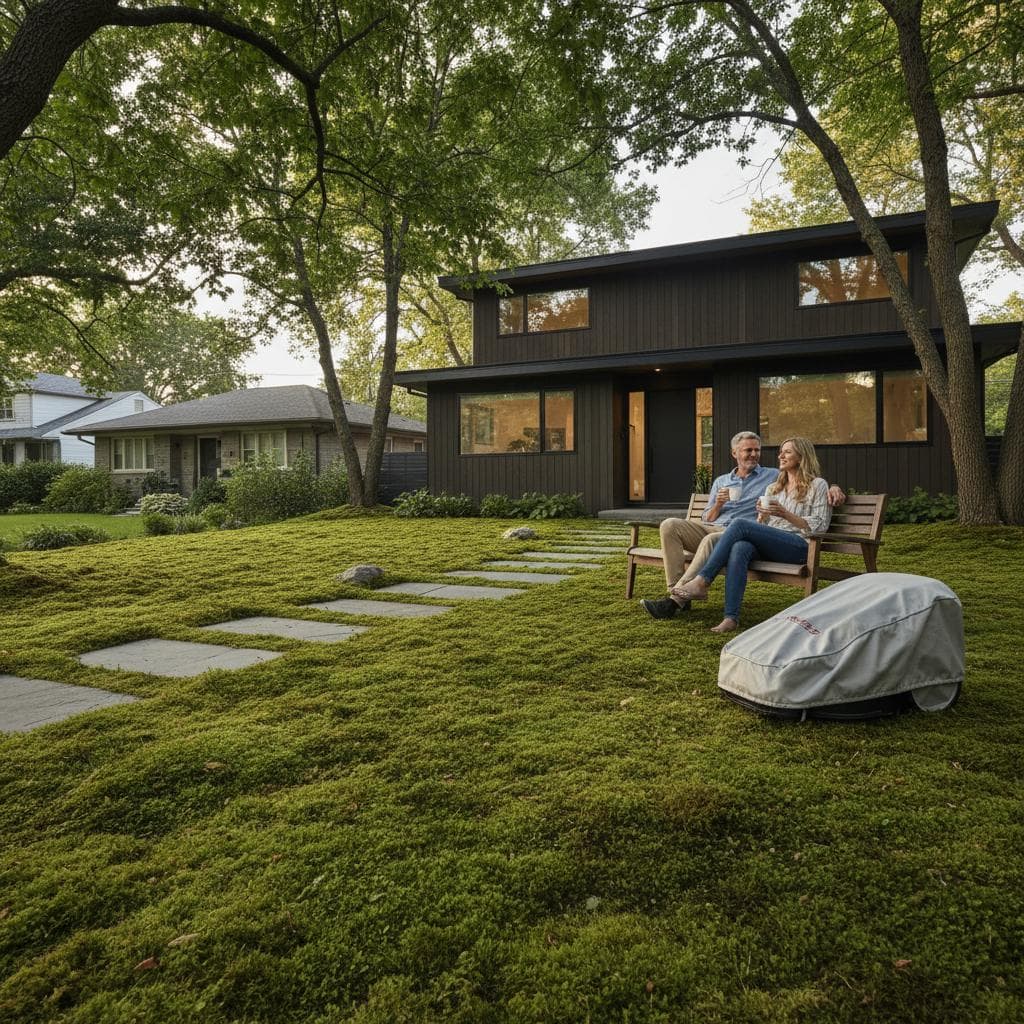
Moss Lawns: Transforming Suburban Yards Without the Need for Mowing
Sara and Daniel Roberts purchased their suburban home for its canopy of mature trees and peaceful surroundings. However, the expansive grass lawn presented a persistent challenge: weekly mowing sessions that consumed their weekends. Seeking a vibrant, resilient alternative, they opted for moss, a living ground cover that demands no mower and enhances the natural charm of shaded spaces.
At a Glance
- Residents: Sara and Daniel Roberts, along with their two young children and a lively terrier
- Location: A tree-lined suburban neighborhood on the East Coast
- Property Size: Quarter-acre lot featuring 1,000 square feet of moss in place of conventional turf
- Landscape Designer: Green Edge Landscape Studio
- Installation Contractor: Moss & Stone Garden Works
- Primary Objectives: Minimize routine lawn care, promote water conservation, and develop a safe, inviting play area for the family
The Appeal of Moss for Modern Homeowners
Moss lawns attract suburban residents by addressing common pain points of traditional grass maintenance. Grass varieties often require frequent cutting, consistent irrigation, and periodic applications of fertilizers or pesticides. In contrast, moss establishes itself on existing surfaces with minimal intervention, bypassing the need for soil preparation or nutrient supplements.
Landscape expert Leah from Green Edge Landscape Studio notes that moss excels in environments where grass typically underperforms. She observes, "Moss capitalizes on shade, humidity, and even slightly compacted terrain that discourages turf growth." This adaptability makes moss ideal for north-facing yards or areas beneath dense foliage, where sunlight filters through sporadically.
Beyond practicality, moss maintains its verdant hue across seasons. It resists browning during droughts and rejuvenates swiftly following precipitation. For those weary of battling bare patches or relying on synthetic treatments, moss provides a reliable, chemical-free option that restores harmony to the landscape.
Key Design Elements for Successful Moss Installation
Installing a moss lawn involves more than scattering plants; it requires intentional planning to ensure longevity and functionality. The Roberts' project incorporated targeted features that support moss growth while integrating seamlessly with the yard's layout.
- Surface Preparation and Drainage: Professionals graded the area gently to facilitate even water distribution, preventing stagnation that could harm the moss. They removed excess thatch from the former grass to create a textured base.
- Defined Boundaries: Low-profile stone edging delineates moss zones from garden beds, stabilizing the edges against erosion and foot traffic.
- Protected Pathways: Smooth river rocks form meandering paths, directing movement away from high-use moss sections and preserving their cushion-like quality.
- Ambient Illumination: Subtle tree-mounted uplights accentuate the moss's velvety texture after dusk, fostering a tranquil evening atmosphere without overwhelming the natural setting.
These choices blend utility with aesthetics, yielding a yard that appears spontaneously lush yet benefits from expert foresight.
Daily Life and Benefits in a Moss-Covered Yard
The Roberts family describes their routine as transformed by the moss lawn. Mornings begin with leisurely strolls across the cool, spongy surface, accompanied by the terrier exploring nearby. The children tumble and play freely, enjoying a soft landing that avoids the grit of dirt or the buzz of insects common in grass areas. Sara shares, "It feels like stepping onto a natural rug, vibrant yet tidy."
Environmentally, the shift yields significant advantages. Eliminating mowing reduces noise pollution and eliminates the storage of fuels or maintenance fluids. With no chemical inputs, stormwater runoff remains untainted, benefiting local waterways. The moss fosters a micro-ecosystem, nurturing ferns, fungi, and pollinator-friendly plants that enhance biodiversity.
Upkeep remains straightforward. The family rakes fallen leaves in autumn and applies a light mist during extended dry periods, typically no more than once a month. Daniel remarks, "This yard demands the least effort of any we have owned, yet its appearance improves with time."
Steps to Create Your Own Moss Lawn
As moss installations gain popularity, they introduce variety to once-monotonous suburban vistas, blending soft greens with textured depth. To embark on this transition, start by evaluating your yard's conditions. Identify shaded, moist zones or compacted soils where moss can flourish naturally.
Consult a local specialist to assess compatibility; species like Sphagnum or Hypnum vary by climate. Prepare the site by clearing debris and testing moisture retention. Introduce moss through transplantation or slurry application, then protect it during establishment with temporary barriers against heavy use.
The Roberts' experience demonstrates that thoughtful adaptation yields enduring rewards. Moss lawns cultivate serene, self-sustaining spaces that prioritize well-being over labor, proving that true landscape elegance often lies in simplicity.