
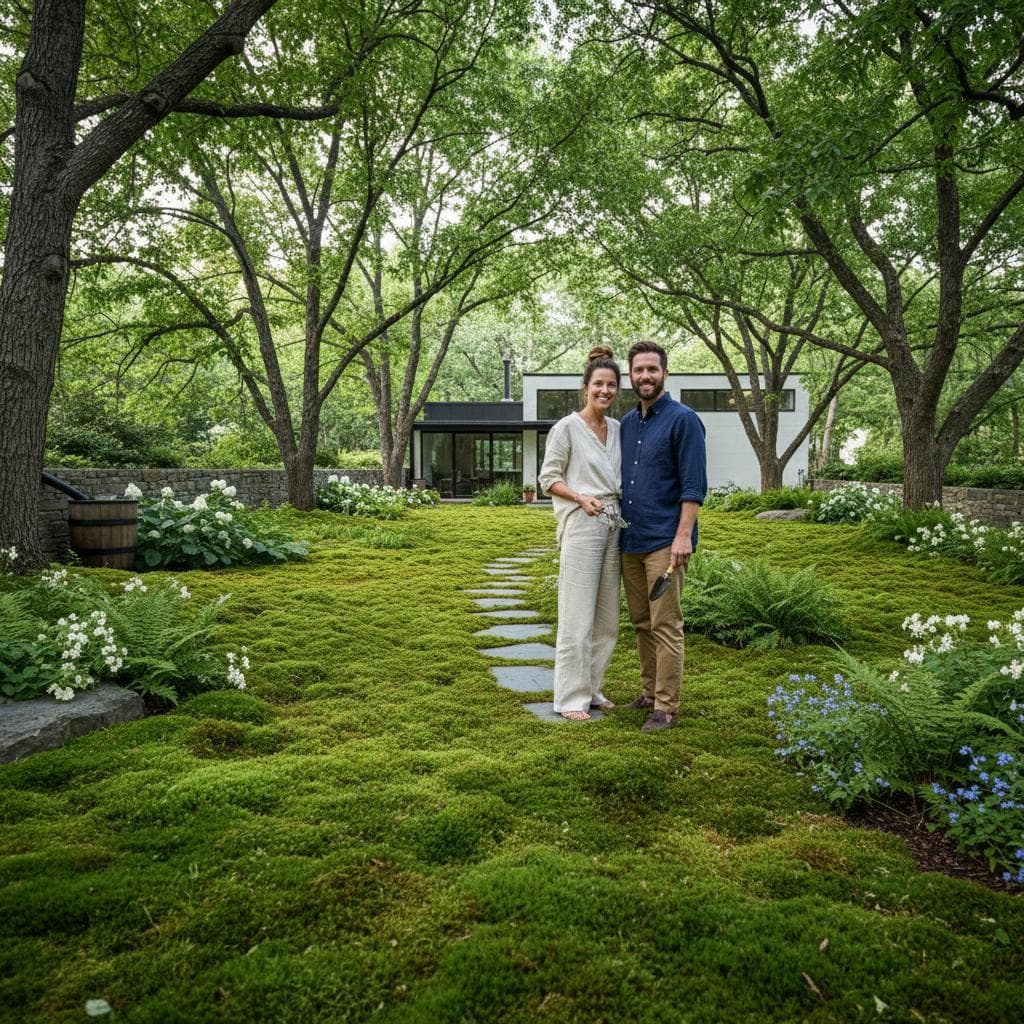
Moss Lawns Emerge as a Sustainable Alternative to Traditional Grass
Laura and Daniel Hayes purchased a property enveloped in shade from a dense oak canopy. They envisioned a vibrant green yard that required minimal upkeep, free from frequent watering and mowing. When conventional grass struggled to establish itself, the couple opted for moss, creating a resilient carpet of green that flourishes in conditions hostile to turf.
Project Overview
- Homeowners: Laura and Daniel Hayes
- Location: Forest Ridge neighborhood
- Lot Size: Quarter-acre
- Landscape Designer: Erin Marshall, Green Haven Landscape Studio
- Installation Team: MossWorks
- Project Scope: Complete replacement of the yard with native moss species
- Primary Objectives: Develop a shade-adapted green area with reduced water demands and effortless maintenance
Ideal Conditions for Moss in Shaded Landscapes
The Hayes yard receives filtered sunlight throughout the day, which inhibits uniform growth of turf grass. Rather than resist these natural limitations, the homeowners aligned their design with them. Moss excels in moist, low-light environments, providing a verdant layer that demands no cutting and scant supplemental watering.
Landscape designer Erin Marshall noted, "Moss aligns perfectly with sites that challenge grass, particularly those with shade or dense soils."
Preparation involved removing existing sparse grass and weeds, then leveling the ground to form a stable, mildly acidic base. The crew selected moss types suited to specific zones: Dicranum scoparium for thick mats in flat areas, Thuidium delicatulum for its delicate, fern-like appearance, and Hypnum cupressiforme to stabilize inclines against erosion. Test soil pH beforehand and amend with pine needles or sulfur if needed to reach 5.0 to 5.5 for optimal growth.
Steps in Moss Lawn Installation
Moss differs from sod as it lacks deep roots and spreads via superficial attachments called rhizoids. These structures draw sustenance and hydration from the atmosphere and precipitation. Workers dampened the soil, positioned moss fragments firmly, and secured the site with lightweight netting to shield against disturbances from wind or wildlife.
Growth appears within weeks as the fragments interconnect. The Hayes maintained brief daily misting until the moss anchored. Once established, moss adapts seasonally, deepening to rich green after rains and adopting a subtle gray-green hue in drier times. Monitor progress by checking for spore capsule formation, a sign of healthy establishment.
Sustainable Design Elements
Success with moss depends on site assessment and species selection. Marshall's team focused on indigenous mosses from nearby woodlands to match the local ecosystem and avoid invasive risks. Source moss ethically from certified suppliers or propagate from your property to ensure compatibility.
The layout included stone paths and edging to delineate walkways from moss zones. Reclaimed granite stepping stones offered durable footing and aesthetic flow, preserving the moss from heavy use.
Marshall explained, "Moss tolerates light foot traffic yet benefits from defined paths that direct activity and maintain design intent."
Rain barrels positioned by the house capture runoff for occasional watering. Moss efficiently absorbs aerial moisture, so modest applications from stored rainwater sustain vitality without excess. Install barrels with overflow diversions to prevent soil saturation.
Seasonal Variations and Complementary Planting
Moss lawns deliver evolving textures and shades that enhance appeal across seasons. Fresh greens dominate in spring and summer, yielding to earthy olives in aridity, all while inviting touch. Observe color shifts to adjust watering during dry spells.
The Hayes integrated the moss with woodland companions like ferns, hostas, and sedges for vertical interest. This ground cover unifies the planting scheme without fertilizers, safeguarding adjacent trees from potential contaminants. Space companions at least 12 inches from moss edges to allow air circulation and prevent competition.
Advantages for Maintenance and Ecology
Moss requires far less water than grass, slashing usage by up to 80 percent in shaded areas. It dispenses with mowing machinery, curbing noise pollution and carbon output. Additionally, moss traps pollutants from the air and retains stormwater, benefiting air purity and soil health.
Care involves simple tasks: sweep leaves gently and hose off residues periodically. Moss inherently deters common pests and ailments, eliminating chemical interventions. In fall, rake lightly to remove debris without disturbing the surface.
Upfront costs mirror or exceed sod installation based on scale, but savings in water bills, amendments, and services offset this promptly. For irregular or dim sites, moss surpasses synthetic options like turf or stone in comfort and environmental merit. Calculate long-term savings by tracking water and maintenance expenses over the first year.
Embracing Moss in Daily Life
Several months post-installation, the Hayes describe their yard as serene and seamlessly blended with the woods. They linger on stone benches in the mornings, observing light play across the moss.
Laura shared, "Weekends once meant battling the lawn; now they mean savoring it."
Prospective adopters should begin modestly: trial moss varieties in select spots, monitor performance, and scale up. Aim for soil pH of 5.0 to 5.5, and provide steady moisture initially. Adapted moss proves resilient with little intervention.
Realizing Lasting Benefits Through Moss
Moss lawns align with rising interest in gentle landscapes, delivering ecological harmony and visual grace. For the Hayes, this approach transformed a defiant yard into a thriving haven that demands modestly yet enriches abundantly. Homeowners gain not only reduced effort but also a deeper connection to their natural surroundings, fostering biodiversity and personal well-being over time.