
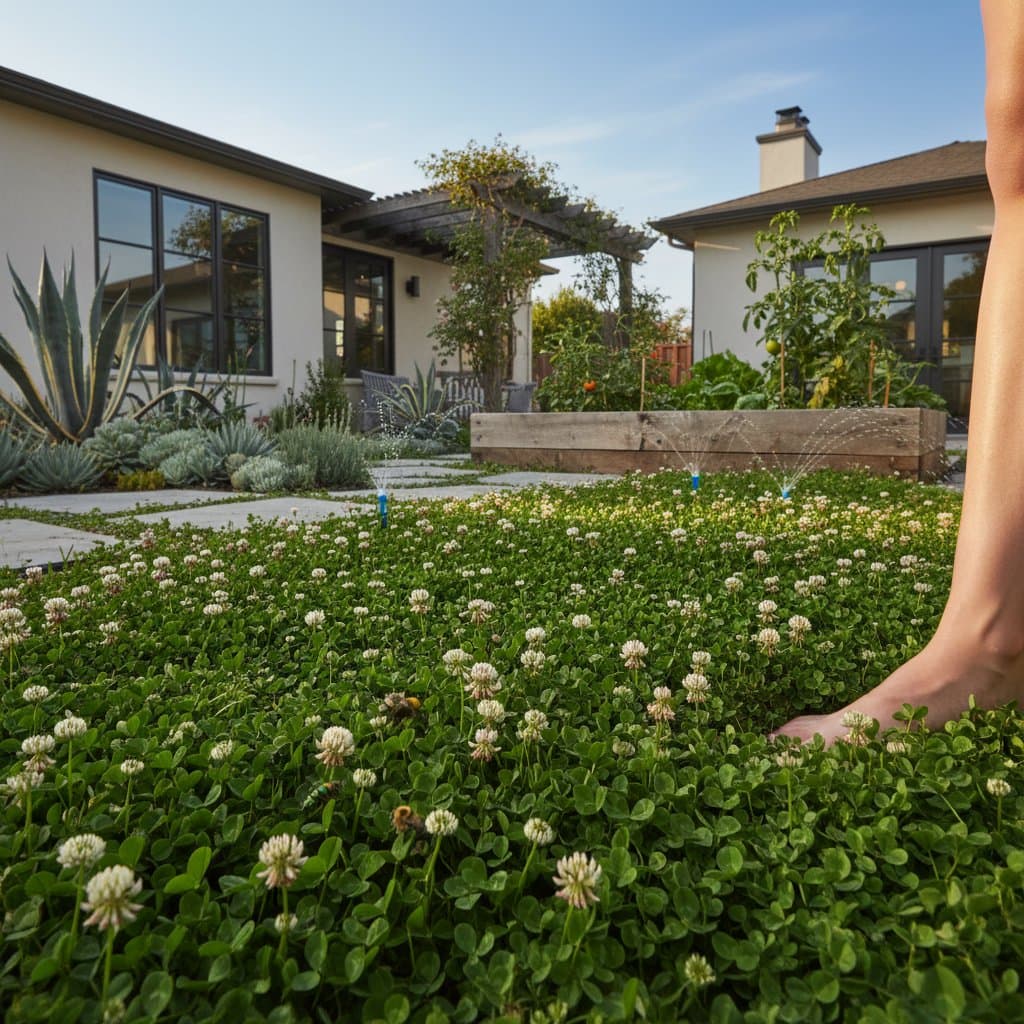
Why Clover Lawns Outperform Traditional Grass
A vibrant green lawn enhances the appeal of many California residences, yet the demands of maintenance often prove burdensome and costly. Homeowners frequently contend with rigorous mowing routines, fertilizer applications, and persistent irrigation needs that traditional grass requires. Clover lawns provide an innovative, environmentally conscious solution. These lawns achieve striking color, plush texture, and enduring durability with significantly less effort. For individuals weary of intensive turf care, clover emerges as the intelligent, sustainable selection.
Reduced Water Needs for Sustained Greenery
California residents recognize the precious nature of water resources. Clover flourishes with far less irrigation than standard grass varieties, retaining its verdant hue during extended droughts when conventional lawns typically brown. The plant's extensive root system accesses subsurface moisture efficiently, eliminating the need for the regular watering schedules essential for fescue or Bermuda grass. In various locales, property owners reduce irrigation frequency by at least 50 percent upon transitioning to clover. Such savings translate to decreased utility costs and reduced environmental impact during conservation periods. To maximize this benefit, install drip irrigation systems focused on deep, infrequent watering to encourage root growth.
Built-In Soil Enrichment Without Synthetic Inputs
Conventional grass demands regular nutrient supplementation to maintain vitality. Clover functions as a natural nitrogen fixer, drawing atmospheric nitrogen and converting it into usable plant nutrients that enrich the underlying soil. This inherent process sustains lawn health without reliance on chemical fertilizers. Gradually, clover bolsters soil composition, nurtures microbial activity, and minimizes nutrient leaching. The outcome yields a self-perpetuating ecosystem that remains lush through natural means alone. Test soil pH annually and amend with lime if levels drop below 6.0 to optimize clover's nitrogen-fixing efficiency.
Plush Texture and Enhanced Safety
A clover lawn offers a sensation akin to walking on a resilient, cushioned mat. Its leaves possess a finer structure than typical grass blades and remain cooler to the touch under sunlight exposure. This quality suits households with children or pets that frequent outdoor spaces. Clover also demonstrates resistance to discoloration from pet urine, a common issue with grass surfaces. The combination of its supple feel and sturdy nature positions clover as an optimal choice for recreation, leisure, or social events. Select white clover varieties for the softest texture, and overseed bare spots in early spring to maintain even coverage.
Natural Weed Suppression and Minimal Mowing
Clover establishes a compact growth pattern that forms an effective barrier against weeds. The dense mat crowds out common intruders such as dandelions and crabgrass, limiting their establishment. Due to its moderate height, clover requires infrequent trimming compared to the weekly cuts needed for grass. Property owners often limit mowing to three or four instances per year, primarily to manage flowering if a seamless appearance is desired. These efficiencies free up substantial time, allowing more opportunities for yard enjoyment rather than upkeep. Mow at a height of 2 to 3 inches when needed, using sharp blades to avoid stressing the plants.
Support for Pollinators and Aesthetic Appeal
The blossoms of clover draw essential pollinators including bees and butterflies, contributing to overall garden ecosystem balance. These delicate white or pink flowers add ornamental interest alongside functional benefits. For a tidier presentation, schedule mowing prior to full bloom to suppress flowers and promote uniformity. Regardless of preference, clover lawns advance biodiversity and bolster local wildlife. Individuals who value dynamic garden elements find clover fosters a vibrant, harmonious setting. Integrate clover with native perennials nearby to create a comprehensive pollinator habitat that thrives in California's varied climates.
Cost-Effective Installation and Long-Term Savings
Clover seed costs less than comparable grass varieties and germinates rapidly under suitable conditions. Sow it directly into established lawns or prepared soil with basic site clearing, such as removing debris and lightly raking the surface. Germination occurs within 7 to 14 days, leading to full coverage in 4 to 6 weeks. Many opt for a clover-grass mix to leverage complementary strengths, like drought tolerance from both. Once rooted, the low-care profile of clover yields ongoing reductions in expenses for water, tools, and labor. Prepare the site by tilling lightly to a depth of 2 inches and broadcasting seeds at a rate of 4 to 6 ounces per 1,000 square feet for best results.
Steps to Transition to a Clover Lawn
Transitioning to a clover lawn extends beyond aesthetic preferences. It embodies a deliberate strategy for landscaping that honors water conservation, soil integrity, and enduring ecological balance. With its deep green tones, inviting softness, and inherent toughness, clover sustains visual and tactile appeal across seasons. Homeowners pursuing elegance with minimal intervention discover in clover a worthwhile investment that promotes responsible enjoyment of exterior environments. Start by evaluating your yard's sunlight and soil conditions, then source high-quality seeds from reputable suppliers to ensure successful establishment.