
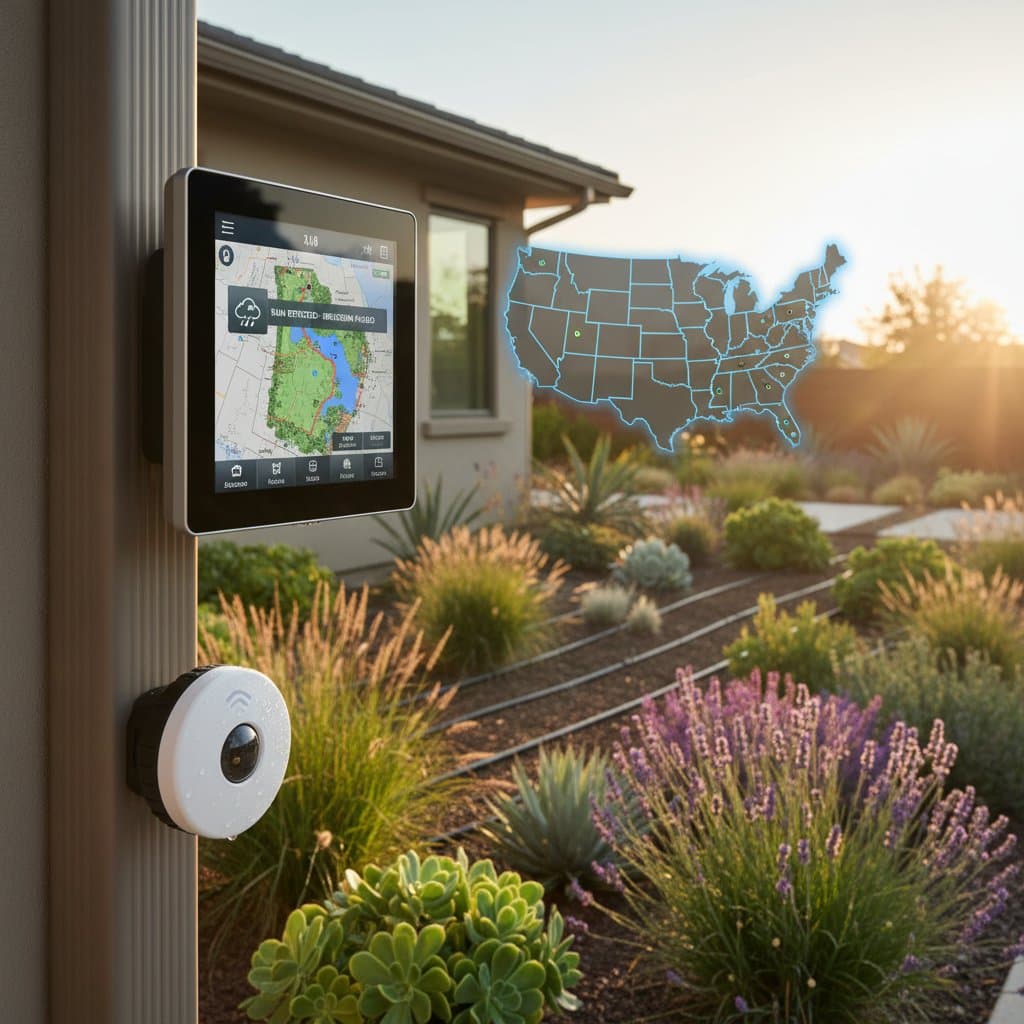
Rain Sensor Mandates Expand to 12 States: Essential Guide for Compliance and Efficiency
Gardeners in California appreciate the precious nature of water resources. Automated irrigation systems demand careful management to avoid unnecessary usage. Recent legislation in twelve states establishes rain sensors as a legal requirement, transforming voluntary conservation practices into enforceable standards. Homeowners, property managers, and landscape professionals encounter both responsibilities and advantages in adopting these technologies for optimized water use and landscape preservation.
Functions of Rain Sensors and Their Importance
A rain sensor operates as a compact device that interrupts irrigation cycles upon detecting precipitation. The core mechanism ensures that artificial watering ceases when natural rainfall suffices. Proper installation yields benefits such as minimized water expenditure, decreased surface runoff, and prolonged durability of irrigation components.
Certain models incorporate hygroscopic disks that expand upon moisture contact, activating a shutdown signal. Alternative designs employ electronic detectors attuned to precipitation volume and duration. Electronic variants provide superior accuracy, particularly in regions with variable weather patterns. In arid climates punctuated by intermittent showers, these sensors conserve substantial water volumes annually while averting plant damage from excess moisture, including root decay, disease proliferation, and nutrient depletion in soil.
Key Elements of the Compliance Framework
Regulations differ modestly across states, yet the fundamental directive remains uniform: newly installed or modified automatic irrigation setups must incorporate operational rain sensors. Coverage extends to residential, commercial, and sometimes public domains, encompassing parks, athletic fields, and community-managed green spaces.
Authorities enforce these provisions during permit approvals and on-site inspections. Installers verify sensor functionality through testing before certification. Existing installations face no universal retrofit mandate, though modifications to controllers or major elements trigger the need for sensor addition. Professionals gain standardized protocols for installations, while individual property owners access straightforward pathways to environmentally sound practices. Compliant configurations not only satisfy legal criteria but also deliver superior operational performance.
Selecting an Appropriate Rain Sensor
Rain sensors vary in design and capability, necessitating evaluation based on system configuration, regional conditions, and financial considerations. Deliberate choices enhance overall effectiveness.
-
System Integration: Confirm compatibility with the current controller model. Contemporary units often feature specialized input ports; legacy systems might require intermediary adapters or electrical adjustments.
-
Adjustable Detection Levels: Prioritize devices with customizable rainfall activation points. Humid coastal environments benefit from sensitive settings to account for ambient moisture, whereas drier interiors demand broader adaptability to storm variability.
-
Upkeep Demands: Opt for low-maintenance options in challenging conditions. Protective enclosures shield against dust accumulation or wind exposure, reducing the frequency of cleaning or adjustments.
-
Connection Type: Wireless models facilitate retrofits by eliminating extensive cabling, though battery replacement schedules apply. Wired alternatives offer enhanced longevity and consistent performance without power dependencies.
-
Durability Features: Assess weather-resistant materials for outdoor exposure. Sensors rated for extreme temperatures ensure reliability in diverse climates.
An optimal selection recoups investment via diminished utility costs and mitigated plant health concerns, functioning as a proactive measure for landscape vitality.
Incorporating Sensors with Advanced Irrigation Technologies
Owners of intelligent irrigation controllers can amplify system intelligence by pairing with rain sensors. These controllers leverage meteorological forecasts and ground probes, yet local precipitation monitoring addresses site-specific nuances overlooked by remote data.
Consider a sloped terrain where drainage patterns alter moisture distribution, or shaded zones under foliage that experience reduced direct rainfall. On-site sensors provide instantaneous adjustments, fostering uniform hydration and optimal soil conditions. Integration demands thorough compatibility checks and precise setup to eliminate inaccuracies or malfunctions. Engaging a certified irrigation specialist streamlines this process, ensuring seamless operation and long-term reliability.
Financial Implications, Savings Potential, and Enduring Benefits
Initial outlays for rain sensors remain affordable, typically under two hundred dollars including labor, far outweighed by seasonal economies. Annual reductions in water consumption translate to noticeable decreases in billing, funding further enhancements like precision drip lines, organic mulching, or drought-tolerant vegetation.
Proactive compliance averts penalties from regulatory violations, which vary by jurisdiction but can accumulate significantly. Certain locales incentivize adherence through utility rebates or tax credits for qualifying installations. Beyond economics, each sensor deployment preserves vast quantities of processed water, contributing to broader ecological sustainability. Over a decade, cumulative impacts support resilient ecosystems and resource equity.
Strategies for Effective Implementation and Landscape Optimization
Navigating these mandates involves strategic planning to align legal adherence with practical gains. Begin by reviewing local ordinances through municipal resources or professional consultations to clarify applicability.
Assess current setups for upgrade opportunities, prioritizing zones with high evaporation rates. Pair sensor adoption with broader efficiency measures, such as zoning valves or evapotranspiration-based scheduling, to maximize returns. Document installations for records, facilitating future inspections or warranty claims.
Ultimately, these requirements foster landscapes that harmonize productivity with stewardship. Property stewards position themselves as leaders in resource management, yielding enduring satisfaction from vibrant, self-sustaining gardens.