
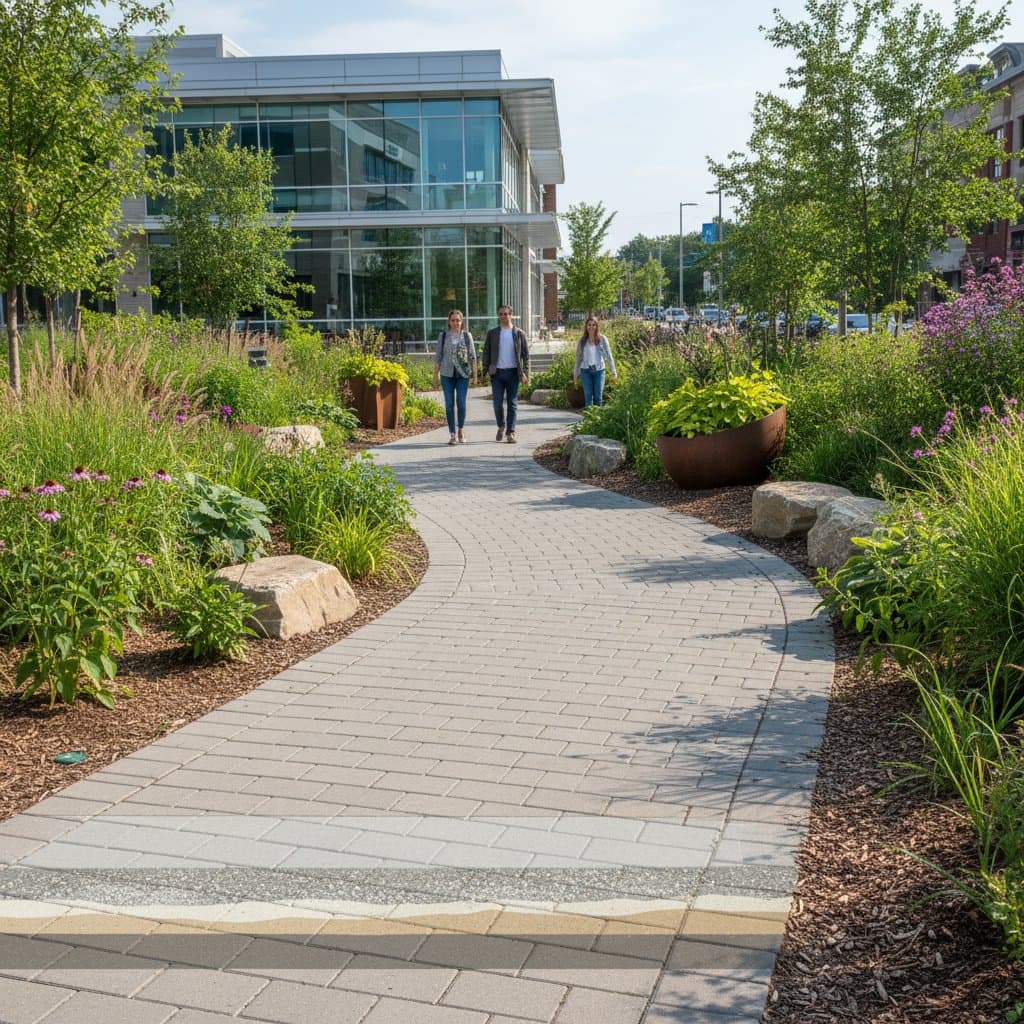
Bioswales: Essential for Walkway Design Under 2026 Stormwater Regulations
Walkways serve purposes beyond mere connectivity in landscapes. They direct foot traffic, shape visual perspectives, and direct rainwater across the terrain. With upcoming stormwater regulations in 2026, bioswales emerge as key elements that unite aesthetic appeal with robust environmental function. These features capture surface runoff, remove contaminants, maintain dry walking surfaces, and integrate seamlessly with surrounding gardens and structures.
At a Glance
Location: Residential yards and commercial properties
Size: From compact residential trails to expansive public avenues
Climate Zone: Versatile for different areas through targeted plant choices
Project Goal: Merge pathway utility with water filtration and habitat support
1. Assess Water Movement on the Site
Start bioswale walkway design by mapping water patterns across the property. Analyze existing contours, soil composition, and gradients to identify collection points and opportunities for controlled flow.
Designers emphasize that bioswales channel water akin to a meandering brook rather than a rigid drain. Achieve this by incorporating a modest slope on the path toward embedded planting channels or shallow depressions that gather runoff. For instance, position a loose gravel walkway beside low-growing sedges to route rooftop drainage into a vegetated catchment, which averts pooling and soil loss.
Functional benefit: Minimizes flooding risks and ensures secure footing post-rain.
Design insight: Incorporate gradual height variations alongside materials such as decomposed granite or porous pavers.
Visual callout: A winding stone trail inclines softly into a planting furrow featuring switchgrass and soft rush.
2. Select and Layer Vegetation for Optimal Filtration
Vegetation forms the core of any bioswale system. Roots anchor the earth, uptake excess moisture, and trap sediments along with chemicals. Arrange plants in layers based on stature and form to maximize filtration efficiency while enhancing the scene.
Prioritize indigenous varieties resilient to fluctuating moisture levels. Pair bunchgrasses such as prairie dropseed with deep-rooted perennials like blue flag iris or Joe Pye weed. In confined areas, opt for compact sedges that maintain neat borders adjacent to the path.
Landscape architects note that bioswales function as dynamic filters attuned to seasonal rhythms. Early spring foliage gives way to summer blooms and autumn seed clusters, fostering an ever-evolving pathway rooted in local ecology.
Functional benefit: Elevates water purity and enriches ground stability.
Design insight: Blend upright forms with rounded mounds to build depth and fluidity.
Example: A slim bioswale with sweet flag and coneflower runs parallel to a brick-paved route.
3. Blend Hardscape Elements with Infiltration Features
Effective bioswale walkways harmonize planted areas with resilient paving. Select hardscape that aligns with natural water dynamics rather than obstructing them. Options like permeable pavers, spaced stone sets, or angular gravel permit downward seepage while providing firm tread.
Build a foundational layer of compacted aggregate to support weight and facilitate drainage. In high-traffic zones, install metal edging or containment strips to secure the surface without impeding lateral flow. Concrete curbs can delineate shifts from path to planting bed, offering added reinforcement.
Designers stress that material selections directly shape hydrological behavior. Choose finishes that welcome absorption over reflection, ensuring harmony with nearby flora.
Functional benefit: Provides enduring support and seamless water entry.
Design insight: Align paver hues and patterns with plant tones for unified composition.
Example: Porous concrete units edged by decorative grasses and smoothed river stones.
Visual callout: Rainfall penetrates permeable pavers to nourish the subsoil directly.
4. Incorporate Illumination and Boundaries for Enhanced Usability
Strategic lighting subtly elevates bioswale installations. Position low-profile, downward-directed lamps to accentuate plant forms and illuminate paths at night, all while preserving ecological balance. Select bulbs emitting warm light at 2700 Kelvin to evoke a serene ambiance.
Boundaries delineate zones between trafficked surfaces and greenery. Employ weathered steel, quarried stone, or permeable polymer strips that permit unimpeded water movement. These elements organize the space without imposing stark divisions.
Lighting specialists observe that multi-level illumination prolongs outdoor enjoyment minus intrusive brightness. Paired with verdant surrounds, such setups yield practical yet enchanting environments.
Functional benefit: Boosts accessibility and security in low-light conditions.
Design insight: Embed light sources during initial planning to safeguard root systems.
Example: Recessed path illuminators nestled within blue fescue and sedge borders deliver gentle radiance.
5. Establish Maintenance Protocols for Sustained Effectiveness
Bioswales demand ongoing attention to preserve their utility. Routinely clear accumulated litter, prune overgrowth, and inspect entry and exit points for blockages. Monitor for subsidence and recalibrate slopes as needed across seasons.
Select robust plants needing scant watering and resist common pests. Apply organic mulch layers, such as coarse bark or pea gravel, to conserve hydration and suppress unwanted growth. As the system matures, deepened root networks and microbial activity render it increasingly autonomous.
Functional benefit: Secures enduring efficacy and adaptability.
Design insight: Embed care routines into the overall blueprint from the outset.
Sustaining Bioswale Performance Over Time
Bioswale-integrated walkways yield landscapes that perform efficiently while captivating the eye. They handle precipitation, safeguard aquatic ecosystems, and infuse routine routes with vitality and form. Through precise site grading, diverse planting schemes, and diligent oversight, these installations deliver lasting environmental and aesthetic rewards.