
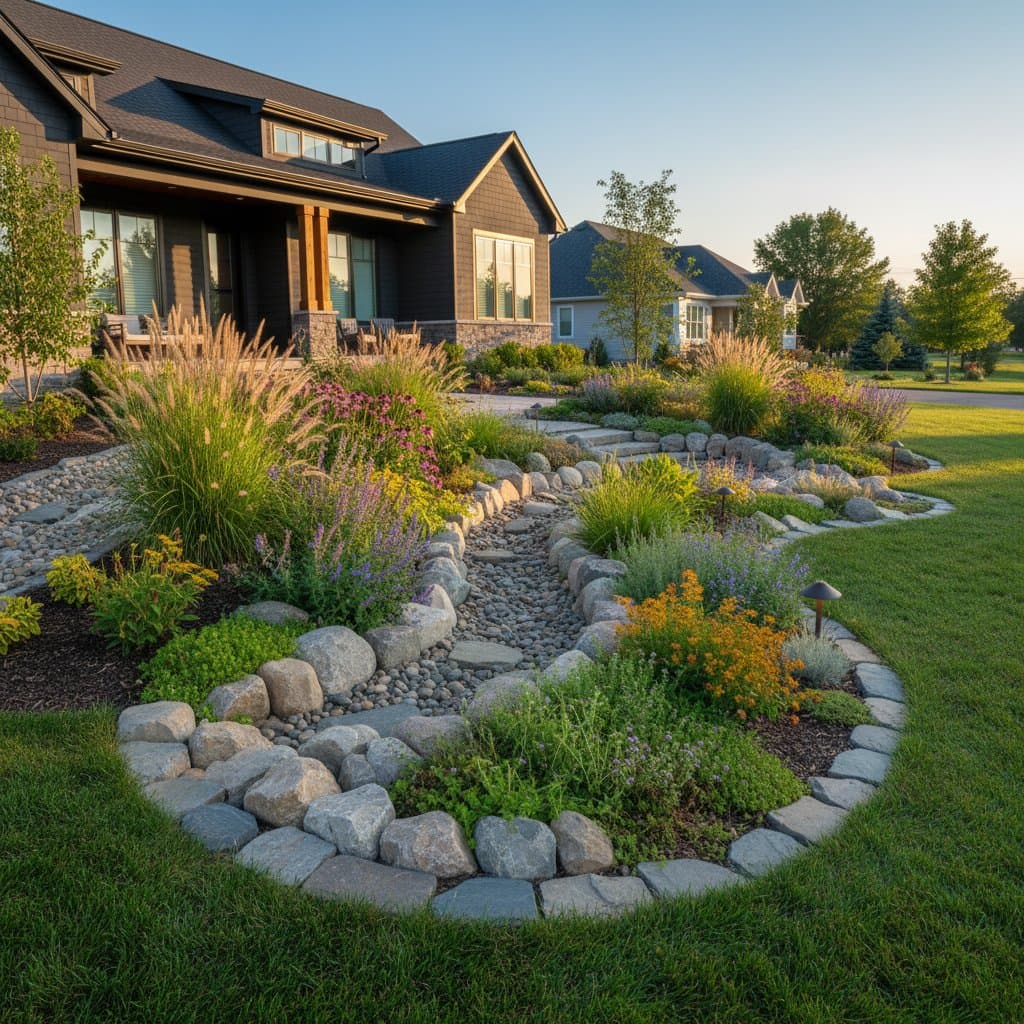
Transform Mandated Bioswales into Stunning Front Yards
Homeowners facing a required bioswale for a new residence or development often view it as a constraint on design choices. These stormwater management features hold potential to serve as the most vibrant element in a front yard. Thoughtful planning allows a bioswale to merge environmental benefits with visual appeal, resulting in a landscape that appears purposeful, textured, and refreshed following each rain event.
Effective bioswales capture and purify runoff, replenish groundwater supplies, and provide habitat for pollinators. They also guide visitors from the street to the entrance, ease the shift between hard surfaces and plantings, and reflect a commitment to the surrounding ecosystem.
At a Glance
Location: Residential front yard
Size: Determined by local drainage needs
Climate Zone: Suitable for diverse regions with appropriate plant selections
Project Goal: Integrate stormwater management with elegant landscape aesthetics
1. Define the Shape with Purpose
Begin the design process by contouring the bioswale to harmonize with the overall yard layout, avoiding the appearance of an improvised trench. Opt for a broad, flowing curve that aligns with the property's lines rather than rigid straight edges. Maintain gentle slopes that facilitate planting and upkeep while ensuring efficient water direction.
Consider this perspective from a landscape designer: A bioswale should function as a garden bed that incidentally handles water flow. This mindset positions the feature as an intentional enhancement.
Functional benefit: Channels and cleans stormwater effectively.
Design insight: Incorporate sweeping curves to link the bioswale with walkways, driveways, and adjacent garden areas.
Example: In a contemporary residence, a teardrop configuration collects downspout discharge and draws attention to the front entrance.
Visual callout: Curved bioswale boundary merges seamlessly with an ornamental grass edging.
2. Layer Native and Adaptive Plants
The choice of vegetation determines both the bioswale's effectiveness and its aesthetic success. Select combinations tolerant of periodic flooding and extended dry periods. Native plants adapt to regional conditions and draw in pollinators, complemented by resilient ornamentals that add variety in form and hue.
Functional benefit: Secures soil against erosion and removes contaminants from incoming water.
Design insight: Position water tolerant species in the central depression and drought resistant options along the elevated margins.
Example: Plant blue flag iris, sedges, and rushes in the deepest areas, paired with prairie dropseed, little bluestem, or coneflower on the periphery.
A landscape architect advises: Arrange plantings in vertical tiers, placing the most aquatic varieties in the core and hardiest selections at the borders.
Visual callout: Blue flag iris delivers vibrant seasonal blooms at the bioswale's base.
3. Use Stone to Shape and Define
Incorporate stone elements to impart a sense of precision and permanence to the bioswale. Rounded river rocks or edged gravel moderate water velocity and strengthen boundaries. This approach evokes a dry streambed, suitable for modern or classic yard styles.
Functional benefit: Minimizes soil loss and promotes water absorption.
Design insight: Choose stones that coordinate with existing paved surfaces for cohesive integration.
Example: Line the entry area with 3-inch river rocks to introduce tactile interest and capture larger debris prior to the main basin.
A designer notes: Stone provides framework to a dynamic ecosystem, elevating a utilitarian drain into a prominent landscape element.
Visual callout: River rock border flows from the driveway into the bioswale's central pool.
4. Connect Paths and Circulation
Integrate pedestrian routes with the bioswale from the outset to enhance usability. Install stepping stones, wooden boardwalks, or modest spans to allow safe passage without damaging the planting zone.
Functional benefit: Enables movement while preserving soil structure and plant health.
Design insight: Position crossings to align with views toward the home entrance or key garden points.
Example: A cedar boardwalk over the shallowest portion directs guests from the public sidewalk to the front steps, highlighting the bioswale as a deliberate pathway feature.
A landscape contractor observes: Graceful integration of paths with the bioswale demonstrates harmony between utility and aesthetics.
Visual callout: Cedar bridge crosses the vegetated swale, connecting street access to the entryway.
5. Integrate Lighting for Nighttime Appeal
Incorporate low-voltage illumination to extend the bioswale's allure into the evening. Position fixtures along contours or amid foliage to cast gentle shadows and capture reflections on damp surfaces.
Functional benefit: Enhances security around approach routes.
Design insight: Employ warm white bulbs at 2700 K to accentuate grass forms and moisture patterns without overwhelming brightness.
Example: Place compact stake lights within prairie dropseed clusters to outline the bioswale's form subtly.
A designer comments: Evening lights revive the bioswale's presence, linking the residence and grounds through consistent mood and detail.
Visual callout: Gentle uplights illuminate swaying grasses and glistening stones.
6. Manage Transitions and Edges
Seamless junctions with surrounding elements elevate the bioswale to a core yard component. Employ defined borders or shallow walls to delineate zones and contain materials.
Functional benefit: Secures plant areas and simplifies ongoing care.
Design insight: Introduce subtle material shifts for fluid progression rather than abrupt divisions.
Example: Install steel edging to separate maintained lawn from the bioswale's native plantings, maintaining a sharp yet natural boundary.
A designer emphasizes: Well defined edges convey intentional care, signaling a thoughtfully maintained space.
Visual callout: Steel border forms a precise division between turf and indigenous vegetation.
7. Make Seasonal Interest Part of the Plan
Design the bioswale to deliver visual engagement across all seasons. Emphasize enduring qualities like form and motion alongside fleeting flowers. Persistent seed clusters, stem textures, and breeze induced sway sustain appeal during dormant phases.
Functional benefit: Preserves attractiveness and ecological roles throughout the year.
Design insight: Blend perennials, grasses, and compact shrubs to build dimension and stature.
Example: Pair winterberry holly for persistent berries, switchgrass for dynamic form, and Joe Pye weed for vertical summer presence.
A horticulturist suggests: Seasonal variations tie the bioswale to natural rhythms, underscoring the ongoing nature of water dynamics.
Visual callout: Ornamental grasses undulate over pooled water following a summer shower.
Sustaining the Bioswale Design
Viewing a bioswale as an integral design choice rather than a regulatory obligation redefines the front yard's character. Residents benefit from a responsive environment that attracts biodiversity, improves daily vistas, and aligns with sustainable practices.
Routine upkeep ensures long term vitality. Clear accumulated debris periodically, prune vegetation as needed, and inspect water entry and exit points for obstructions. This approach yields a resilient feature that fulfills both practical and aesthetic roles, fostering a deeper bond between the property and its natural context.