
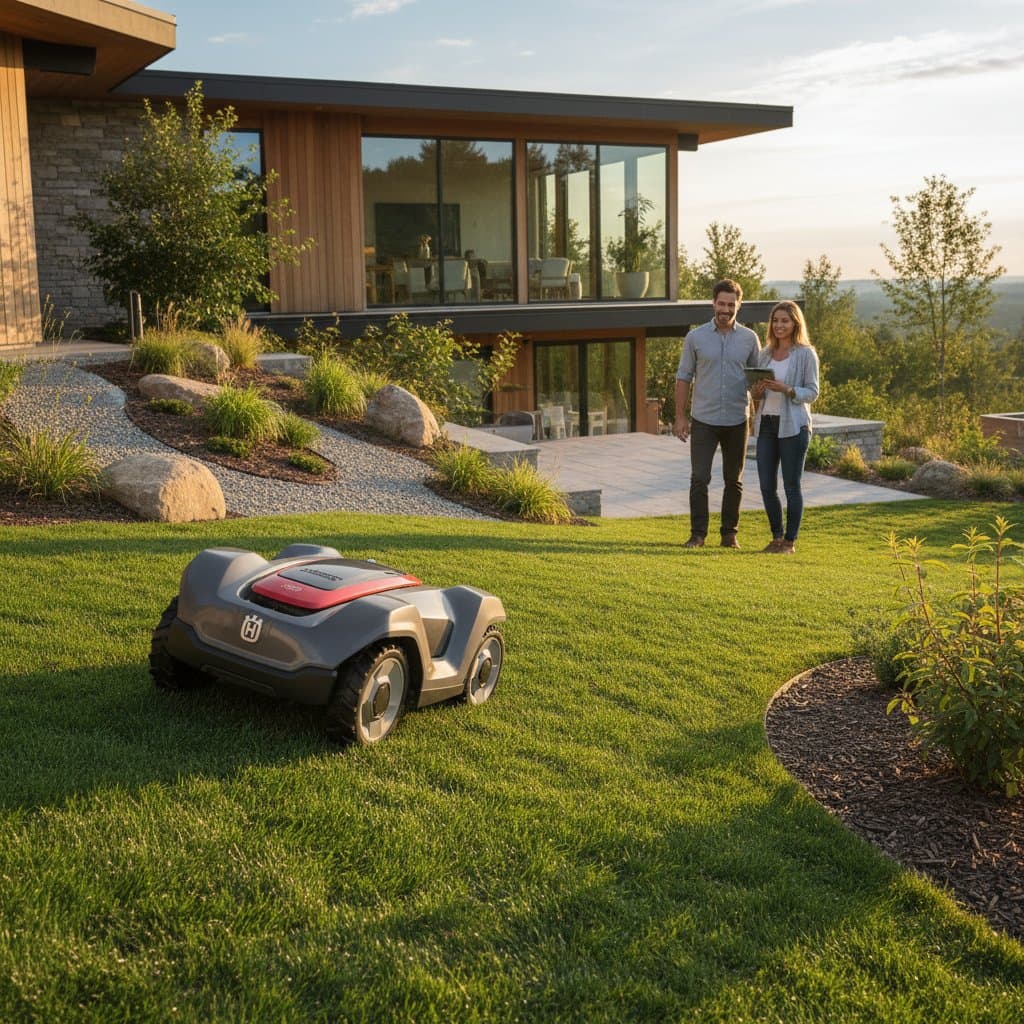
Introduction to AWD Robotic Mowers for Challenging Terrain
Hillside properties present unique landscaping challenges. Steep slopes demand equipment that maintains traction and coverage without slipping or missing areas. All-wheel drive (AWD) robotic mowers address these issues effectively, offering homeowners reliable automation for uneven lawns.
Jason and Marla, residents of a sloping suburban lot, faced weekly struggles with traditional push mowers. Their terrain included inclines up to 70 percent, dense shrubbery, and narrow paths. After researching options, they selected an AWD model that promised to handle such conditions. The result exceeded expectations, delivering uniform cuts and reducing physical labor.
These mowers integrate advanced engineering to perform on gradients where standard models falter. Key features ensure stability, efficiency, and safety across varied landscapes.
Essential Features for Slope Performance
AWD systems distribute power to all wheels, preventing slippage on wet or loose soil. This capability allows the mower to ascend and descend inclines with confidence. Models like the Husqvarna Automower 435X AWD excel here, rated for slopes up to 70 percent.
-
All-Wheel Drive Mechanism: Independent motors on each wheel adjust torque in real time. This setup provides superior grip, especially during turns or on irregular surfaces.
-
Body Flexibility: Split-chassis designs pivot at the center, enabling wheels to conform to the ground. Better contact on hills reduces uncut patches and improves overall coverage.
-
Battery Capacity: Larger batteries, often 18 volts or higher, support extended runtimes of up to 150 minutes. This ensures complete coverage before recharging, minimizing interruptions on larger properties.
-
Navigation Sensors: GPS, ultrasonic, and infrared sensors detect obstacles and boundaries accurately. These inputs guide the mower around trees, flower beds, and furniture without collision.
-
Programming Options: Customizable schedules and multi-zone mapping balance mowing frequency. Users define priority areas via apps, ensuring even maintenance across the yard.
Contractors assess slope percentage, total lawn area, and entry points before recommending a unit. Professional installation optimizes boundary wire placement, preventing the mower from overlooking edges or looping inefficiently around barriers.
Real-World Maintenance Insights
Robotic mowers demand less hands-on work than manual alternatives, yet routine care sustains performance. Homeowners should clean the undercarriage biweekly to remove grass clippings and debris from sensors. This practice prevents navigation errors and maintains cutting precision.
Blade replacement occurs every three months, depending on usage and grass type. Dull blades lead to ragged edges and increased resistance, straining the motor. Contractors recommend keeping spare blades on hand for quick swaps.
Seasonal checks include verifying boundary and guide wires for damage from weather or animals. A multimeter tests signal strength; weak spots require splicing or replacement. Marcus Lee, a landscaping technician, advises examining wheel treads for erosion, particularly on abrasive steep lawns. Apply silicone-based lubricant to axles sparingly to eliminate friction without attracting dirt.
Position the charging station in a sheltered, level spot and clear it of leaves or twigs regularly. In regions with harsh winters, remove the mower for indoor storage when growth ceases. Charge the battery to 50 percent capacity before shutdown to avoid deep discharge. The base station stays outdoors under a protective cover until reactivation in spring.
Environmental and Lifestyle Benefits
Electric operation eliminates fuel consumption and exhaust fumes, aligning with sustainable practices. Frequent light trims promote denser grass growth, which retains moisture and nutrients better. This approach cuts fertilizer needs by up to 30 percent and reduces watering frequency.
Micro-clippings decompose on site, returning nitrogen to the soil as natural fertilizer. Healthier lawns resist pests and drought more effectively. Sound levels stay below 60 decibels, akin to background chatter, preserving neighborhood tranquility.
Safety features include motion detectors that halt blades upon approach. Pets and children navigate the yard freely without risk. Jason and Marla observed denser turf after initial use. "The grass looks thicker," Marla noted. "We no longer bag clippings or battle uneven spots." Their dogs now relax near the operating mower, treating it as a benign presence.
Integrating Automation into Daily Life
Several months post-installation, Jason and Marla's property maintains a pristine appearance. The mower operates unobtrusively, blending into the routine without fanfare. What required backbreaking effort previously now demands only periodic checks.
This shift mirrors broader adoption of smart yard solutions. Property owners move away from gas-powered tools toward efficient, quiet alternatives that fit modern schedules. Evaluate your terrain's incline, configuration, and accessibility when planning an upgrade. Opt for professional setup to guarantee optimal results from day one.
For Jason and Marla, the change frees weekends for pursuits like planting flowers or hosting guests. Their elevated vista remains a source of pride, enhanced by reliable, hands-off maintenance.